

Assam's rich heritage hides a glorious chapter of history spanning hundreds of years. It holds a vast treasure of exquisite artistry. Assam is not only blessed with abundant biodiversity, but it is also rich in religion, art, and culture. Its hidden remnants are now a valuable part of our history. Every corner of Assam echoes with vibrant tales of history. One of the finest examples of this rich heritage is the Madan Kamdev Temple. Today, it stands as one of Assam's most significant archaeological sites.
Just a few kilometers from the northern banks of the mighty Brahmaputra, which flows through the heart of Assam, stands the historic Madan Kamdev Temple. Hidden for centuries within dense forests, this ancient site was rediscovered in the 20th century. Today, it is one of Assam’s major tourist attractions. Known as the “Khajuraho of Assam,” the temple reflects the artistic brilliance of the Pala dynasty in Assam. It is admired for its serene natural surroundings and the numerous scattered remains of stone architecture and sculptures. The intricate carvings here depict the legendary tales of Kamdev, the Hindu god of love.
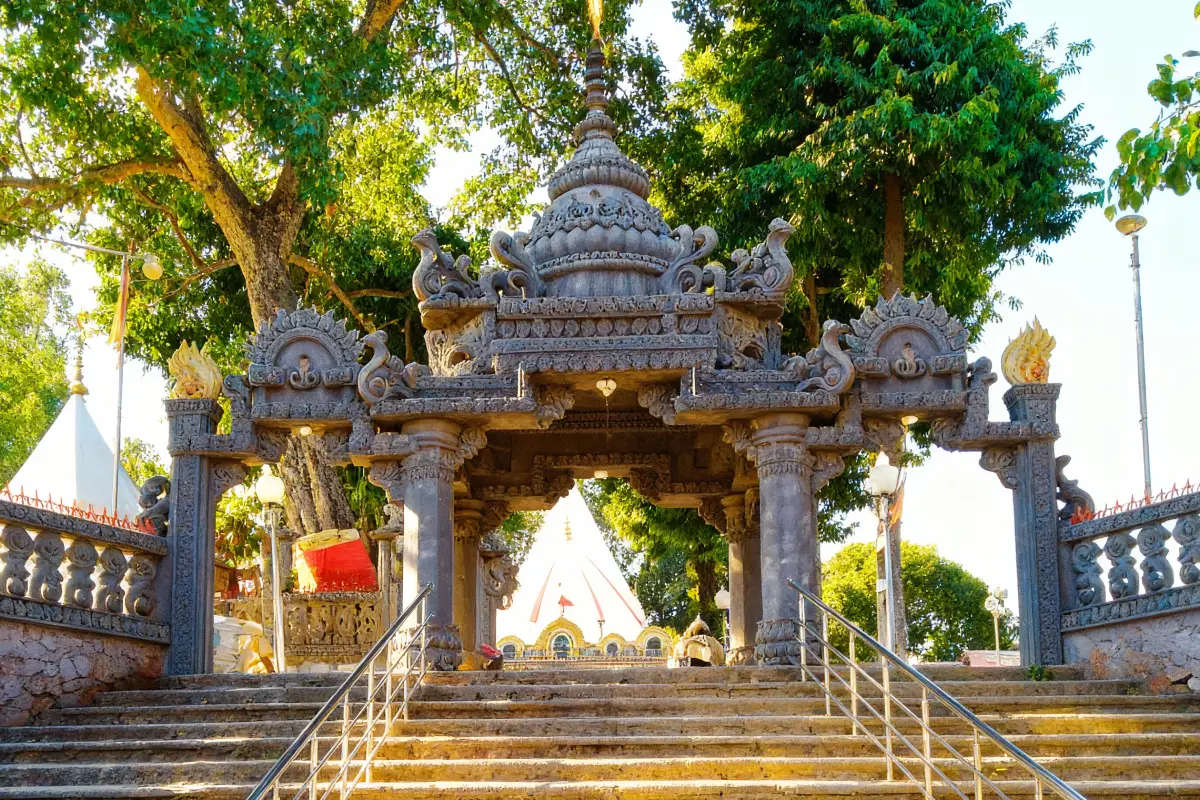
The Madan Kamdev Temple reflects the influence of the Nagara style of medieval temples. This style is visible in its unique layout and sculptural patterns. The temple ruins spread across a scenic hilltop surrounded by greenery. This natural setting adds charm to the archaeological site. Visitors can explore several carved stones, idols, and temple bases across the area. Each structure reveals a part of Assam’s forgotten past. The site continues to attract historians, researchers, and curious travellers. It stands as a timeless reminder of Assam’s artistic and cultural glory.
If questions arise, like "Why visit this temple? What is specific about it? Then let’s explore what makes this temple so captivating that it always draws visitors towards it. From its mysterious ruins to its incredible natural beauty, you will be mesmerized.
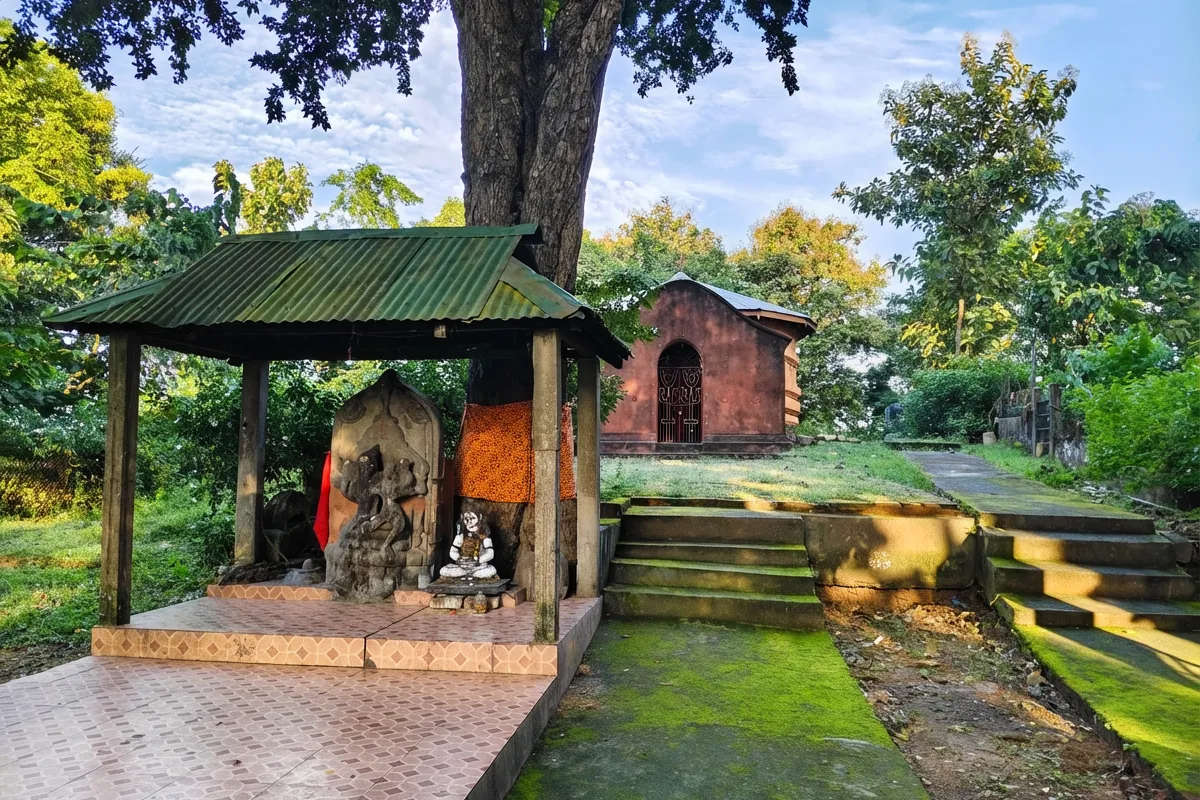
The temple has a sculpture of a ruined sculpture of God Maheshwar and Goddess Uma. This half-destroyed idol of Maheswar and Uma is worshipped by people as ‘Madan-Kamdev.’ This site is significant for devotees to seek blessings and explore the temple’s divine aura.
The Madan Kamdev temple is unique among the rest of the temples in Assam. This temple is mentioned in ‘Kalika Purana’ and ‘Yogini Tantra.’ The temple is also brought up in Rajnikant Bordoloi’s ‘Donduadruh.’ The temple was ruined. It is unknown how this temple was destroyed. From the ruined sculptures, some say it seems an earthquake destroyed them. The destroyed parts of the temple are preserved in a nearby museum. To study our history more, it is crucial to visit and research this temple, as it is comparable to the Khajuraho temples. It is also significant for an archaeological survey.
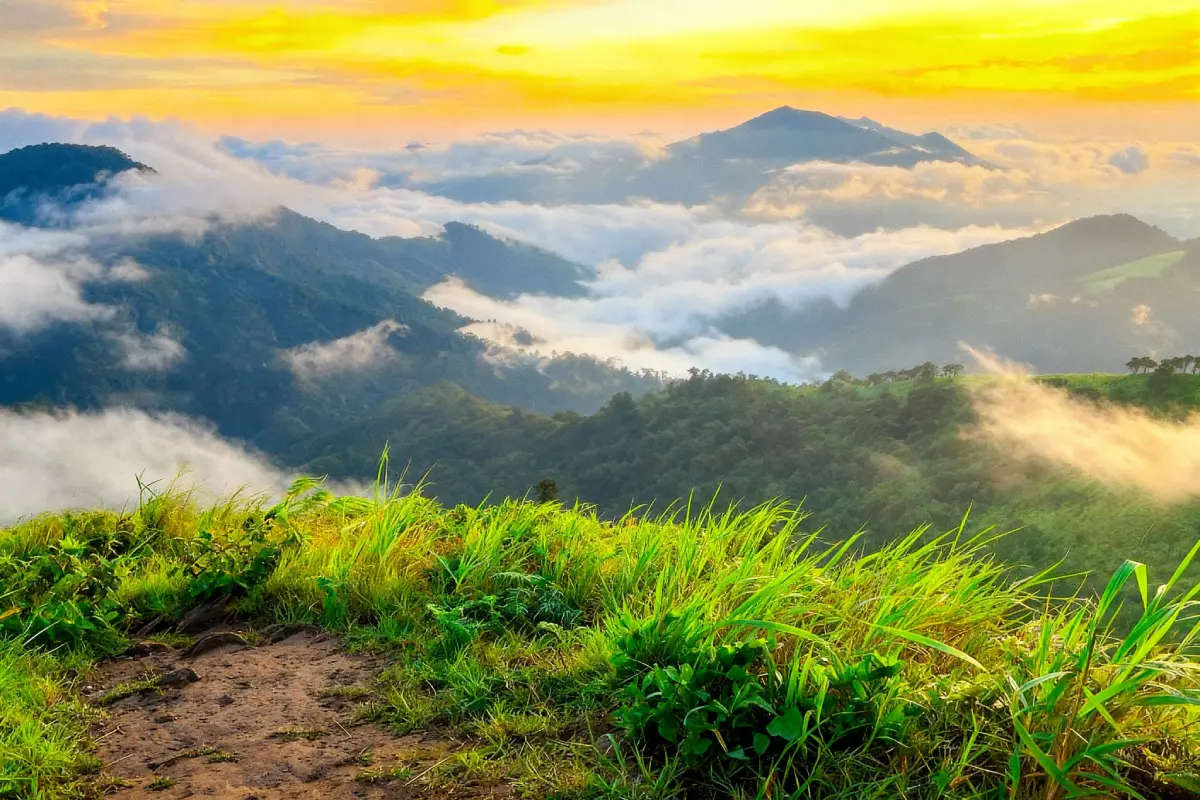
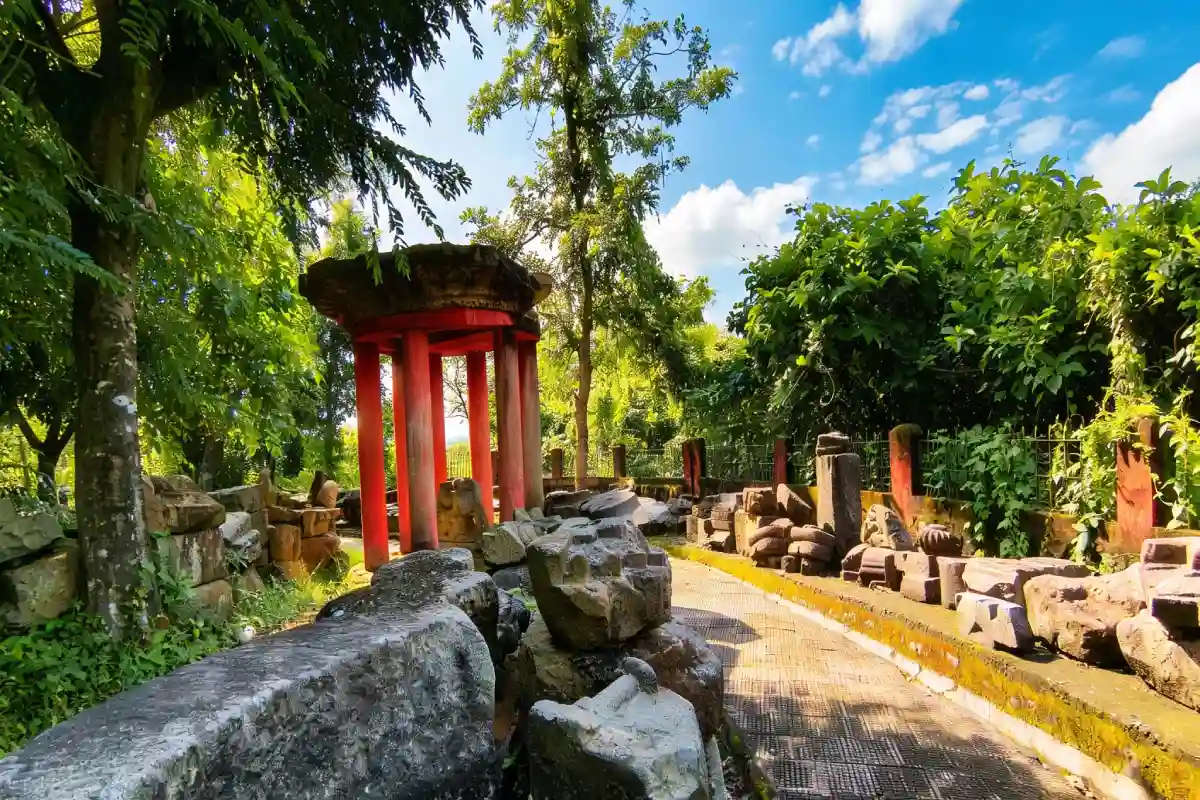
Perched atop Dewangiri Hill, the Madan Kamdev Temple is surrounded by incredible natural beauty. From here, one can admire the remarkable scene of the Brahmaputra Valley stretching into the horizon. The lush greenery, the fresh air gently brushing against your skin, and the melodious chirping of birds create an enchanting atmosphere. As you stand amidst the ancient ruins, a sense of peace and mysticism envelops you, making this place a perfect retreat from the chaos of daily life.
Various festivals are celebrated at the Madan Kamdev temple throughout the year. Three main festivals observed here are Madan Trayodashi Tithi, Maha Shivratri, and Ganesh Chaturdashi. Among them, Madan Trayodashi Tithi is celebrated with great happiness on the Shukla Trayodashi Tithi of the Assamese Chaitra month (March-April).
During Madan Trayodashi, a specific bamboo puja is performed, where two bamboo poles are worshipped. The significance of this festival lies in the legend that when Kamadeva was reduced to ashes by Lord Shiva's fiery wrath, his wife, Rati Devi, prayed to Lord Shiva. Moved by her devotion, Shiva restored Kamadeva to life on this very day. Hence, the festival of Madan Trayodashi Tithi is celebrated in remembrance of this event.
You can visit this temple for worship and prayers at any time of the week. Devotees come here to offer puja and seek blessings in a peaceful spiritual atmosphere. The Madan Kamdev Temple remains open for visitors from 9 AM to 5 PM.
The temple area is a few kilometers away from Guwahati. Therefore, the atmosphere of the area is quite calm and peaceful. People may find both relaxation and knowledge on this site.
The Madan Kamdev temple area is splendid for photography. Since this is a ruined temple, the different types of sensational sculptures, inscriptions, etc., give the perfect vibe for an archaeological photoshoot. In addition, the greenery and flowing river create a magnificent view for the photographers.

Distance From Guwahati City: 36 Km

Nearest City: North Guwahati (12)

Nearest Railway Station: Kamakhya Junction(31 Km)

Nearest Bus Stoppage: ISBT Guwahati(37 Km)

Nearest Airport: GBI Airport, Borjhar(41 Km)
Madan Kamdev Temple is well-connected by road, and you can easily find buses, taxis, and private cabs to reach the site. After reaching the base, you need to climb a flight of stairs to reach the temple on the hill.
The temple is approximately 34-36 km from Guwahati city, located via NH 27, which passes through the Saraighat Bridge. You can take a bus or taxi to Baihata Chariali and hire a local vehicle to the temple base.
The nearest railway station is Kamakhya Junction, about 31 km away, while Guwahati Railway Station is approximately 37 km via NH 27. You can take a bus or taxi to Baihata Chariali from those stations.
Lokpriya Gopinath Bordoloi International Airport (Guwahati) is the closest airport, located around 41 km away via NH 17 and NH 27. Taxis and cabs are available from the airport to the temple base.
You can visit Madan Kamdev Temple during this season without any difficulty. The cool climate, clear skies, and pleasant weather make these months perfect for exploring the area. As you travel towards the temple, crossing the historic Saraighat Bridge over the mighty Brahmaputra becomes a memorable experience. Its scenic charm will instantly captivate you. The lush green hills around the site are also best explored during this season.
During this time, nature dresses itself in fresh colors. New leaves brighten the entire Madan Kamdev Temple area, and some trees bloom with colorful flowers, making the surroundings look vibrant. Assam also receives early showers during these months, which refresh the landscape. The temperature stays moderate, and the environment remains clean and pleasant.
During these months, the temperature usually rises and the humidity increases. Travelling can sometimes feel uncomfortable in this season. However, the post-summer or autumn period, from September to November, is still a good time to visit Madan Kamdev Temple. If you want to escape the heat and search for a cooler spot near Guwahati, this location can be a suitable choice.
The ideal time to visit Assam’s notable archaeological site, Madan Kamdev Temple, is from post-summer to winter and spring. This means you can plan your trip anytime between October and May. It is best to avoid visiting during the summer and monsoon because extreme heat and heavy rainfall can sometimes disrupt your journey.
Located a short distance from Guwahati, the Madan Kamdev Temple silently reveals a living chapter of Assam’s mythological history. The ruins scattered around the site seem to conceal many mysteries.
According to popular legends, Kamdev is the Hindu god of love. Ancient tales mention that when Kamdev disrupted Lord Shiva’s meditation, an enraged Shiva burned him to ashes. However, Kamdev’s wife, Rati Devi, worshipped Lord Shiva and pleaded for her husband’s revival. Pleased with her devotion, Shiva restored Kamdev’s form. It is believed that the place where Kamdev regained his form was named Kamrup. The temple site is said to be where Kamdev reunited with his wife, Rati Devi, and together, they built several temples dedicated to Lord Shiva.
Another reference from the Kalika Purana identifies this location as the Matsya Dhwaj Mountain. The south-flowing Saswati River also traverses the site. In his travelogue, “Kamarupar Teertha Bhraman,” Chandrakumar Agarwala referred to this river as the Mora Nodi, or Dead Stream, also known as “Madanakur.” There is a belief regarding the use of bricks in this temple that some parts were constructed during the Ahom era. However, based on the style of the Madan Kamadeva idol, historians speculate that it was built during the reign of the Pala dynasty. The Assam Archaeology Department suggests that the temple was constructed around the 11th–12th century.
However, a closer examination of the sculptural features reveals that some of the idols date back to the 9th century CE. Several renowned Pala rulers, such as Brahmapala and Ratnapala, ruled over Kamarupa (ancient Assam) in that period. This leads historians to assume that the temple was built during the reign of the Pala dynasty in Assam.
More details about the Pala rule in Assam can be found in K.L. Barua’s Early History of Kamarupa and S.L. Baruah’s A Comprehensive History of Assam. The Palas of Kamarupa were followers of Tantric practices, and it is believed that they constructed several Tantric temples across Assam.
There are various legends regarding the destruction of the Madan Kamdev Temple. According to some people, the temple was destroyed by Kalapahar. However, there is no concrete evidence to support this claim. On the other hand, the Archaeological Survey suggests that the temple was ruined due to an earthquake. This conclusion is drawn from the alignment of the ruins, which appear to have collapsed uniformly, indicating that an earthquake was the likely cause of their destruction.
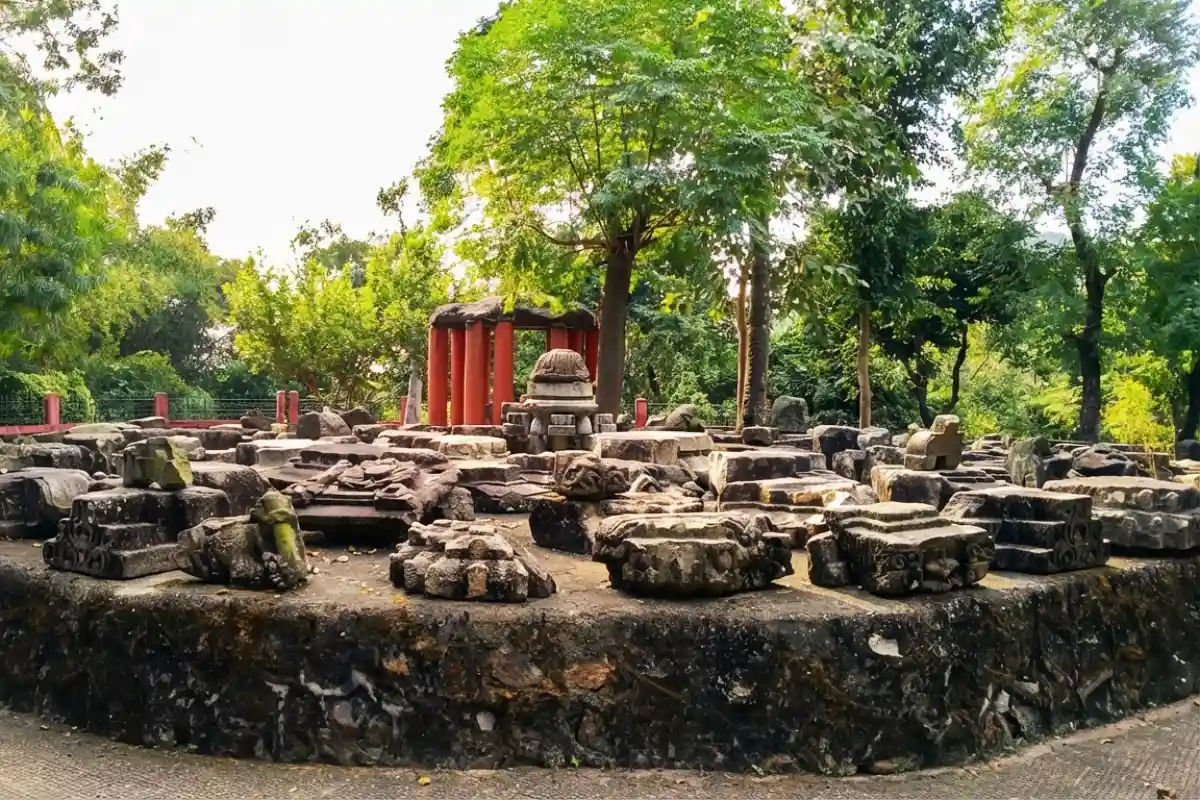
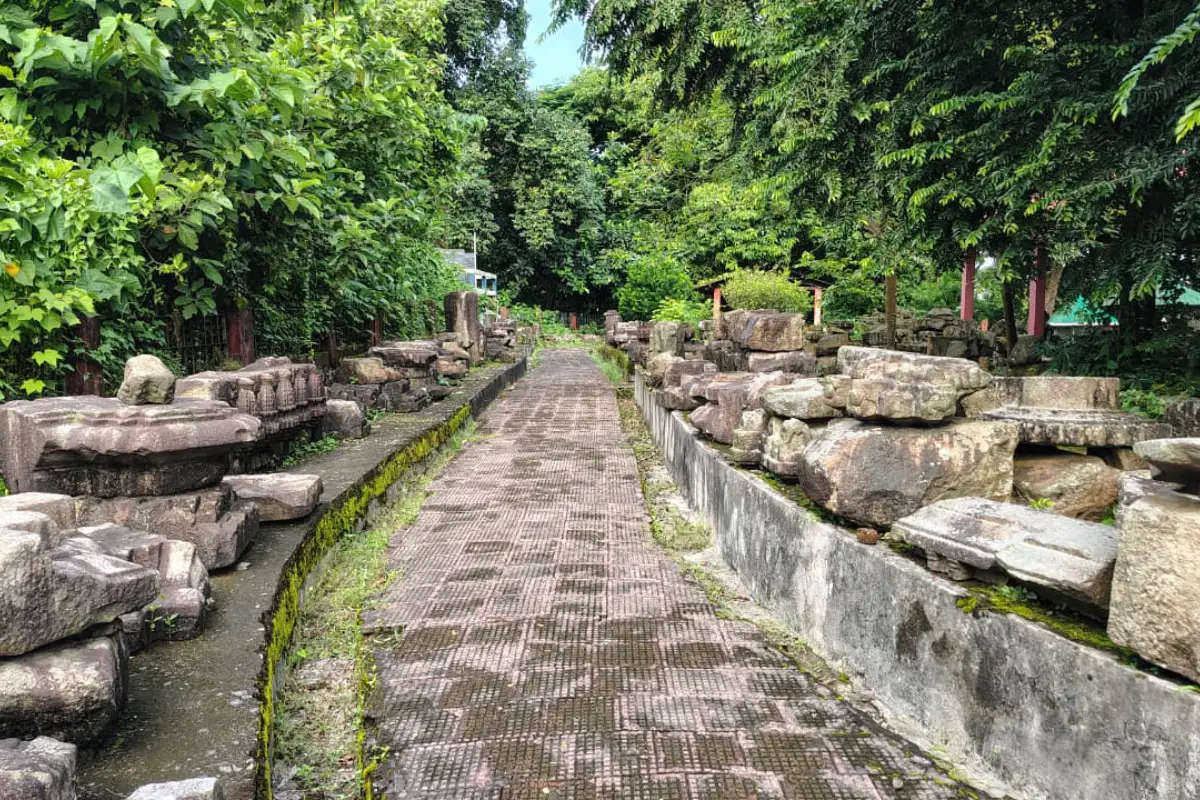
There is no definitive information about who built the Madan Kamdev Temple or when it was constructed. This historically rich site was thoroughly examined only in 1970. Excavations in the temple area uncovered the ruins of 24 small and large temples, which had been buried under dense forests and vegetation for centuries. The discovered architectural and sculptural remnants reflect Assam’s rich artistic heritage.
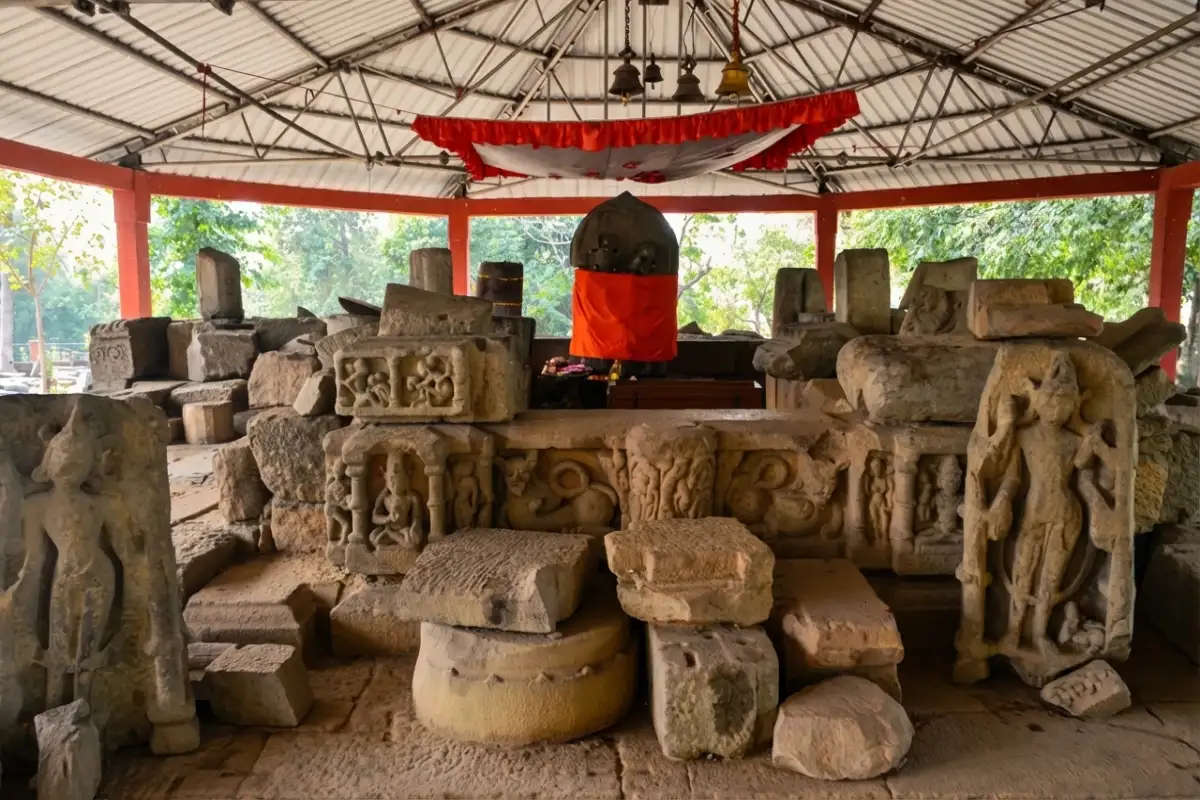
Spread over a small area, the site contains numerous ruins, including intricately carved statues of gods, goddesses, humans, animals, flowers, and leaves. Some of these remnants depict erotic sculptures, similar to those found in Khajuraho. Because of this, the site is often referred to as the "Khajuraho of Assam."
The temple features a Garbhagriha (sanctum sanctorum), influenced by the Nagara style of medieval temple architecture. On three sides of the sanctum, there are idols of three goddesses. On the left side of the main sanctum, a goddess identified in the Kalika Purana as Tritiya Tripura Devi. Inside the sanctum, an idol is currently covered with red cloth. This sculpture is in the realm of Uma-Maheshwara, depicting the embrace of Lord Shiva and Goddess Parvati.
Among the ruins of Madan Kamdev, large pillars can be seen, intricately carved with floral and other natural motifs. A beautifully designed door jamb was also discovered in the temple area throughout excavations. This door jamb features a portrait of an elephant being attacked by two human figures, each holding a trident. Additionally, symbols of the Kalpavriksha (the wish-fulfilling tree) are observed on these door jambs with large and artistically carved leaves. In the central part of the door jambs, an idol of Lord Ganesha is also visible.
The site features a Vaikuntha Vishnu sculpture, regarded as one of the most significant in all of India. Additionally, a temple in the Ratha style was discovered here, which is unique in Assam, as no other temple in the region follows this architectural style. Its plinth remains in excellent condition, while the Mandapa and Garbhagriha are still beautifully connected.
Among the various sculptures discovered here, some depict dancing figures. Several Surya (Sun God) idols are also found in this temple, showing a clear influence of South Indian Surya sculptures. When compared to South Indian temple sculptures, it is observed that South Indian Surya idols usually have bare feet and hold two partially bloomed lotuses in their hands. The Surya sculptures at Madan Kamdev exhibit the same characteristics.
*Advertisement