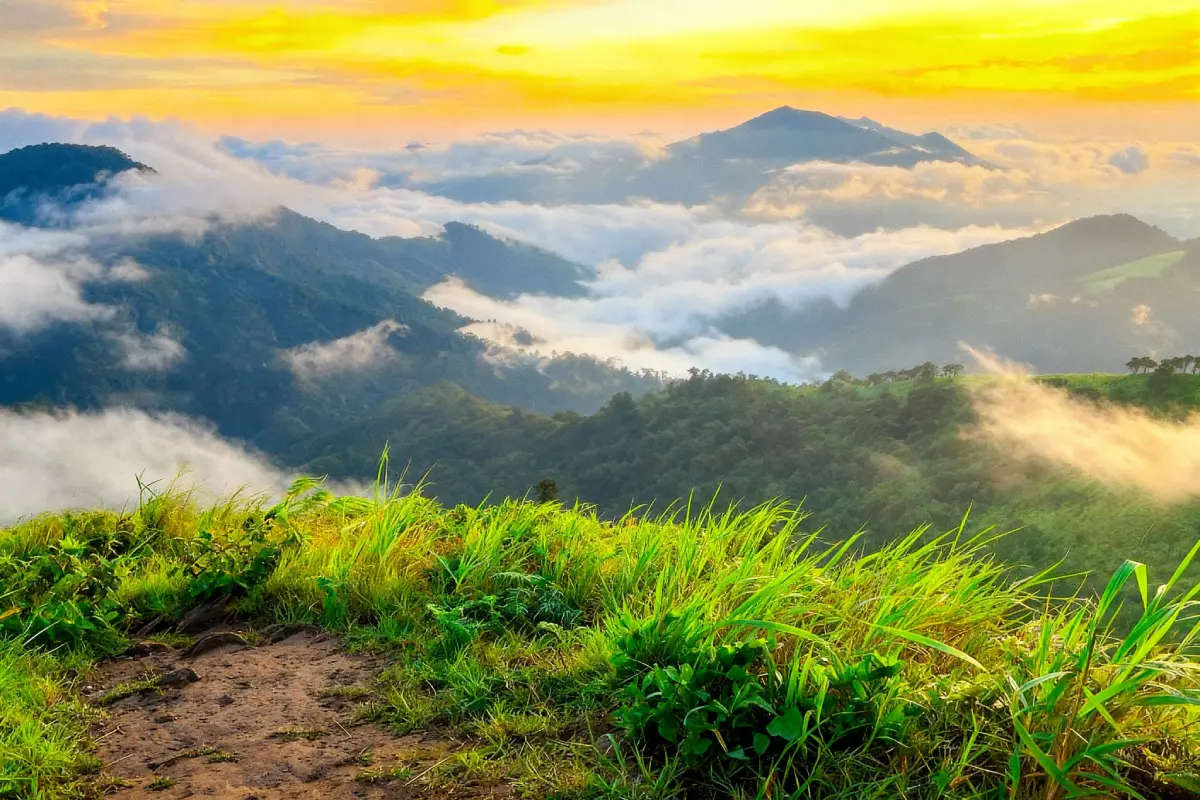
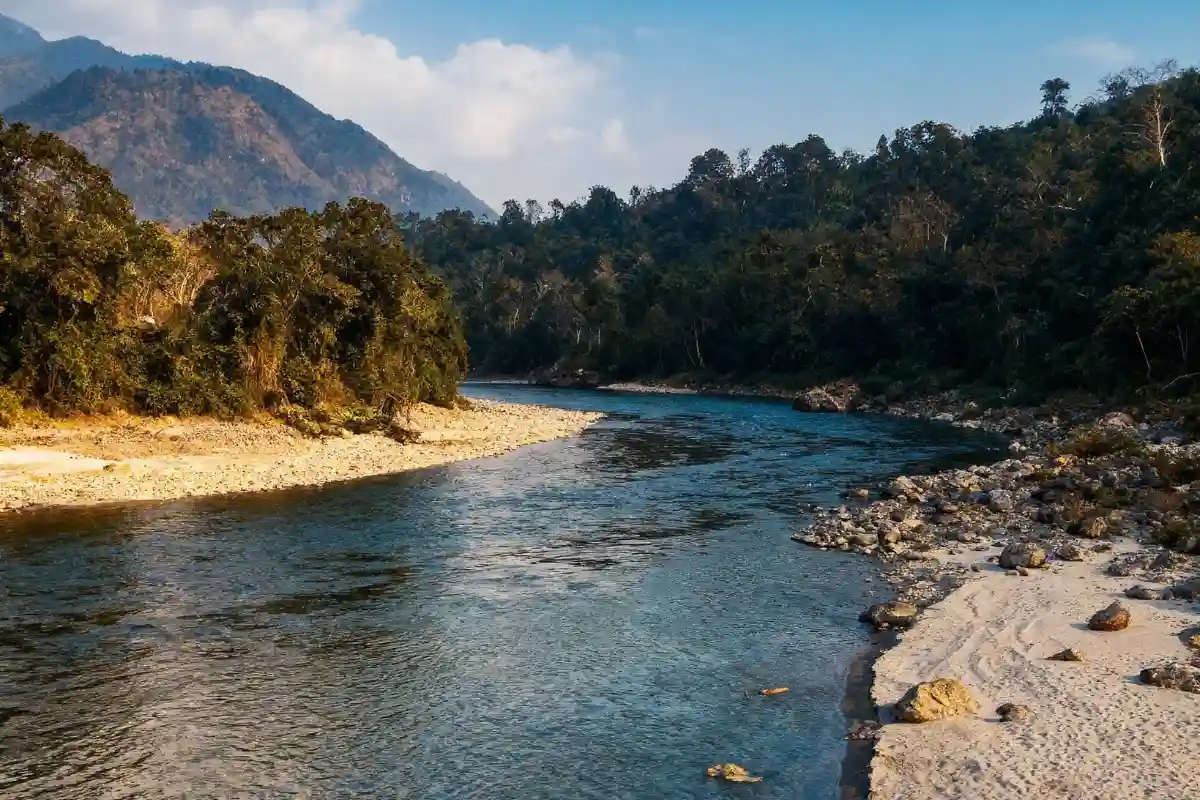

Manas National Park nestles in the foothills of the Himalayas, where green forests, open grasslands, and clear rivers come together. Located in Assam’s Chirang and Baksa districts, it also shares its border with Bhutan’s Royal Manas National Park. The Becky and Manas rivers flow through the park, supporting wildlife and making the landscape more alive and vibrant.
UNESCO recognized Manas National Park as a World Heritage Site in 1985 for its rich biodiversity and unspoiled natural charm. Established as a wildlife sanctuary in 1928, Manas originally spanned around 391 square kilometers. It gained the status of a biosphere reserve in 1989 and was later upgraded to a national park in 1990. Today, the park stretches across 850 square kilometers.
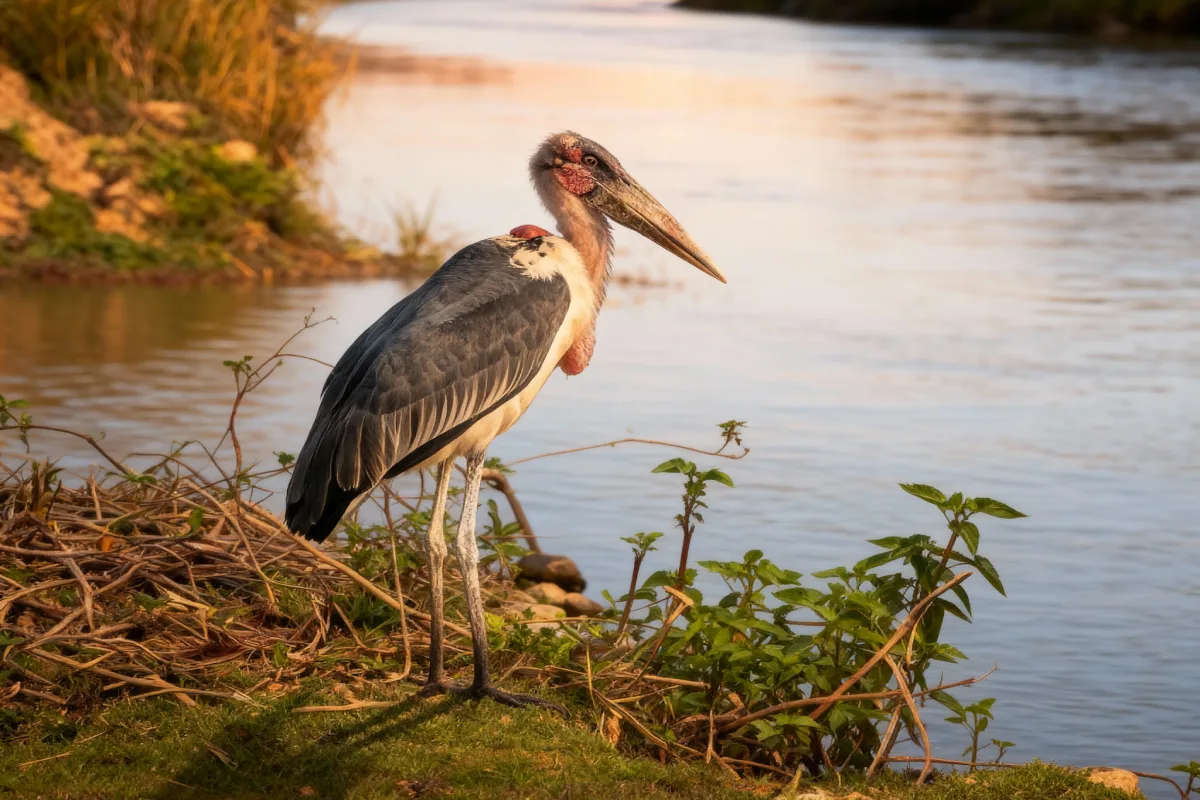
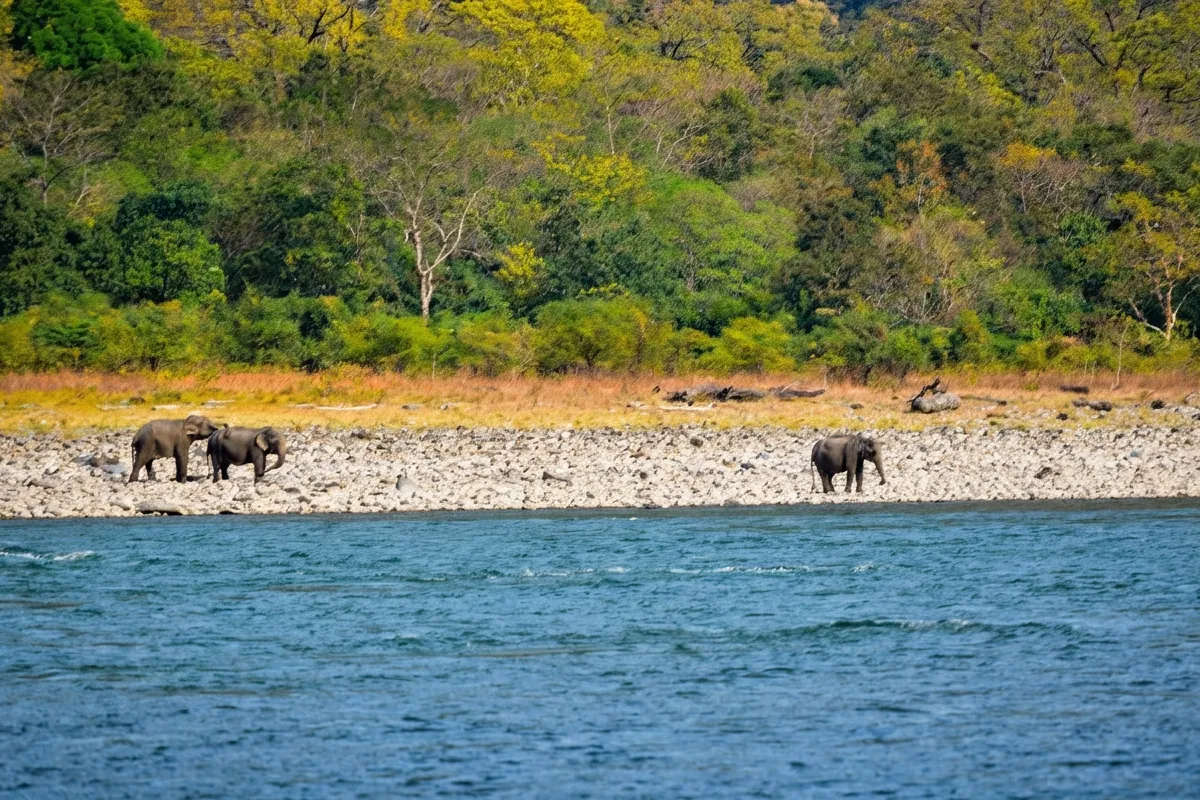
Manas National Park hosts a wide range of plant and animal species, making it a treasure trove of biodiversity. So far, around 543 species of plants have been recorded here. The park also shelters 55 mammal species, nearly 450 types of birds, 50 reptile species, and 3 kinds of amphibians. You will find golden langurs, Bengal tigers, and pygmy hogs living freely in their natural habitat. Elephants, deer, wild buffalo, and many birds like great hornbills and Bengal floricans attract wildlife lovers and photographers.
Manas also serves as a tiger reserve and elephant reserve under India’s conservation mission. Visitors often explore its expansive grasslands, dense forests, and the tranquil waters flowing between the hills. Bodo communities inhabit adjacent areas around the park and assist in conserving nature in the form of ecotourism and guided tours. They greet visitors with warmth and share stories of their traditions and connection to the forest. Manse provides more than wildlife; it provides tranquility, discovery, and a return to the genuine rhythms of nature.
The Manas waterway, from which the park derives its name, flows through the park's western border and is its principal waterway. The park's elevation ranges from 60 to 1,500 meters (200 to 4,900 feet) above sea level, which contributes to its diverse ecosystem.
It was one of the first reserves added to the tiger reserve network under Project Tiger in 1973. The park is home to various indigenous people, including the Bodo, who have a strong relationship with the land and its wildlife. The National Park is home to 450 bird species, 55 mammal species, 50 reptile species, and three amphibian species. 31 of these animals are threatened species, and 21 are listed in India’s Schedule 1 of mammals.
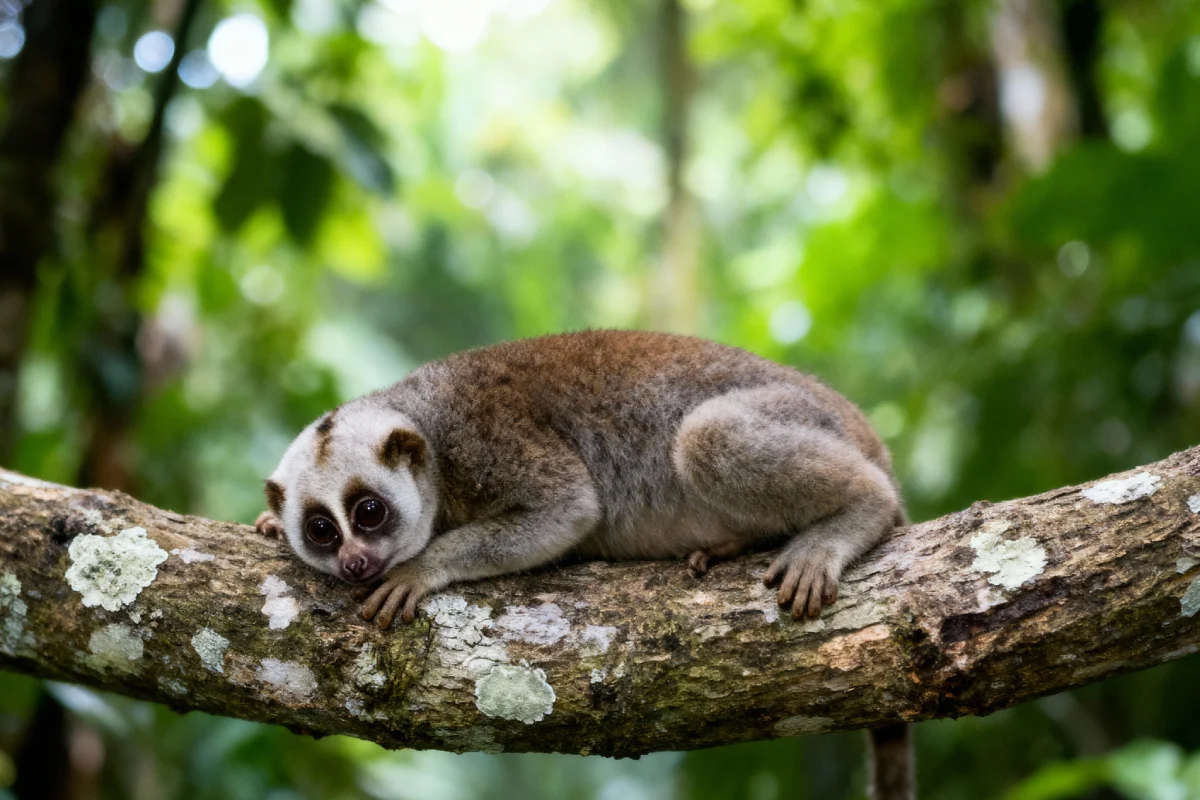
It is one of the rarest mammals, found exclusively in Assam. Conservation efforts in Manas have helped to recover its population, which was once assumed to be extinct.
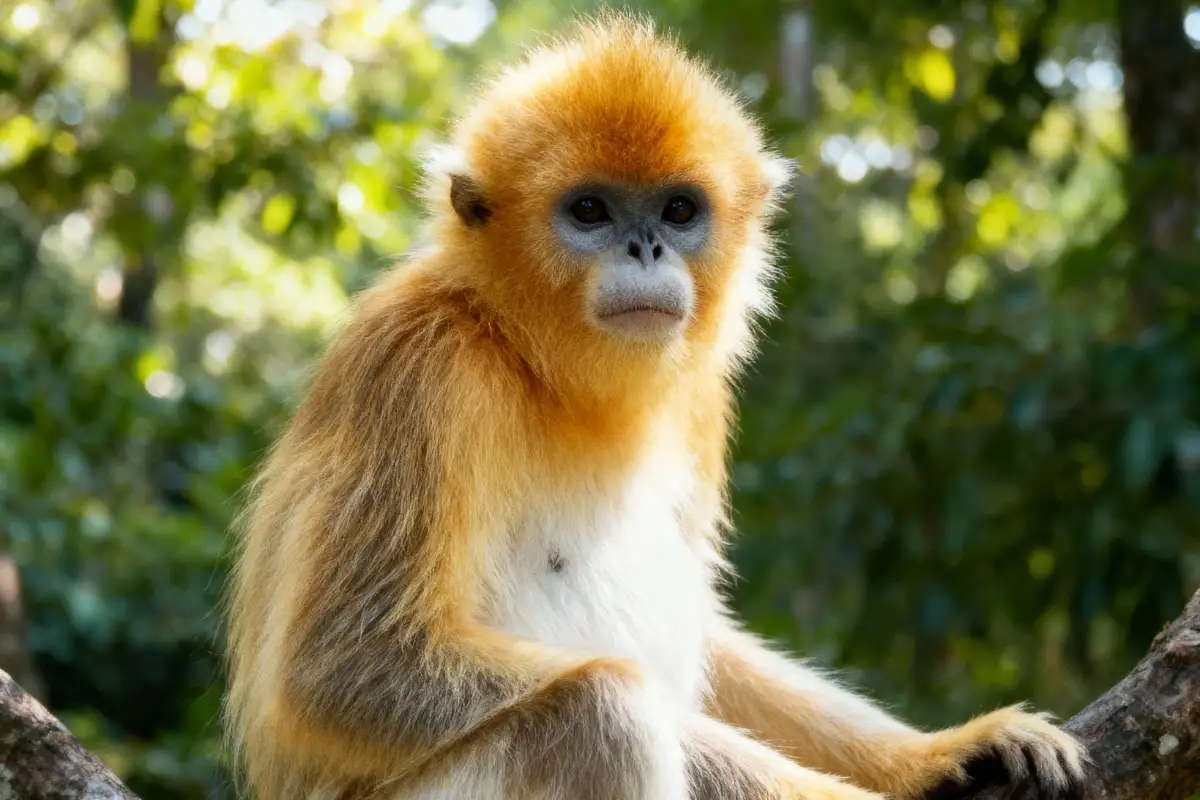
This stunning golden-furred monkey is one of the most elusive and endangered langur species, living mostly in the woods of Assam and Bhutan. Manas is one of the few areas where they thrive.
A rare freshwater turtle species, the Assam roofed turtle is found in the rivers and wetlands of Manas, though it is highly threatened due to habitat loss and poaching.
The clouded leopard, known for its distinctive cloud-like markings, is a rare and elusive big cat that lives in Manas' deep forests; however, sightings are extremely rare.
The wild water buffalo is larger and more powerful than its domestic counterpart, and Manas boasts one of the only remaining sizable populations of this endangered species.
The park is also home to unique and endangered endemic animals, including the Hispid Hare, Indian Rhinoceros, Chinese Pangolin, Bengal Florican, Tiger, and Sloth Bear.
The vegetation includes Sal (Shorea robusta), scrub woods, ancient plantations (in buffer areas), semi-evergreen and mixed deciduous forests, grasslands, and riparian vegetation in the core area. The main plant species found here are hoolong trees. Other notable species found here are Amari, Dewa Sam, Himolu, Garjan, and others.
Manas National Park is widely recognized in India as a prime habitat for several rare and endangered wildlife species. In the past, the area was used as a royal hunting ground by the kings of Cooch Behar and the Gauripur rulers.
The name "Manas" is believed to have originated from a local legend. It is said that the serpent goddess Manasa once performed worship inside a cave in this region. A river flowing past the cave came to be known as the Manas River, named after the goddess. The national park was later named after this river. Both the Manas and Beki rivers, which flow past the park, are tributaries of the Brahmaputra and originate in the Himalayas.
According to folklore, the Brahmaputra River flows from the sacred Lake Manasarovar in the Himalayas, and locals believe that the Manas River shares the same origin. Due to its link with Lake Manasarovar, the river came to be known as Manas, giving the park its name as well.
*Advertisement
Manas National Park feels less like a “tourist spot” and more like nature running the show—elephants moving like slow, thoughtful boulders, deer flickering through grass like living shadows, and if you’re lucky, a tiger leaving only a whisper of presence behind.
And the best part? The park’s landscapes keep changing the mood—riverine stretches, dense forest patches, open grasslands—so every drive or walk feels like turning a page in a very alive storybook.
If you’re the sort of traveler who takes photos “just in case,” Manas will test your storage. The Manas River braids through the park, catching sunlight like spilled silver, while grasslands glow at dawn and dusk like someone quietly turned the saturation up on the world. It’s cinematic without trying—no filters needed, unless you’re feeling dramatic.
Beyond the beauty, there’s a deep sense of ecological richness here: a meeting of ecosystems that makes the scenery feel varied and surprising, even within the same afternoon.
Manas isn’t only about spotting wildlife—it’s about the feeling of being somewhere a little wilder, a little rarer, and still refreshingly unpolished. Safaris here come with real suspense: the thrill isn’t guaranteed by crowds and radio chatter; it’s earned by patience, quiet, and the luck that makes travel memorable.
You leave with more than pictures—you leave with stories. The kind you tell later with phrases like, “And then everything went silent…” which is travel-speak for “It was incredible, and I will be talking about it forever.”
You can enjoy adventurous experiences, wildlife safaris, river rafting, trekking, and bird watching.
Capture the photograph in stunning nature's beauty.
Enjoy a picnic at the breathtaking greenery and the riverside area.

Distance From Guwahati City: 131 Km

Nearest Town / City: Barpeta(24 Km)

Nearest Railway Station: Barpeta Road Railway Station(23 Km)

Nearest Bus Stoppage: Simalguri public bus stand, Barpeta(23.7 Km)

Nearest Airport: LGBI Airport, Guwahati(137 Km)
Manas National Park is well-connected by air, rail, and road, allowing visitors from all over India to reach it with ease. The closest airport is Lokpriya Gopinath Bordoloi International Airport in Borjhar, Guwahati. From there, travelers can hire a taxi or book a cab in advance to reach the park within 3 to 4 hours.
For those preferring train travel, Barpeta Road Railway Station is the closest option, situated some distance from the park. Regular trains from major cities such as Guwahati, Delhi, and Kolkata serve this station. From Barpeta Road, local transport or taxis are available to reach the park within 45 minutes.
Road travel is also a scenic and flexible option, with well-maintained routes linking the park to cities in Assam and neighboring states.
The best time to visit Manas National Park is during the winter months, from November to February. The weather is usually pleasant, with comfortable temperatures and clear skies, making it ideal for exploring the park’s rich biodiversity. This season offers the best opportunity to enjoy wildlife safaris and the scenic beauty of the surroundings. The park remains closed during the monsoon season, from June to September, due to heavy rainfall and the risk of flooding, so it’s best to avoid planning a trip during that period.