

The Charaideo Maidams: Assam’s Royal Pyramids of the Ahoms
The Charaideo Maidams represent one of the most prominent and historically rich heritage sites of Assam, deeply connected to the Ahom Dynasty. The name “Charaideo” originates from the Tai word “Che-Tam-Doi,” meaning “a city shining on a hill.” Once the first capital of the Ahom kingdom, Charaideo held immense political and spiritual importance. Even after the capital shifted to different locations over time, Charaideo continued to remain the symbolic heart of the Ahom dynasty, revered as a sacred landscape long before and during the Ahom era.
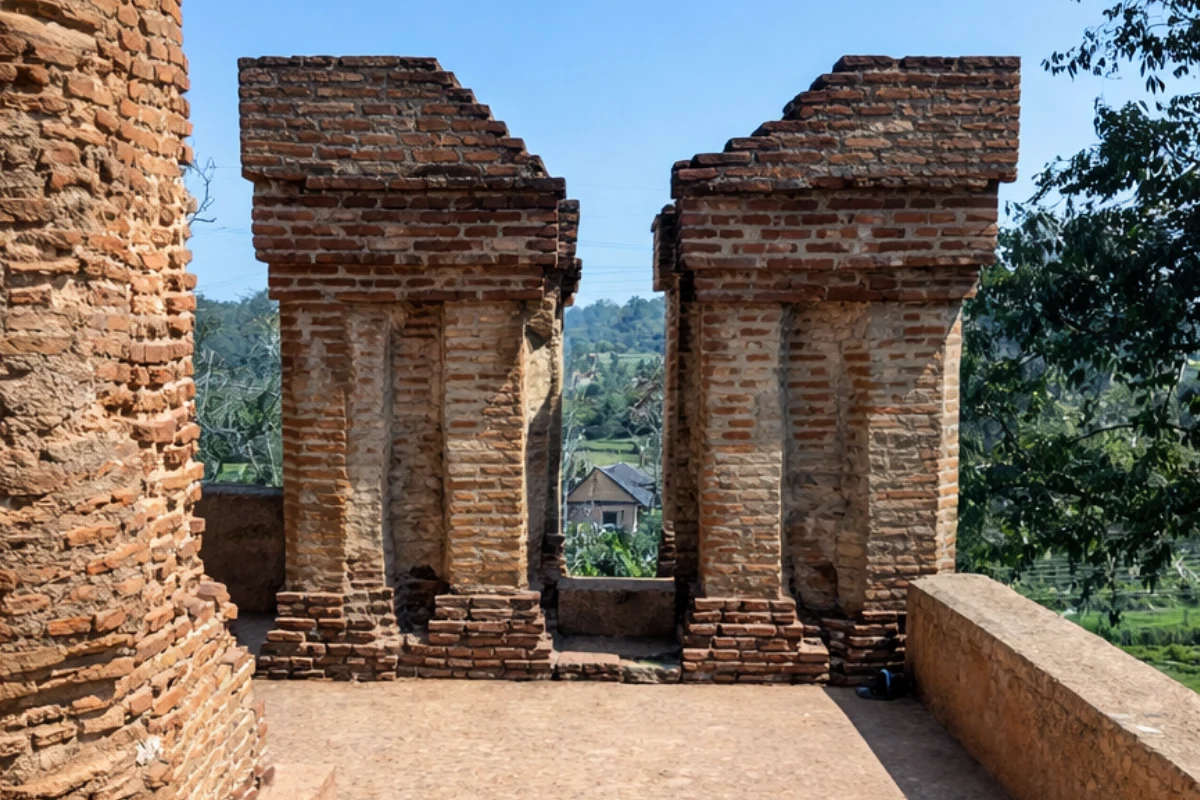
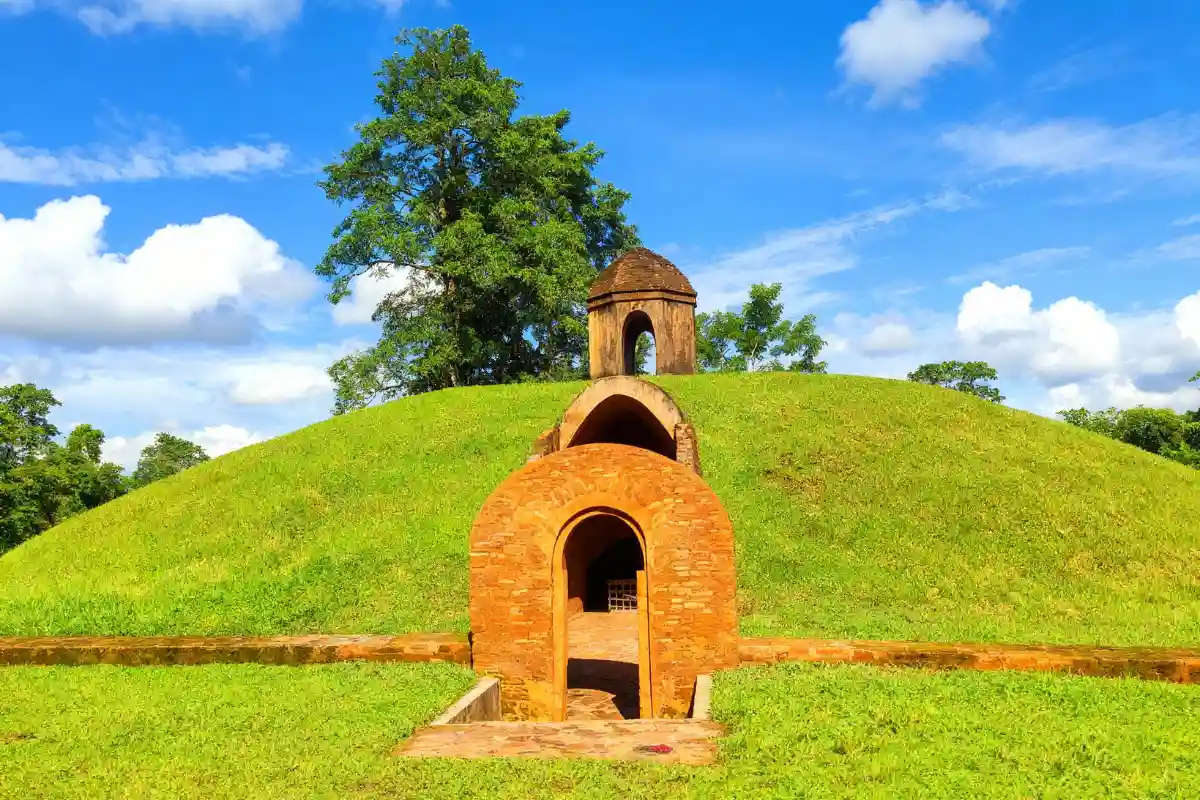
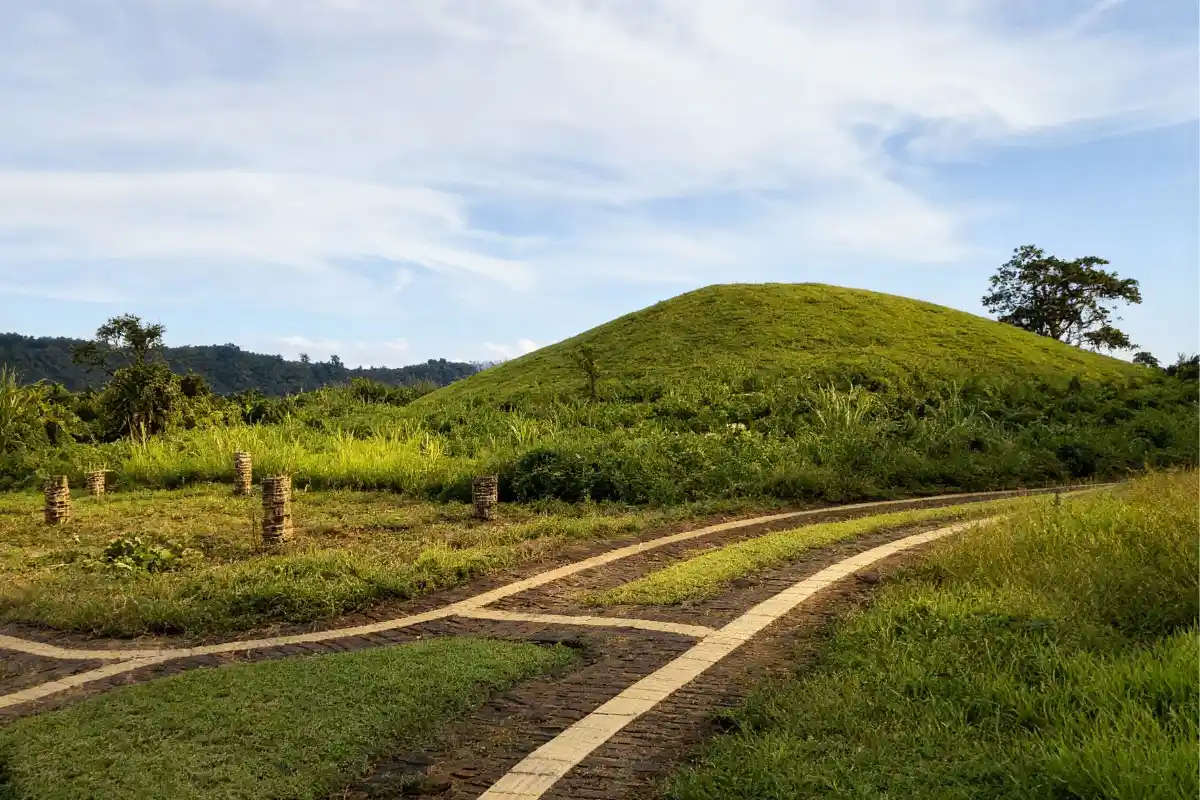
Recognized as a UNESCO World Heritage Site, the Maidams are traditional burial mounds of the Ahom rulers, royal family members, and high-ranking officials. This distinctive funerary practice involved placing the body inside a specially crafted wooden coffin known as a “Rungdang,” along with personal belongings, weapons, ornaments, and everyday items. Underground chambers were built to house these coffins, while dome-shaped earthen mounds called “Chao Chali” rose above them. Architecturally, the Maidams resemble pyramidal structures and showcase the advanced engineering skills and refined artistic excellence of medieval Assam’s craftsmen.
Today, more than 150 Maidams are scattered across the Charaideo, with several protected by the Archaeological Survey of India and the Assam government. These monumental structures attract visitors from around the world, offering a rare glimpse into Ahom beliefs, architecture, and ancestral traditions. Together, the Maidams stand as a powerful reminder of the Ahom dynasty’s legacy and their deep respect for ancestors, death, and the afterlife.
Rich Historical Importance:
Charaideo Maidams hold immense historical value as the original capital and sacred burial site of the Ahom dynasty. The site reflects centuries of Ahom rule, royal traditions, and governance systems that shaped Assam’s history. Visiting Charaideo offers a deeper understanding of medieval Assam, its rulers, and the cultural practices that continue to influence the region’s identity today.
Cultural Significance:
Charaideo Maidams are deeply rooted in the cultural and spiritual traditions of the Ahom community. The Maidam burial practice reflects ancestral worship, respect for the afterlife, and long-standing rituals passed down through generations. These sacred mounds symbolize the Ahom worldview, where royal authority, spirituality, and cultural identity were closely connected, making Charaideo a living heritage of Assam’s rich cultural past.
Connection to Ahom Royal Legacy:
Visiting Charaideo is not just a journey to a historical site but a deep connection to the life, governance, and royal traditions of the Ahom kings. This sacred land served as the final resting place of Ahom rulers and royal family members, reflecting their beliefs in ancestry, power, and spirituality. Walking among the Maidams allows visitors to experience the grandeur of the Ahom dynasty and understand how royal authority, cultural values, and ancestral worship shaped Assam’s rich historical identity.
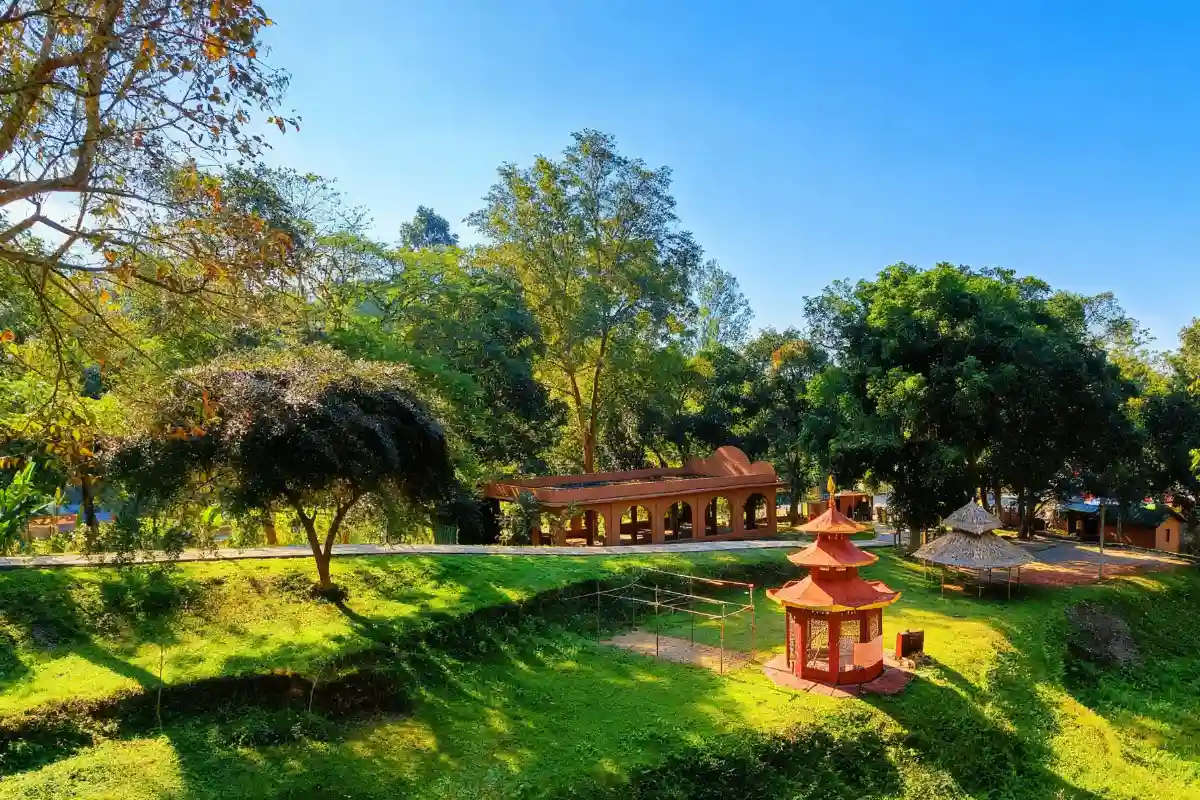
Explore the Maidams: Walk through the ancient burial mounds and observe their unique pyramid-like structures and historical layout.
Learn Ahom History: Understand the Ahom dynasty, royal traditions, and burial practices through on-site information and guided visits.
Photography: Capture the scenic hilltop views, symmetrical mounds, and the peaceful surroundings, especially during morning hours.
Enjoy a Picnic: Relax and enjoy a peaceful picnic amid the serene surroundings of the Charaideo hills. The open green spaces and calm atmosphere make it an ideal spot to spend quality time with family or friends while soaking in the historical and natural beauty of the area.

Distance From Guwahati: 378 km.

Nearest Town / City: Sivasagar(27 km.)

Nearest Railway Station: Simaluguri Junction.(13 km.)

Nearest Bus Stoppage: ASTC, Sivasagar.(27 km.)

Nearest Airport: Jorhat Airport.(79 km.)
By Road: Charaideo is about 378 km from the heart of Assam, Guwahati, which takes approximately 6-7 hours by road. The site is well-connected to different parts of Assam, making it easily accessible from anywhere in the state. Regular buses and public transport are always available. From Sivasagar town, it is around a 45-minute drive, and it is also not far from Sonari town. If you are traveling by public transport or local buses, you need to get down at Chukafa Gate, and a short walk will take you to the historic Charaideo Maidams.
By Rail: If you are traveling by train, the nearest railway station is Simaluguri Junction, which is well-connected to various parts of Assam. From the station, you can hire taxis or use local vehicles and buses running between Sivasagar and Sonari to reach Charaideo Maidams.
By Air: The nearest airport is Jorhat Airport. From the airport, you can use public transport to reach Sivasagar via Jorhat ISBT, from where Charaideo is easily accessible. The road connectivity from Sivasagar to Charaideo ensures a smooth and hassle-free journey.
The ideal time to visit Charaideo Maidams is from early winter to post-winter, that is, from October to April. During this period, the weather is pleasant and perfect for outdoor activities. Additionally, from December to February, the site sees a higher number of tourists. Many visitors come for picnics from different parts of Assam, and the Charaideo Festival, held every January, also attracts large crowds.
You can visit any day of the week, preferably in the morning, to fully enjoy the site and its serene atmosphere.
Respect the Heritage: Charaideo Maidams are sacred burial sites. Avoid climbing the mounds and follow all guidelines.
Maidam, also known as Frang-Mai-Dam in the Tai-Ahom language, is the traditional burial system of the Ahom community. The term comes from Tai-Ahom words, where "Frang-Mai" means burial and "Dam" refers to the deceased. Often described as the “Pyramids of Assam,” Maidams are comparable to the pyramids of ancient Egypt and the royal tombs of ancient China due to their monumental scale and cultural importance. Unlike cremation practices followed by many communities, the Tai-Ahoms traditionally buried their dead, considering Maidams sacred spaces.
Assam is home to Maidams, but Charaideo boasts the highest concentration and the greatest historical significance. Even today, certain Tai-Ahom clans continue to follow Maidam-related rituals, honoring ancestors through traditional ceremonies held annually.
Historical records such as the Changrung Phukan Buranji provide detailed accounts of the Maidam tradition, including their construction, protection, and rituals. Special officials like Changrung Phukan and Maidam Phukan were appointed to oversee the building and maintenance of these burial sites. Only members of specific clans were permitted to construct Maidams for Ahom kings and high-ranking officials. A dedicated group was also responsible for guarding the Maidams, ensuring their sanctity.
The size and design of a Maidam largely depended on the status and rank of the deceased. Maidams built for Ahom kings and royal family members were much larger, more elaborate, and carefully guarded, while those of lower rank were comparatively smaller and simpler. Structurally, a traditional Maidam consists of three main components: the Rungdang (wooden coffin), the Kareng Rungdang (burial chamber), and the Chao-Chali (earthen mound). Many Maidams are enclosed by an octagonal brick boundary wall, with the entrance usually facing west. Outside this enclosure, annual ancestral rituals were performed to pay respect to the departed.
The Rungdang refers to the specially crafted wooden coffin in which the body was placed after ritual cleansing. These coffins were traditionally made from the durable wood of the Bischofia javanica tree, chosen for its strength and longevity. The Rungdang was considered a vital element of the burial process, symbolizing protection for the deceased in the afterlife.
Above the Rungdang lies the Kareng Rungdang, a chamber-like structure built at the burial site. This chamber housed not only the coffin but also items used by the deceased during their lifetime, including weapons, ornaments, utensils, furniture, and personal belongings. In earlier times, some Maidams were divided into multiple chambers, reflecting the complexity of Ahom burial customs. The entire structure was finally covered with an earthen mound known as the Chao-Chali, which often appears as a dome-shaped hillock. Some Chao-Chalis feature multi-level underground chambers connected by passages, showcasing the advanced architectural planning and engineering skills of the Ahoms.
*Advertisement