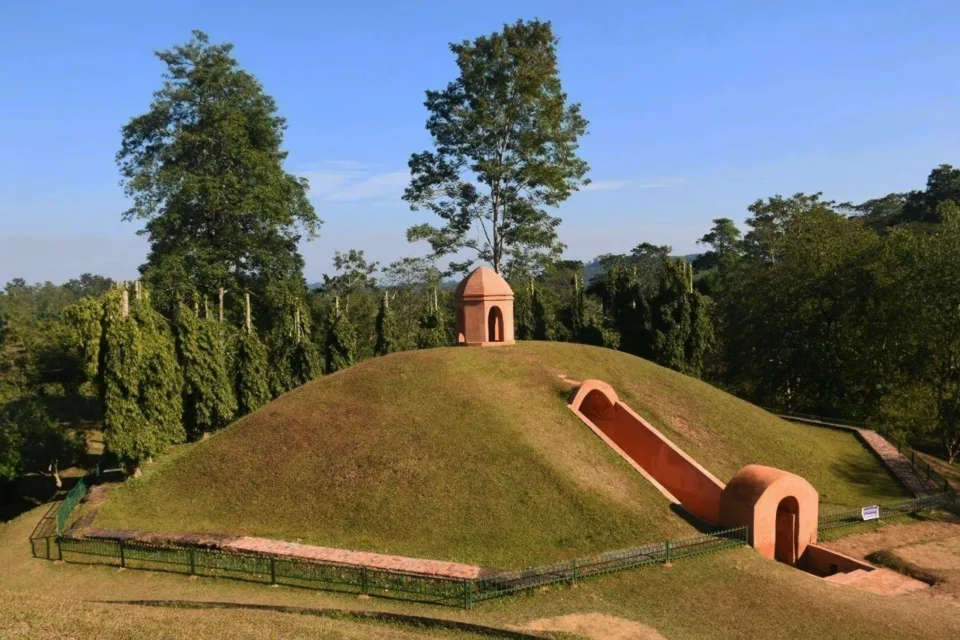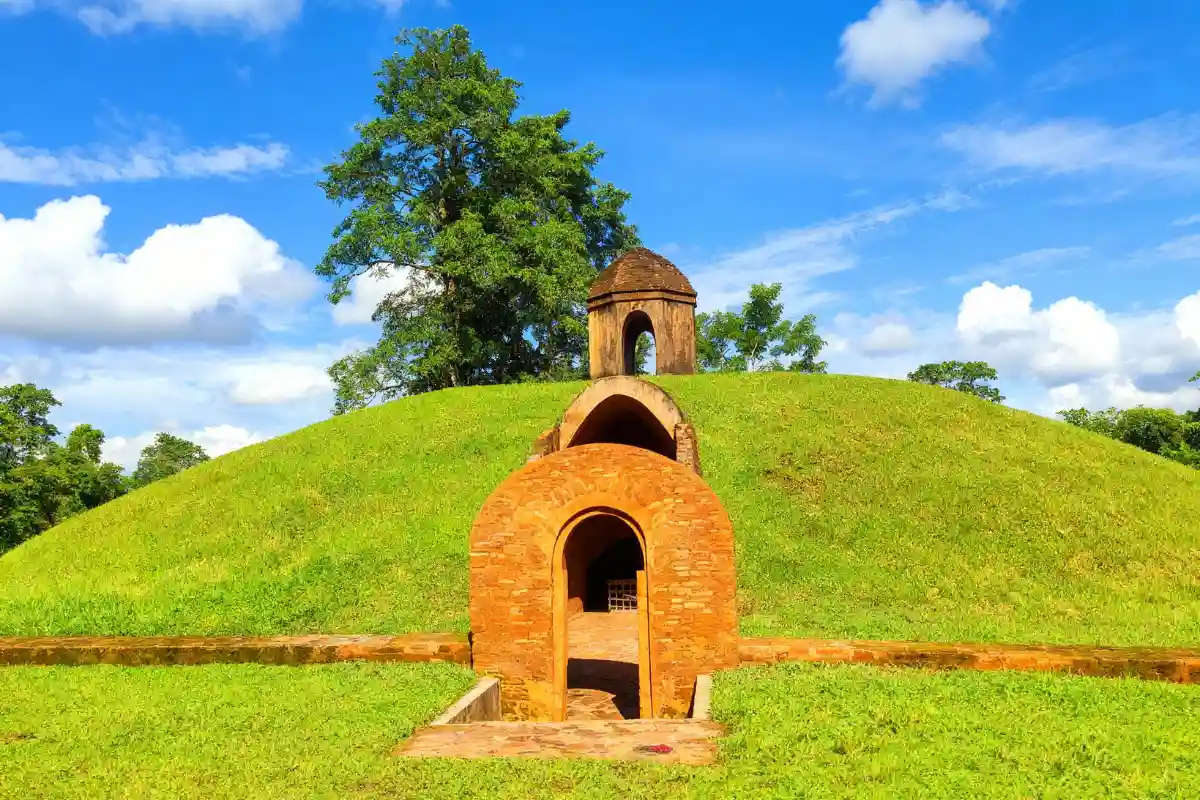


Charaideo, also known as Che-Rai-Doi, is one of the most prominent archaeological sites and a historic town in Upper Assam. The name Che-Rai-Doi means “the shining city on the hills.” It is in Assam. This place was established by the Ahoms, who entered Assam in 1228 CE. In 1253 CE, the first Ahom king, Chao Lung Siu-Ka-Phaa, officially founded Charaideo, making it the first capital of the Ahom kingdom.
Charaideo has remained a symbolic center of Ahom power in Assam. Today, it is especially famous for its numerous maidams (burial mounds), which serve as the final resting places of Ahom kings and members of the royal family. Due to their unique burial structure and historical importance, the Charaideo Maidams are often called the “Pyramids of Assam,” making them a significant heritage destination.
Recognizing its historical significance, Charaideo was officially designated as a UNESCO World Heritage Site on 26 July 2024. The destination's captivating natural beauty, artistic heritage, and rich cultural legacy continue to attract visitors from around the world. It houses many symbols of Assam’s 600-year Ahom rule, including manmade ponds, ancient royal roads, and the historic maidams, all of which narrate the proud and remarkable history of Assam.
permanent seat of the first Ahom king, Chaolung Sukaphaa. In earlier times, the place was called Che-Tam-Doi-Phi, which translates to “the city of the sacred hill.” The name Charaideo originated from the Tai-Ahom terms Che Rai Doi or Doi Che Rai, meaning “the shining city on the hills.” Over time, this name evolved into Charaideo or Charai-Khorong in Assamese. According to the Tai-Bailung-Mohong Buranji, a manuscript written in the Tai language, King Sukaphaa was laid to rest in his capital at Che-Rai-Doi.
Before Sukaphaa’s arrival, local tribes such as the Moran and Borahi regarded this area as an important place of worship. Although the capital of the Ahom kingdom shifted to different locations over the centuries, Charaideo continued to hold immense symbolic value. It remained the sacred heart of Ahom authority, housing the burial grounds of Ahom kings and queens and serving as a center for ancestral worship. The Ahom rulers were buried only after elaborate and lengthy royal funerary rituals.
The royal tombs, known as maidams, are located on the hillocks of Charaideo. Their pyramid-like structures reflect the advanced architectural knowledge and craftsmanship of medieval Assam’s artisans and masons. Historically, more than 150 maidams existed at the site. Today, however, only about 30 maidams are protected by the Archaeological Survey of India and the Assam State Archaeology Department. Many of the remaining unprotected maidams have suffered damage due to encroachment and neglect.