

Located in the heart of Assam, Kaziranga National Park is a paradise for nature enthusiasts. Known across the globe, this protected area is a vital refuge for the endangered one-horned rhinoceros. Vast grasslands, tropical forests, and wetlands together form a vibrant landscape where nature thrives freely.
Recognized as a UNESCO World Heritage Site in 1985, Kaziranga National Park spans 1,090 sq. km. The Brahmaputra flows along its northern boundary, while smaller rivers like Borjuri, Kohora, and Diphlu cross through. Kaziranga was the first forest in Assam to become a national park and remains its proudest conservation symbol.
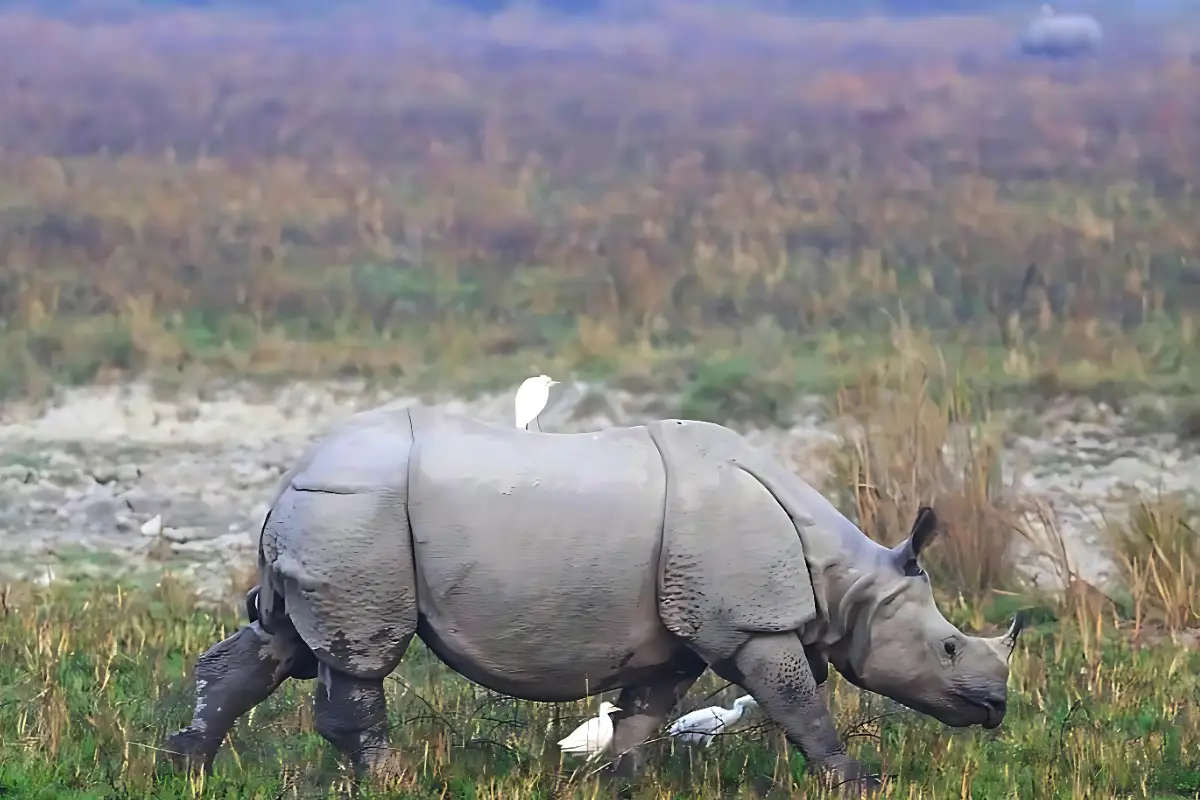
Kaziranga supports a rich variety of flora and fauna. It is covered with sedimentary grasslands, forests, and mixed dry deciduous forests, including tropical semi-evergreen forests. It is a treasure trove of many rare and unique natural resources. Kaziranga is especially known for its “Big Five,” including the one-horned rhinoceros, swamp deer, wild buffalo, royal Bengal tiger, and elephant. Holding the largest population of one-horned rhinoceroses in the world, Kaziranga shelters around 2,401 rhinos today. Additionally, the park supports over 20 mammal species, 27 types of reptiles, and 42 varieties of fish, along with several turtle species.
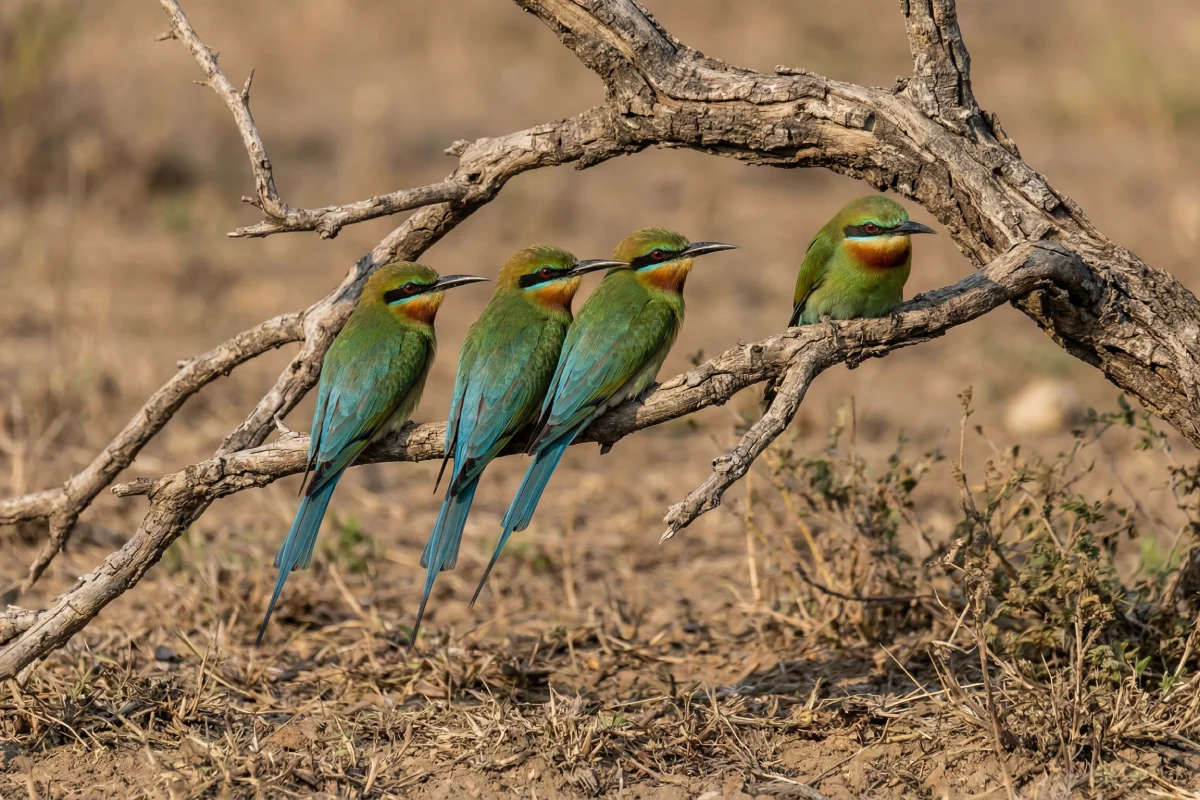
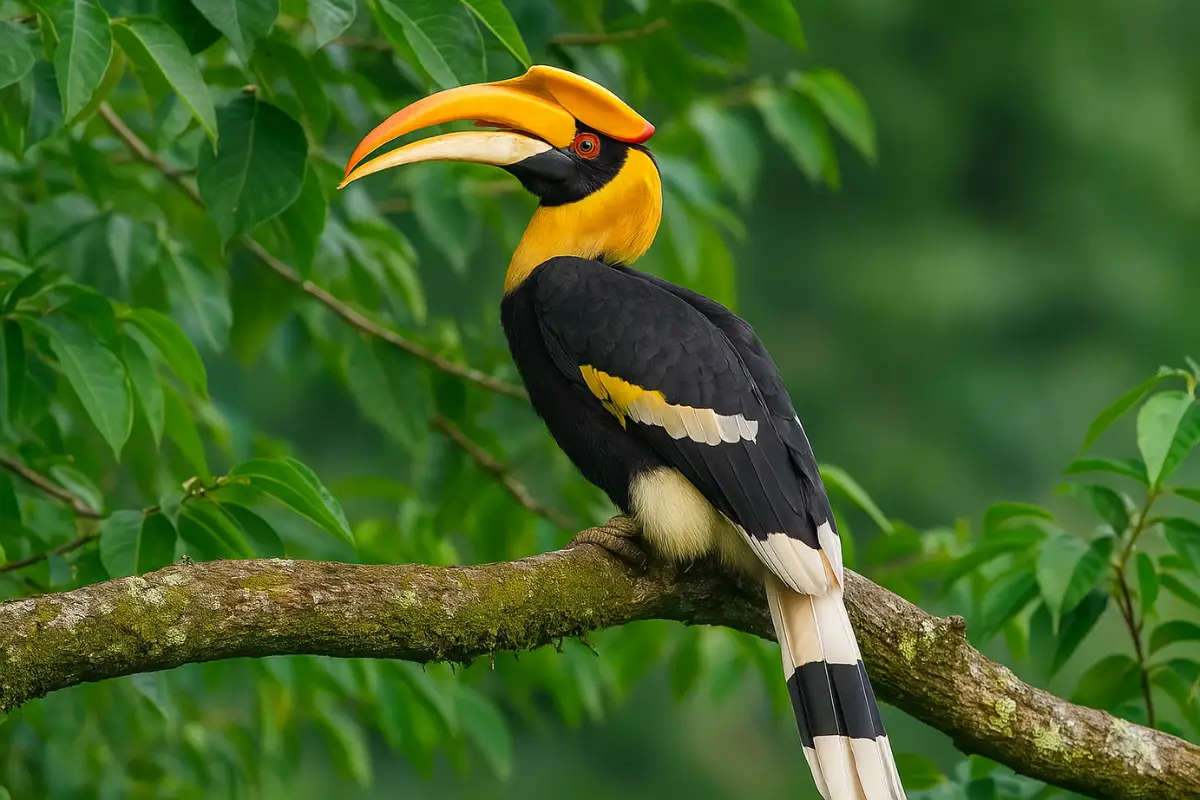
Kaziranga is also a paradise for birdwatchers. Over 480 migratory and resident bird species have been recorded here, which attract bird lovers from around the globe. For this reason, BirdLife International has also declared it an Important Bird Area.
Kaziranga is not just a wildlife destination, but it represents a strong future for Assam’s tourism sector. In Kaziranga, you can experience jeep safaris, elephant rides, bird watching, and nature trail walks, all of which will leave you mesmerized by Assam’s lush wildlife. Nature trails in Kaziranga offer an unforgettable journey through Assam’s pristine natural world.
Kaziranga is the place on Earth where the one-horned rhino isn’t just a “rare animal”—it’s a powerful, real-life presence you can witness roaming free. The moment you see a rhino stepping out of elephant grass like a prehistoric giant, you’ll realize why Kaziranga is not just another wildlife destination—it’s a once-in-a-lifetime wildlife story you get to live.
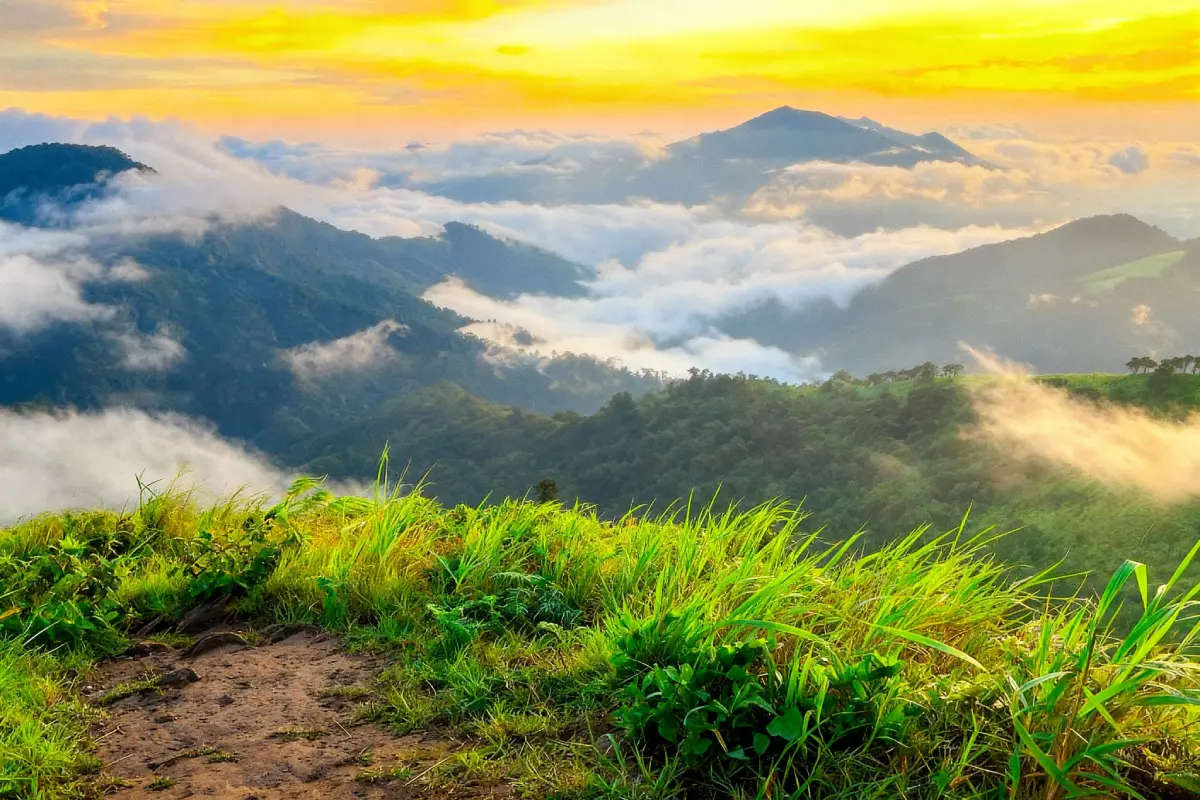
Kaziranga’s terrain is dramatic and cinematic—endless golden grasslands, wetlands, forest edges, misty mornings, and muddy trails that feel untouched. Whether it’s a jeep safari or an elephant safari, every ride feels like stepping into a nature documentary. The best part? You’re not just “looking for animals”—you’re exploring a living wilderness that still feels untamed.
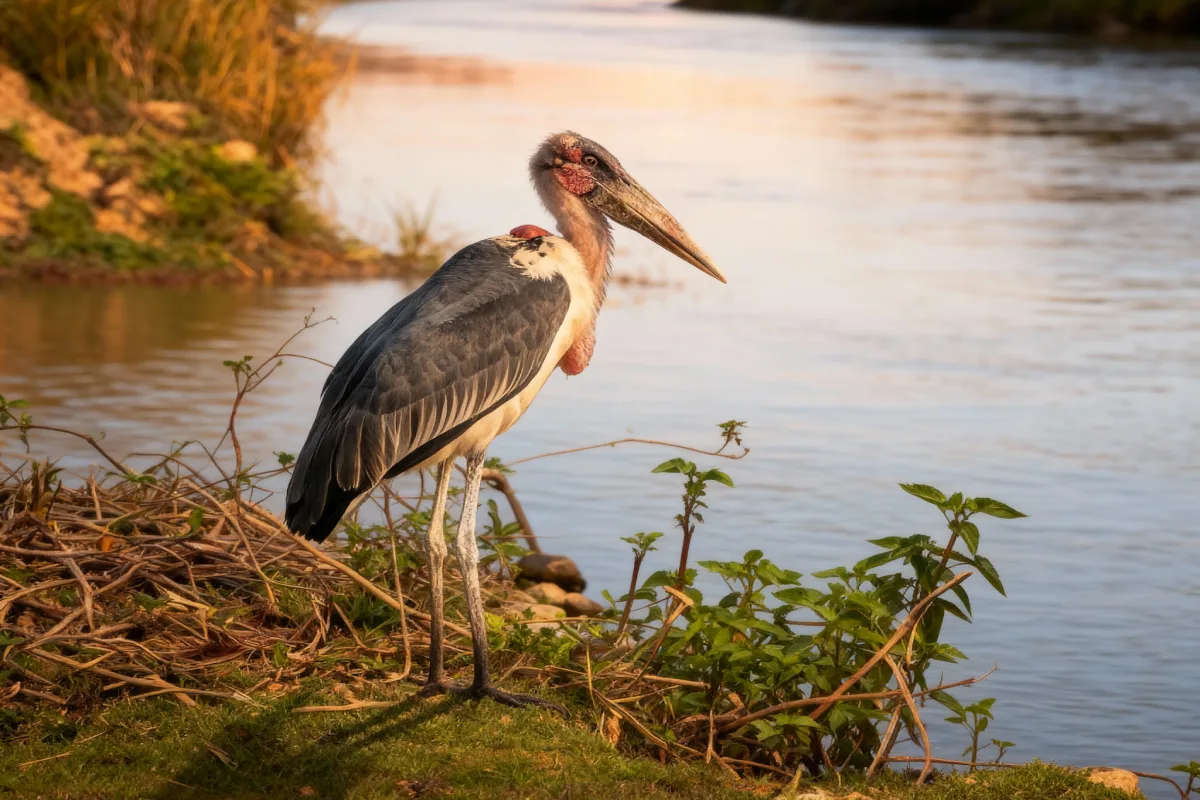
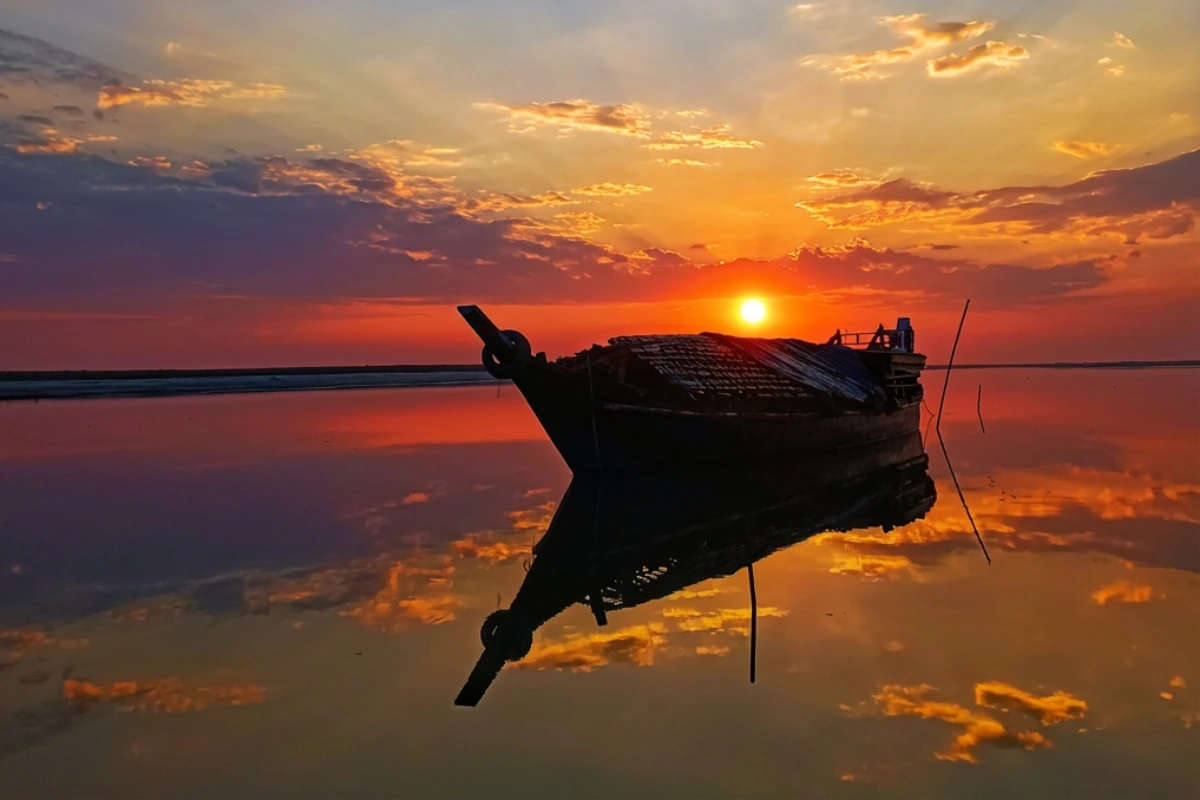
Even if you’re not a hardcore birdwatcher, Kaziranga will surprise you. Its wetlands attract thousands of migratory birds, and you’ll constantly spot eagles, storks, herons, and colorful water birds across the landscape. Add the calm of the riverine ecosystem, wild sunsets, and the peaceful rhythm of nature—and Kaziranga becomes not just a wildlife trip, but a full reset for the mind.
Jeep Safari.
Elephant Safari.
Wildlife Photography.
Eco-camping.

Distance From Guwahati City: 204 Km

Nearest Town / City: Bokhakhat(36 Km)

Nearest Railway Station: Golaghat Railway Station(79 Km)

Nearest Bus Stoppage: Kohora Bus Stop(11 Km)

Nearest Airport: Jorhat Airport(102 Km)
Kaziranga National Park can be reached conveniently by road, train, and air from major cities in Assam. The park is located along NH-37, ensuring smooth road connectivity from Guwahati, Jorhat, Tezpur, and Nagaon, among others. Regular ASTC and private buses run to Kohora, the main entry point to the park from all towns and cities of Assam.
For rail travelers, the nearest stations are Furkating Junction and Golaghat Station. These are connected to other states of India. From there, taxis and buses are available to Kaziranga. For air travel, the nearest airport is Jorhat’s Rowriah Airport. From there, you can either take a direct taxi or use connecting bus services.
Plan your visit to Kaziranga between November and April for the best experience. Winter and early spring offer clear skies, lush landscapes, and a higher chance of spotting rhinoceroses, elephants, and tigers. Please note, the park remains closed to visitors during the monsoon months—typically from May to October—due to frequent rainfall and the risk of flooding.
Kaziranga National Park contains sheer forest, thick elephant grass, rough reeds, marshes, and tiny lakes. The National Park is crossed by the River Diffalu, a tributary of the Brahmaputra, while another, Moradifalu, flows along its southern border. Kaziranga National Park is home to more than forty species of mammals, 15 of which are listed on Schedule I of the Wildlife Protection Act 1972. It is home to two-thirds of the world's Indian one-horned rhinoceros population. According to tiger census numbers from 2014, Kaziranga had an estimated 103 tigers, making it India's third largest population. As a result, it was named a Tiger Reserve in 2006.
Kaziranga is home to the world's largest number of one-horned rhinos. It is the largest rhinoceros species. It is listed in Appendix I of the CITES and in Schedule I of the Wildlife Protection Act. Not only has the nature preserve made a magnificent conservation victory by saving the Great Indian One-Horned Rhinoceros from extinction and reproducing its single greatest population, but it has also reported zero One-Horned Rhinos poached in the previous year
Kaziranga National Park now has the highest tiger population density of any protected region in the world, as well as the third largest tiger population in India. Kaziranga National Park's tiger species are predominantly Royal Bengal Tigers, which are located in the park's Agoratoli Safari Range. A fully grown Indian tiger in Kaziranga National Park can reach 11 feet in length and weigh 700 pounds. The Indian tigers of Kaziranga National Park are superb hunters, with athletic bodies that can cut through wind in a wink.
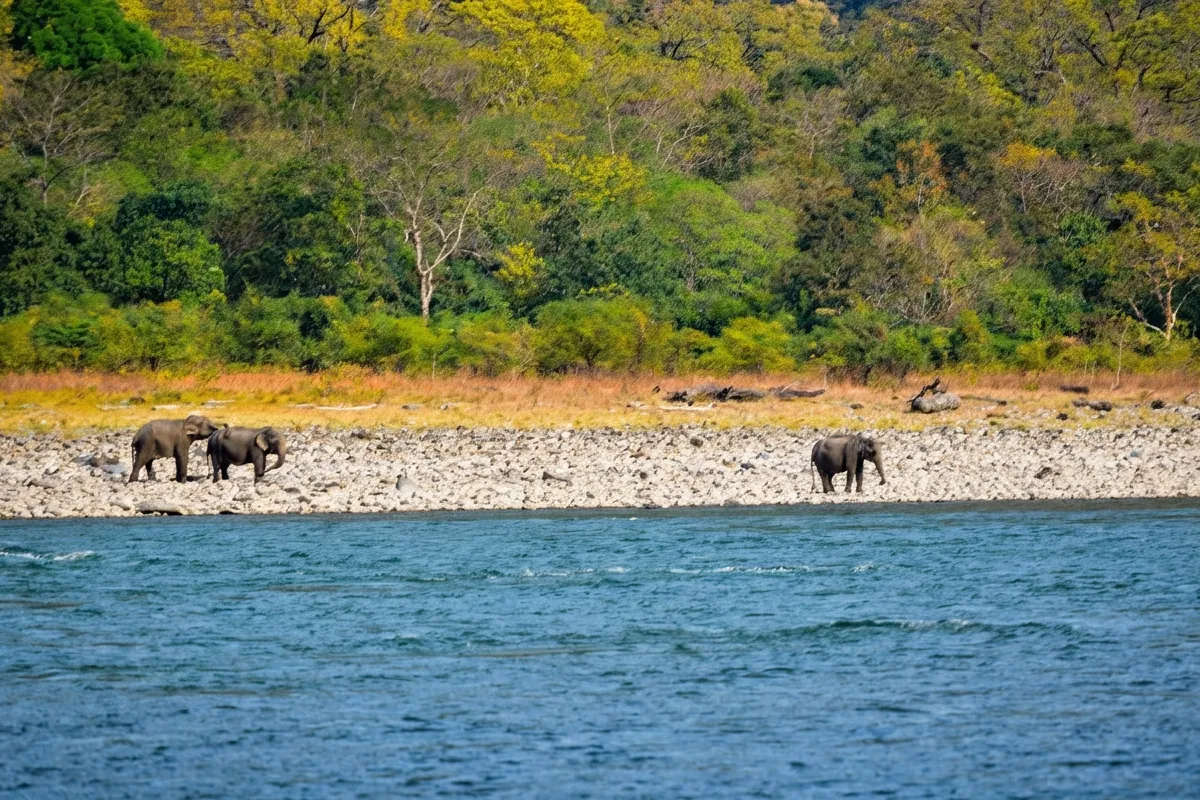
The Indian elephant is India's largest mammal, classified as adult males and herd adults (adult females and sub-adults) depending on social hierarchy. The Asian elephant's trunk contains two finger-like structures at the tip, allowing the animal to move delicately and powerfully. They have long, coarse hair that covers their body sparingly, and their skin ranges from brown to dark gray. They have played a major role in Asian culture for thousands of years.
Water buffalo are an endangered species and tigers' favorite prey. They are also known as Asiatic buffalo and are huge bovines endemic to the Indian subcontinent and Southeast Asia. Kaziranga National Park features the world's largest population of Asiatic water buffaloes. Wild buffaloes are also beneficial to the grassland ecology because they aid in plant renewal.
Another iconic resident of Kaziranga National Park is the swamp deer, locally admired for its graceful presence in the park’s vast floodplain grasslands. Also known as Barasingha (meaning “twelve-horned” because of its many-tined antlers), this deer thrives in marshy wetlands, reed beds, and swampy meadows—exactly the kind of habitat Kaziranga is famous for.
Swamp deer are typically seen moving in herds, feeding on soft aquatic plants, grasses, and shoots, and they play an important role in maintaining the balance of the park’s grassland ecosystem. Their elegant antlers and cautious behavior make them one of the most fascinating wildlife sightings during jeep safaris, especially in the early morning hours when the wetlands come alive with activity.
Kaziranga is home to 9 of the Indian subcontinent's 14 primates, including the endangered and rare Western Hoolock Gibbon, India's only ape species. Other notable mammals include panthers, Sambar deer, swamp deer, hog deer, sloth bears, gaur, and capped langur. Gangetic River Dolphins, India's national aquatic mammal, can be seen in several of the park's confined oxbow lakes.
During the winter, many migratory birds from Central Asia visit this park. Lesser White-Fronted Goose, Ferruginous Duck, Baer's Pochard Duck, Lesser Adjutant, Greater Adjutant, Black-Necked Stork, and Asian Openbill Stork are some of the most common migratory bird species found here. Conservationists identified 43 grassland species in Kaziranga's three wildlife divisions. It is one of the final homes for the severely endangered Bengal florican.
It is most notable for its dense, towering elephant grasses interspersed with little swamplands. Wet alluvial grasslands cover roughly two-thirds of the park's size. The grasslands are mixed with sections of tropical moist deciduous and tropical semi-evergreen forests. It also has a dense cover of water lilies, hyacinths, and lotus. Rattan cane, a climbing palm, is also seen here.
The history of Kaziranga began during British rule in Assam. When Lady Mary Victoria Curzon, wife of British administrator Lord Curzon, visited the region of Kaziranga, she heard about the presence of the rare one-horned rhinoceros. However, she couldn’t spot one during her visit. Moved by this, she urged her husband to take steps to protect the animal. As a result, on 1st June 1905, Kaziranga was declared a proposed reserve forest covering an area of 232 sq. km.
Later in January 1908, the area was expanded by 152 sq. km and officially recognized as a reserved forest. In 1916, it was declared a Gagame sanctuary, and in 1950, Kaziranga was designated as a wildlife sanctuary. To curb poaching, the government passed the Assam Rhinoceros Bill in 1954. Subsequently, under "The Assam National Park Act," 1968, and finally on 11th February 1974, Kaziranga was officially declared a National Park.
In December 1985, UNESCO designated it a World Heritage Site, recognizing its global importance. Later, in 2006, it was also notified as a Tiger Reserve under Project Tiger.
Several fascinating legends surround the origin of the name Kaziranga. According to one popular piece of folklore, a Karbi youth named Kazi fell in love with a girl named Ronga. However, their families did not accept their relationship. As a result, both of them disappeared into the dense forest. The sanctuary was later named Kaziranga, combining their names, as a tribute to their love.
Another legend suggests a linguistic origin. In the Karbi language, "Kazi" means goat, and "Ronga" is similar to the Assamese word “ronga,” meaning red. So, Kaziranga might mean “the land of red goats.”
A different tale tells of an old couple, an elderly woman named Kazi and an old man named Ranga, who once lived in this region. Over time, the place came to be known as Kaziranga, inspired by their names.
*Advertisement