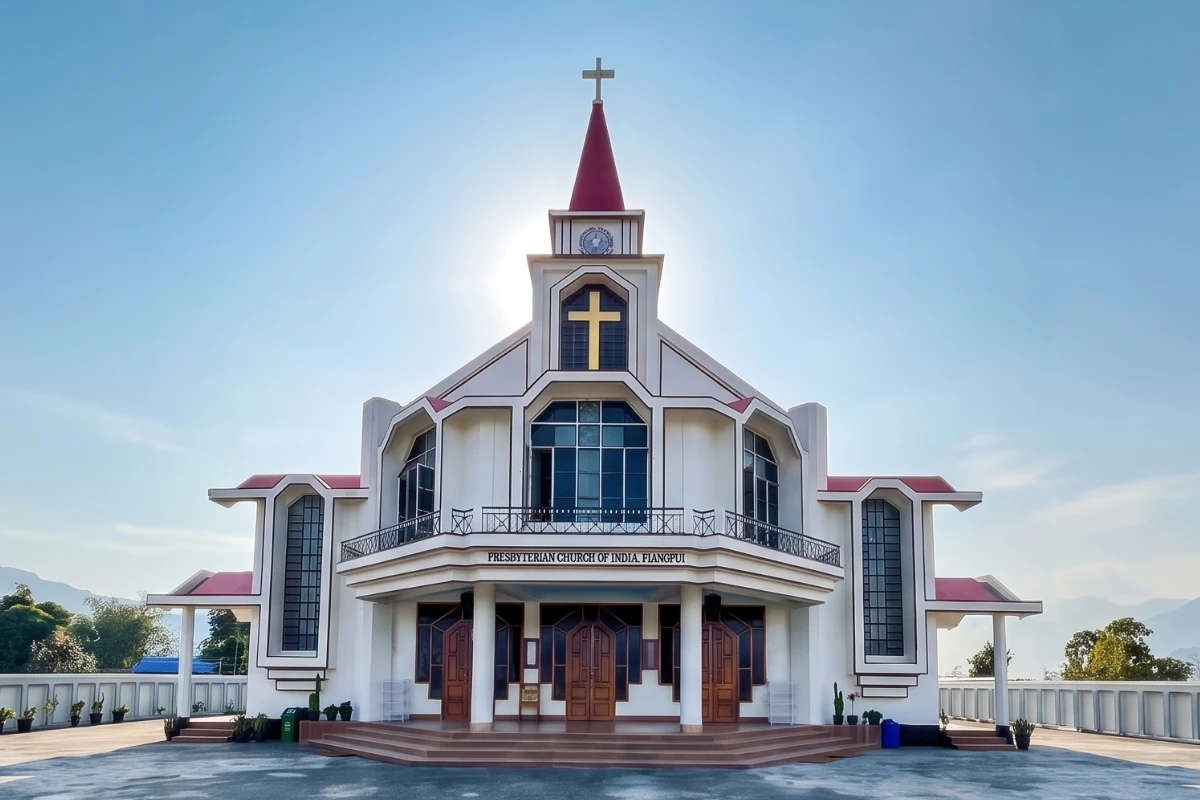
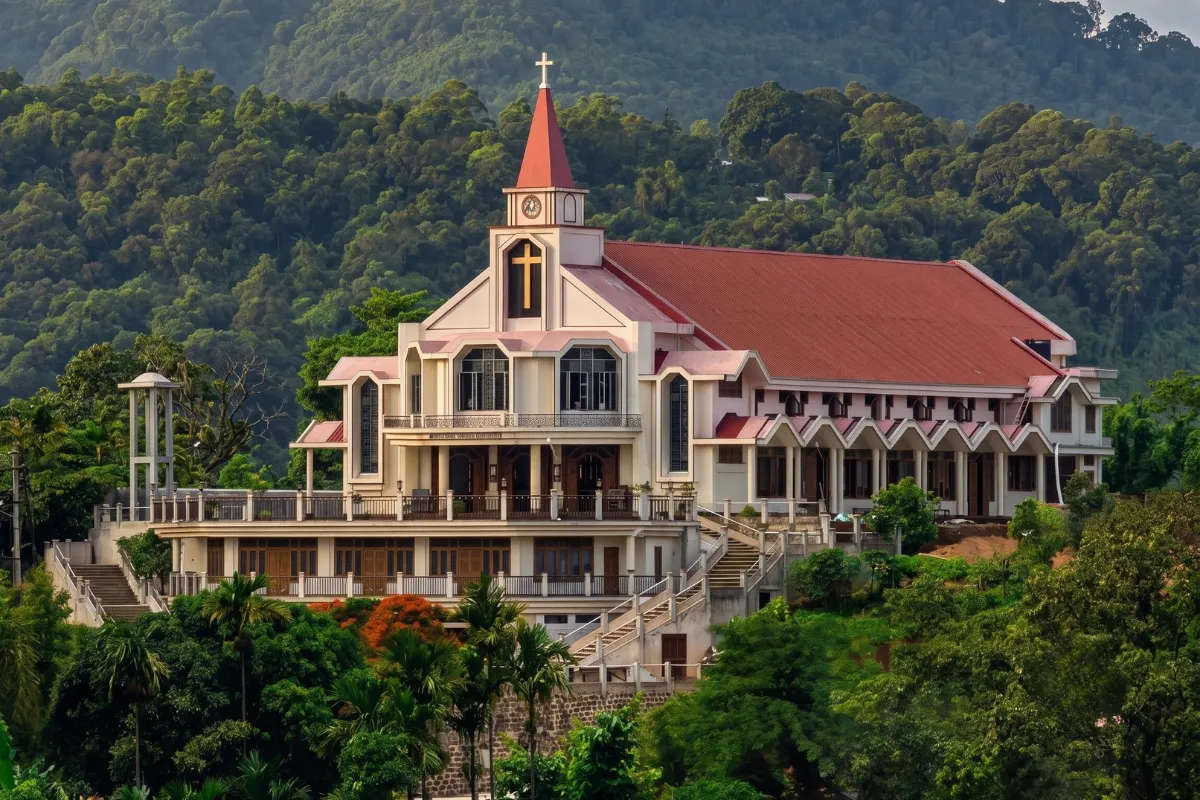
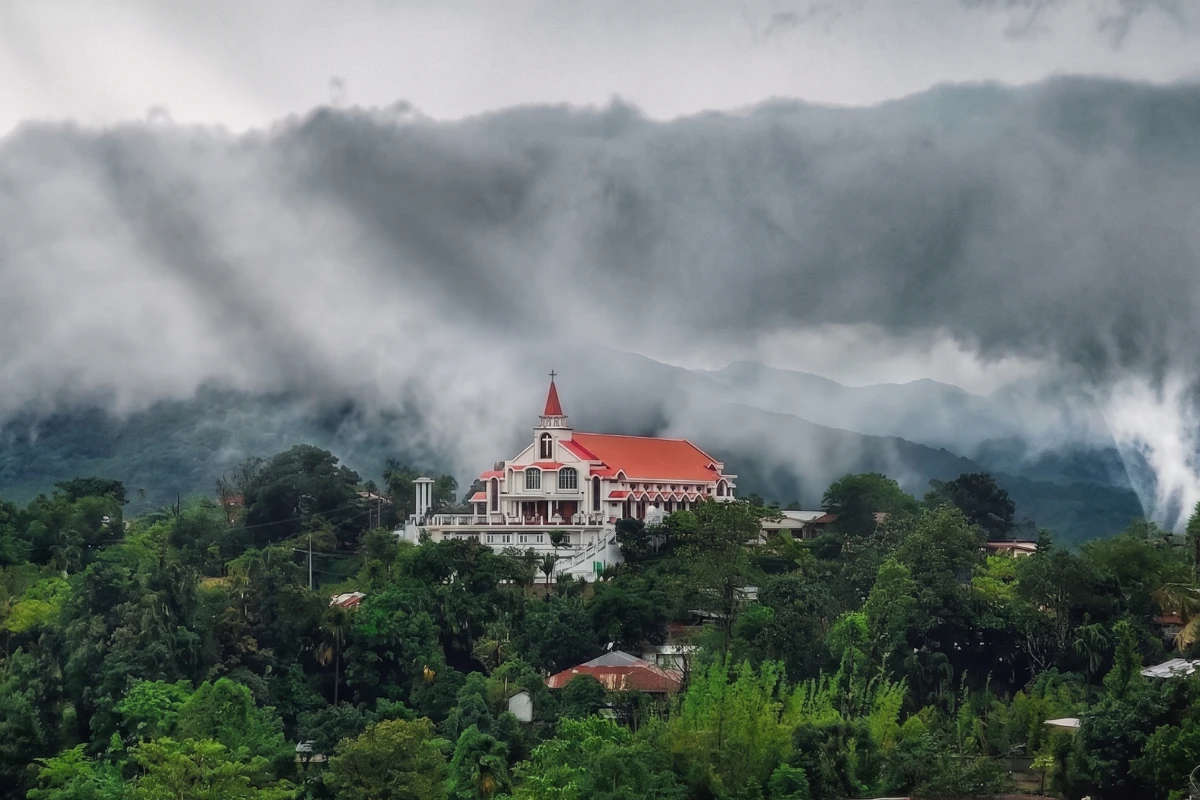

The first time you drive into Haflong, you don't really look for Fiangpui Church—it finds you. Perched right on top of the town's highest ridge, this pale, spire-topped structure catches your eye from almost every corner of Haflong, whether you're standing by the lake, walking through the main bazar, or looking out from a viewpoint on the opposite hill. That's the thing about Fiangpui Church—it doesn't just belong to Haflong; it sits above it, almost like a quiet guardian of the valley.
Fiangpui Church is widely regarded as the largest church in the Dima Hasao district, and honestly, once you're standing at its gate, you understand why it has earned that reputation. The original church building here was inaugurated way back on 27th February 1966, and over the decades it grew into the grand structure you see today, rebuilt and expanded around 2012 to accommodate the growing congregation. It stands in the Fiangpui locality, a settlement about 2 km from Haflong's main town, home mostly to the Biate community—one of the many hill tribes that make Dima Hasao such a culturally rich district.
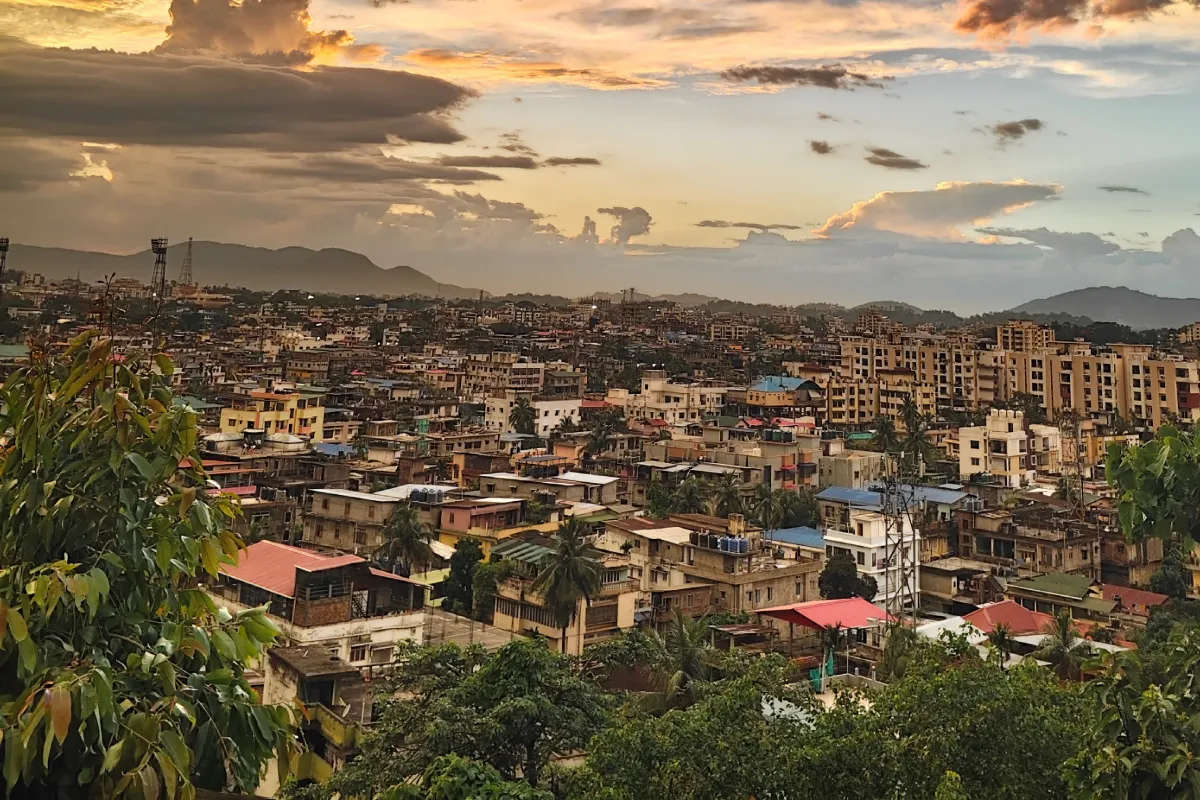
There's a reason locals point to this church when they describe Haflong's skyline. Built right at the highest point of the plateau, Fiangpui Church is visible from multiple corners of the town—from the bazar road, from the lake, and even from some of the surrounding hills. Seeing that white structure rise above the green hills as you approach is genuinely one of those "wow, is that it?" moments that makes the climb up worth it.
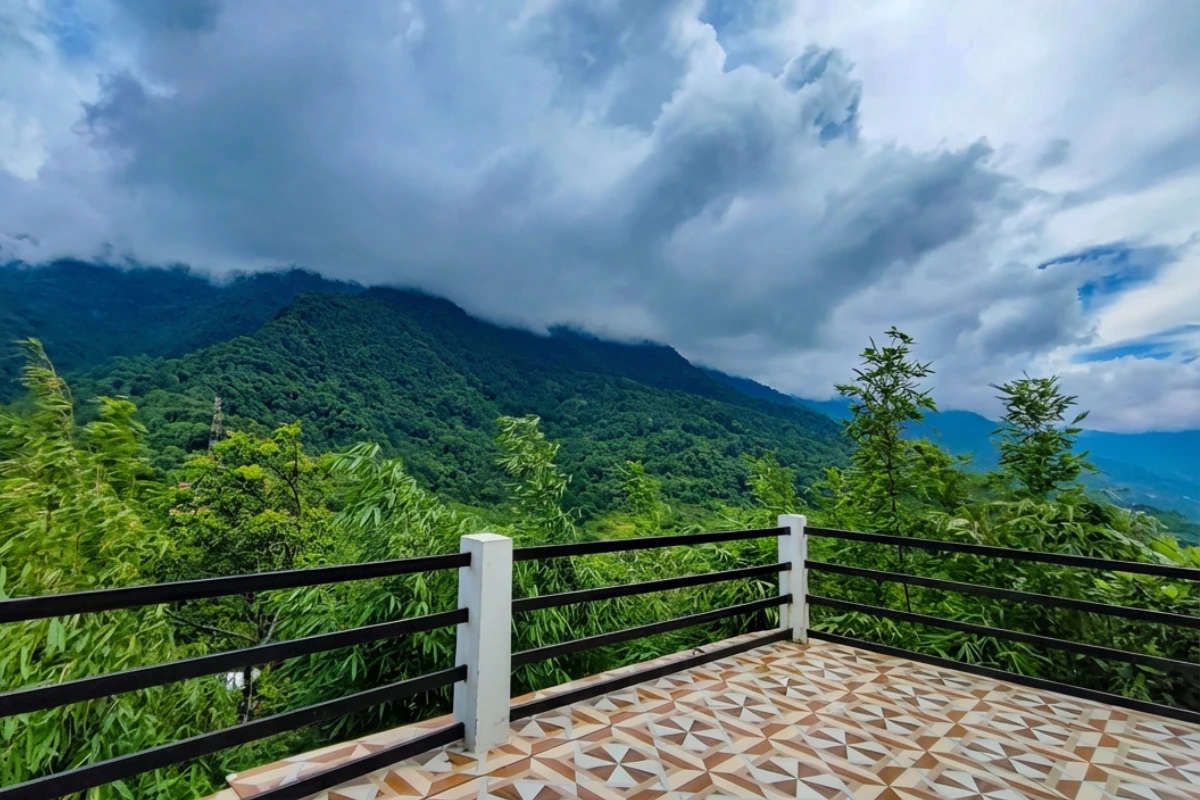
From the top, the church campus offers sweeping views of the Barail hills—the second highest range in Assam. On a clear day, you can see layers of hills fading into the horizon, and if you're lucky enough to catch a misty morning, the valley below looks like it's floating on clouds.
This isn't a newly built showpiece church put up for tourism. It has stood here since 1966, watching Haflong grow from a small hill outpost into the district headquarters it is today. Walking around it, you get a feeling of stepping into a piece of the town's living history rather than just another photo stop.
The church's design is simple but striking—clean white walls, a tall spire, and large arched windows that let in soft light. It's not overly decorated, and that's precisely its charm. It has the kind of quiet elegance that fits perfectly with Haflong's laid-back hill-town character.
On Sundays, you'll see the community dressed in their best, walking up to the church for the service. If your visit lines up with a Sunday, watching this quiet, dignified gathering gives you a real, unscripted glimpse into the everyday life and faith of Haflong's hill communities.
If you happen to be in Haflong around Christmas, make it a point to visit in the evening. The church is beautifully lit up during the season, and it's easily one of the prettiest sights in the whole district at that time of year—locals travel from nearby villages just to see it glow against the night sky.
Walk around the church compound and take in the sweeping view of Haflong town and the Barail range.
If you're visiting on a Sunday, respectfully observe or attend the service to experience the local community's way of worship.
Spend some quiet time here—it's one of the best spots in Haflong to simply sit, breathe, and take in the hills.
Photograph the church against the sky, especially in the golden light of early morning or late afternoon.

Distance From Guwahati: 330 Km

Nearest City: Haflong Main Town(2 Km)

Nearest Railway Station: Haflong Hill Railway Station(2.5 Km)

Nearest Bus Stoppage: Haflong ASTC Bus Stand(2 Km)

Nearest Airport: Silchar Airport, Kumbhirgram(90 Km)
Haflong sits about 330 km from Guwahati, and the drive takes roughly 8–9 hours depending on road conditions, since a good stretch of it winds through hilly terrain. You can travel by private car, shared sumo, or state-run buses that connect Guwahati and Silchar to Haflong. Once you're in Haflong town, the church is just a short 2 km drive uphill—an auto-rickshaw or local taxi from the main bazar will get you there in about ten minutes.
Haflong town has its own railway station on the historic Lumding–Silchar hill section, one of the most scenic train routes in India, cutting through dozens of tunnels and bridges across the Barail hills. If you enjoy train journeys as much as the destination itself, arriving in Haflong by rail is an experience in itself. From the railway station, it's a quick cab or auto ride up to the church.
The nearest airport is Silchar Airport (Kumbhirgram), around 90 km away, roughly a 2.5- to 3-hour drive through the hills. If you're coming from farther away or want more flight options, Guwahati's Lokpriya Gopinath Bordoloi International Airport, about 330–340 km from Haflong, is the better-connected alternative, from where you can continue by road or rail.
The best months to visit Fiangpui Church—and Haflong in general—are between October and March. This is when the hill station shows off its best side: clear skies, crisp air, and unobstructed views of the Barail range from the church compound. Winter mornings here can get genuinely cold, so an early visit rewards you with soft light and often a light mist settled over the valley, which makes for some really lovely photographs.
If you can plan your trip around Christmas, do it—the church lit up at night during the season is a sight you won't easily forget. On the other hand, I'd suggest avoiding the monsoon months of June to August, since the hill roads leading up to Haflong can get slippery and are occasionally prone to landslides, which can make travel here both uncomfortable and unpredictable.
This is an active place of worship, not just a monument—dress modestly and keep your voice down, especially if a service is going on.
The church may be closed to visitors outside of service hours, so it's a good idea to check with your driver or a local before heading up, particularly on weekdays.
If you'd like to attend or photograph a service, it's courteous to ask permission first rather than walking in and clicking away.
Carry a light jacket even in the daytime—Haflong's weather shifts quickly, and it gets noticeably cooler up at the church compound.
Roads in this region can be affected by fog or rain, so it's worth checking local weather conditions a day before your trip, especially between June and September.
Fiangpui Church isn't just an architectural landmark—it's a genuine reflection of Dima Hasao's identity. This district is home to a beautiful mix of hill communities—the Biate, Dimasa, Hmar, Zeme Naga, Kuki, and several others—many of whom follow Christianity, and their churches double up as the heart of community life here, much like temples or mosques do elsewhere. Fiangpui, the locality this church stands in, is itself named after two Biate words meaning "many rivulets" and remains home to a strong Biate population to this day.
Since its inauguration in 1966, this church has been far more than a building for Sunday prayers. It has hosted generations of baptisms, weddings, festivals, and community gatherings, quietly becoming a symbol of continuity for the people of Haflong. Its location—deliberately built at the highest point of the town—is no accident either; in many hill communities across Northeast India, placing the church above the settlement is a way of signifying its central role in guiding community life. Standing there today, overlooking the town it has watched grow for nearly six decades, you get a real sense of how deeply this church is woven into Haflong's story.
*Advertisement