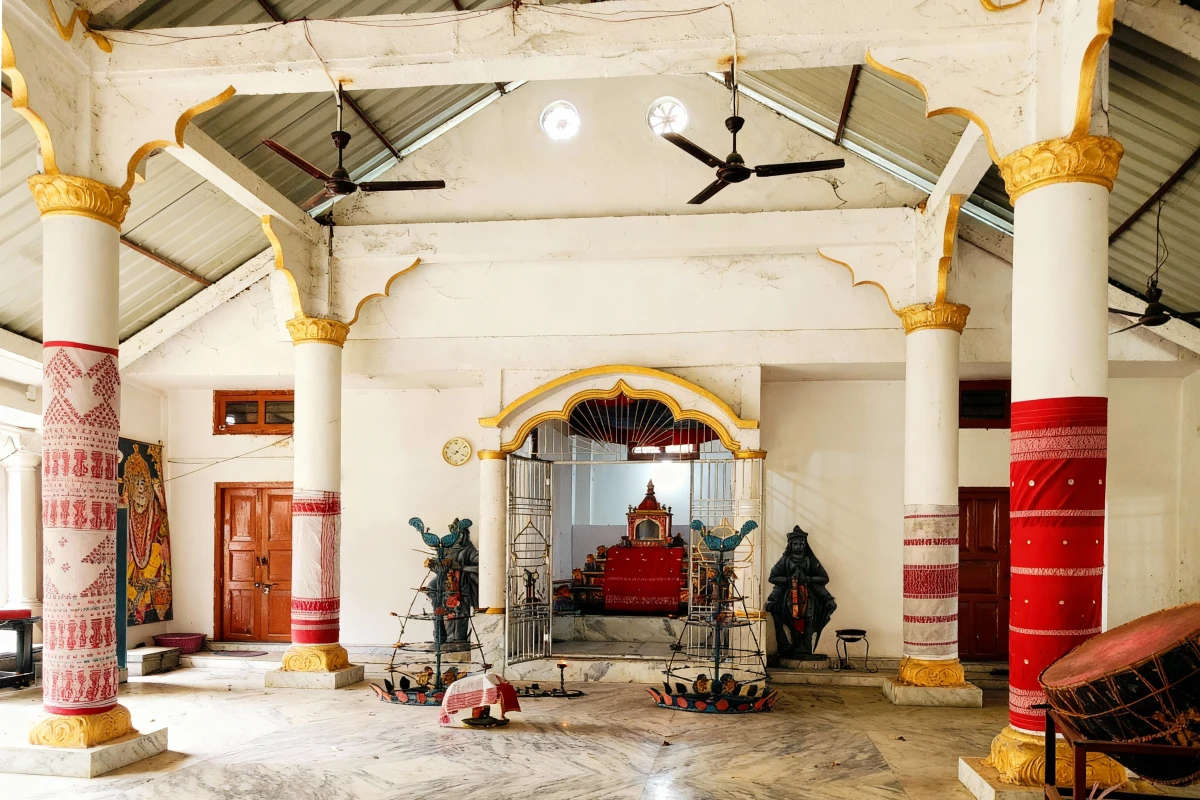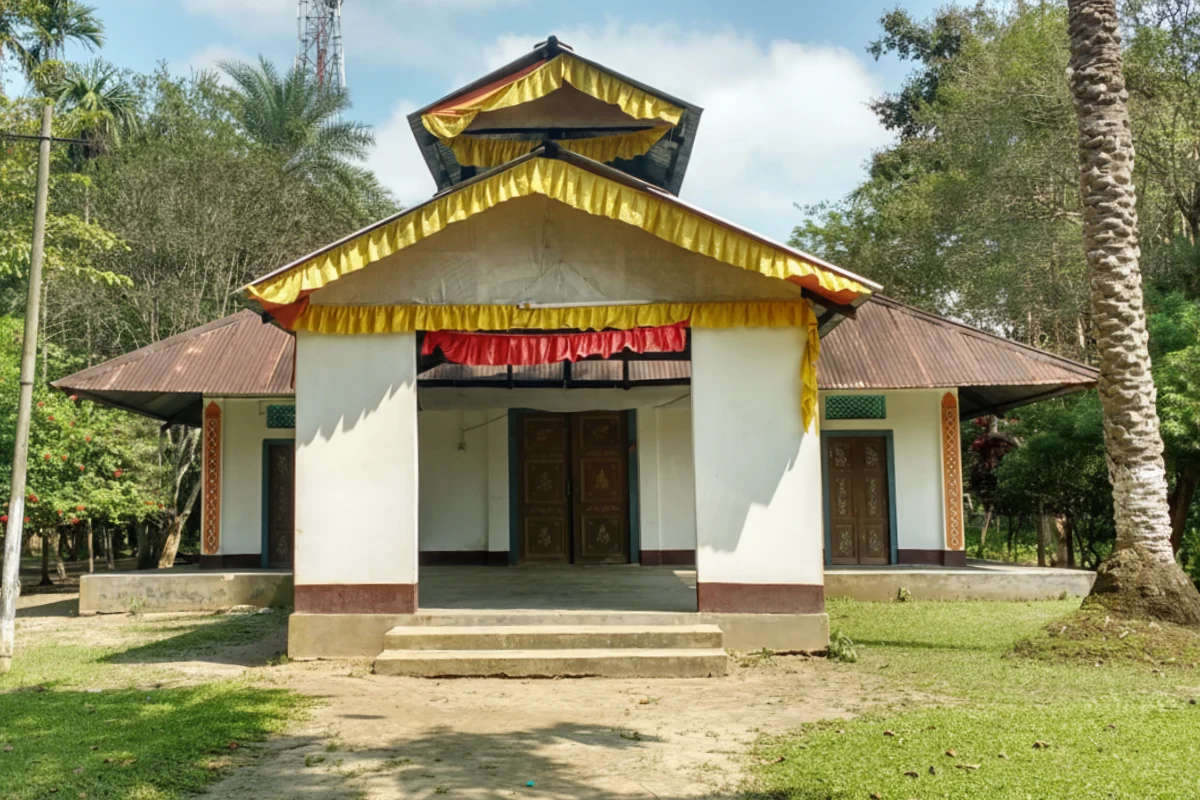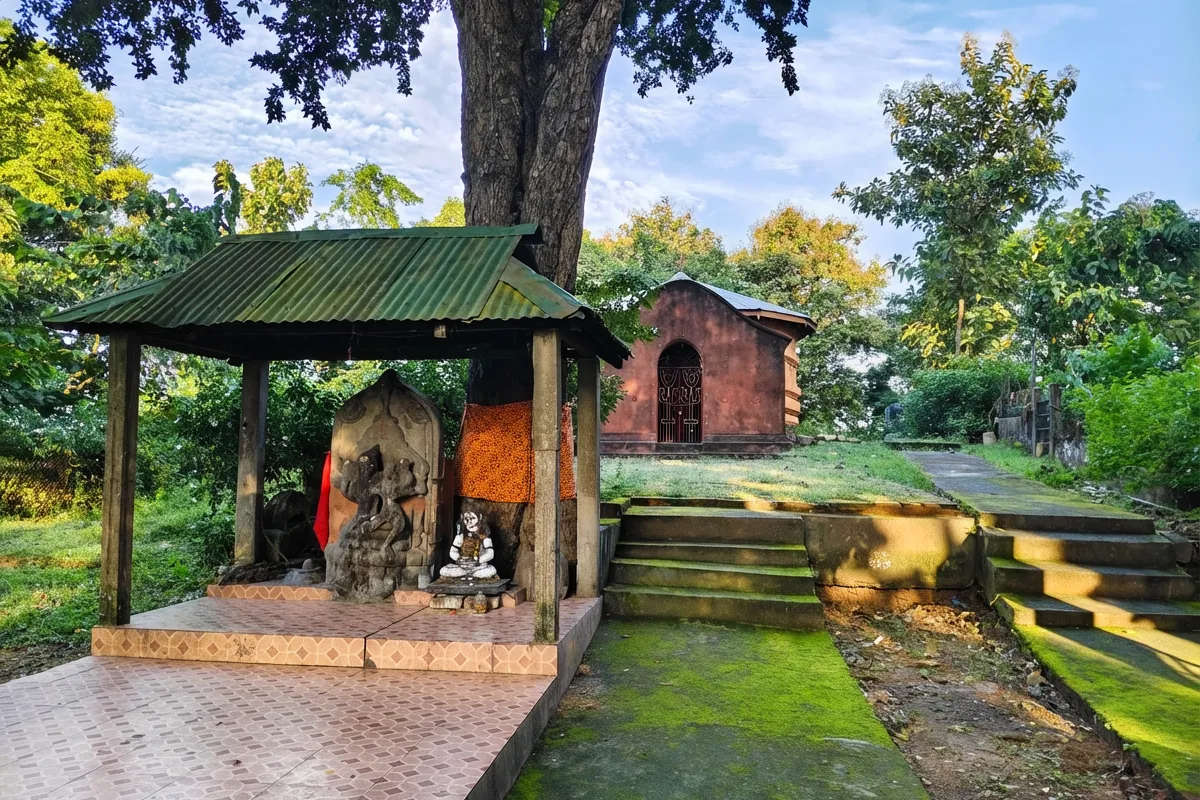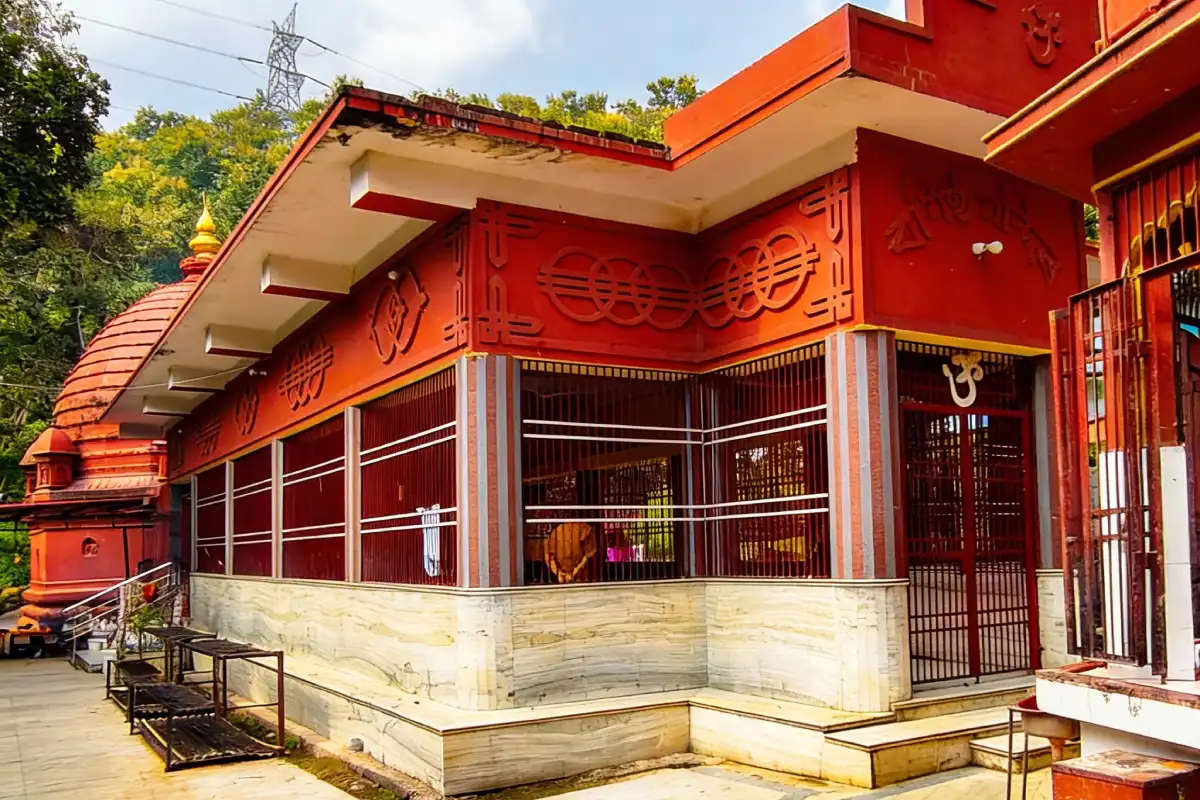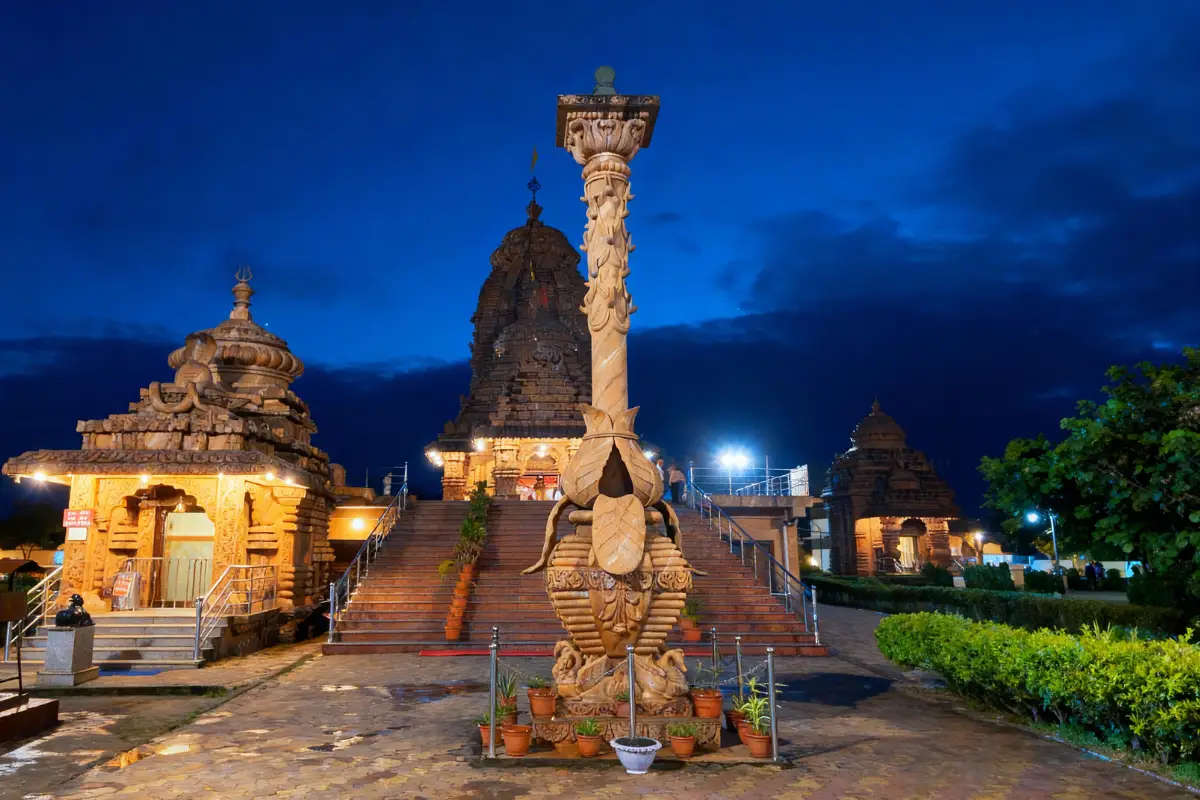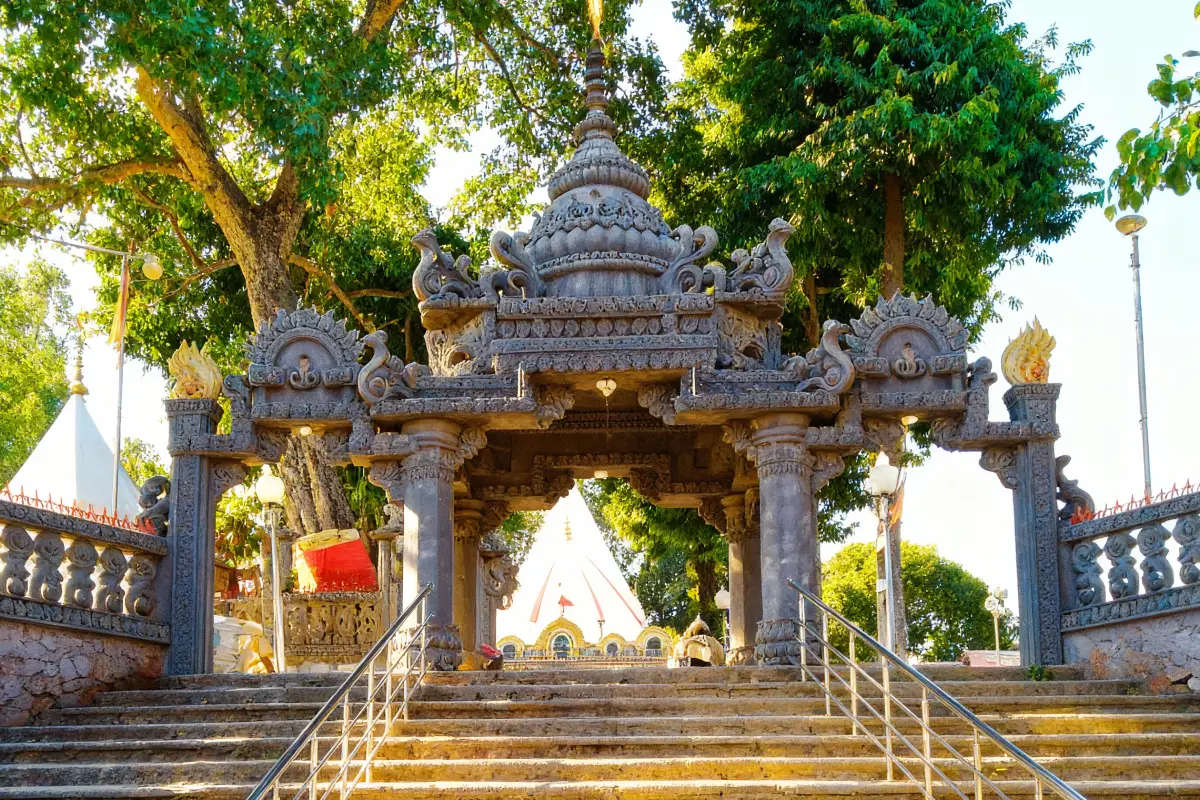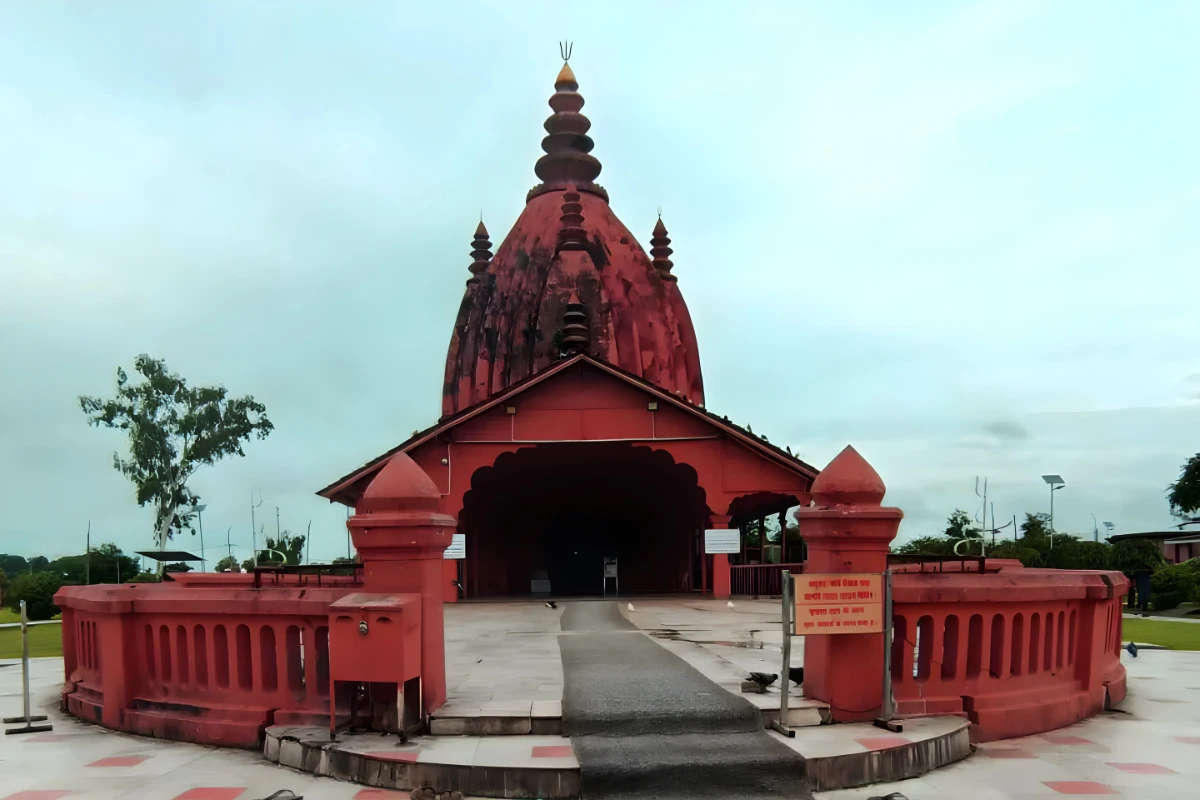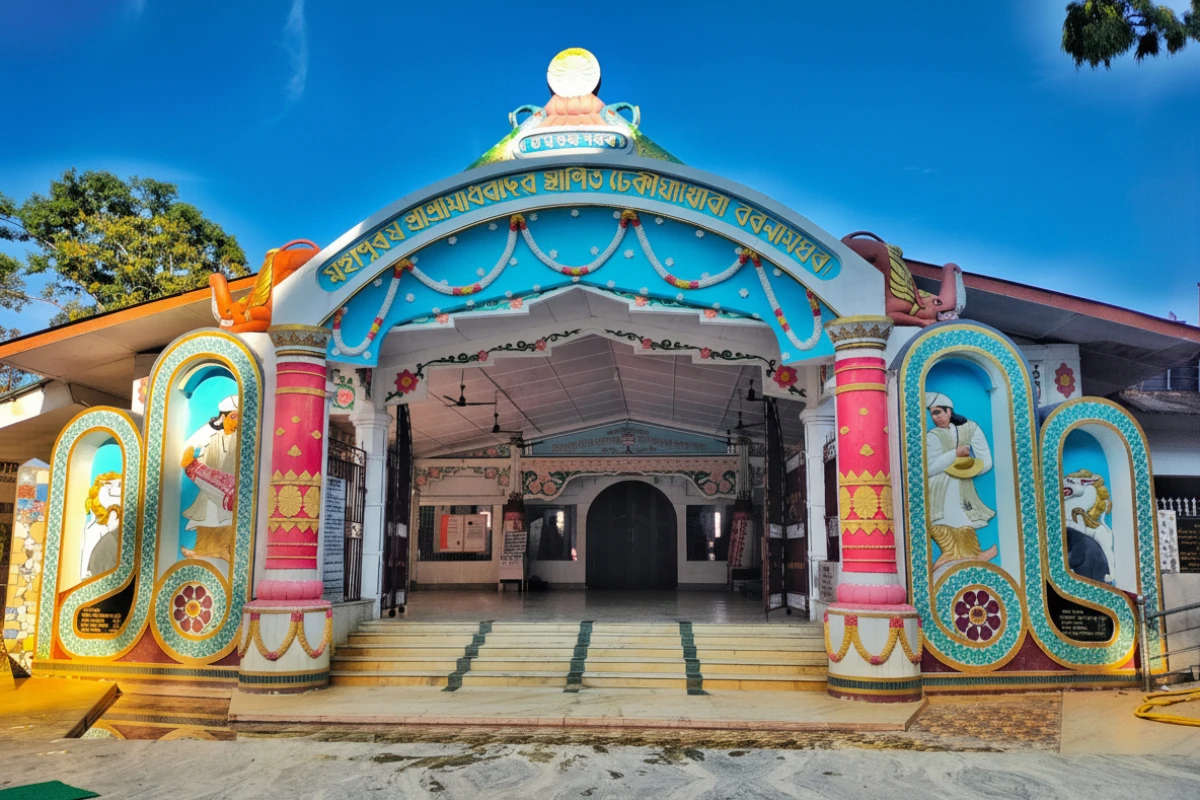
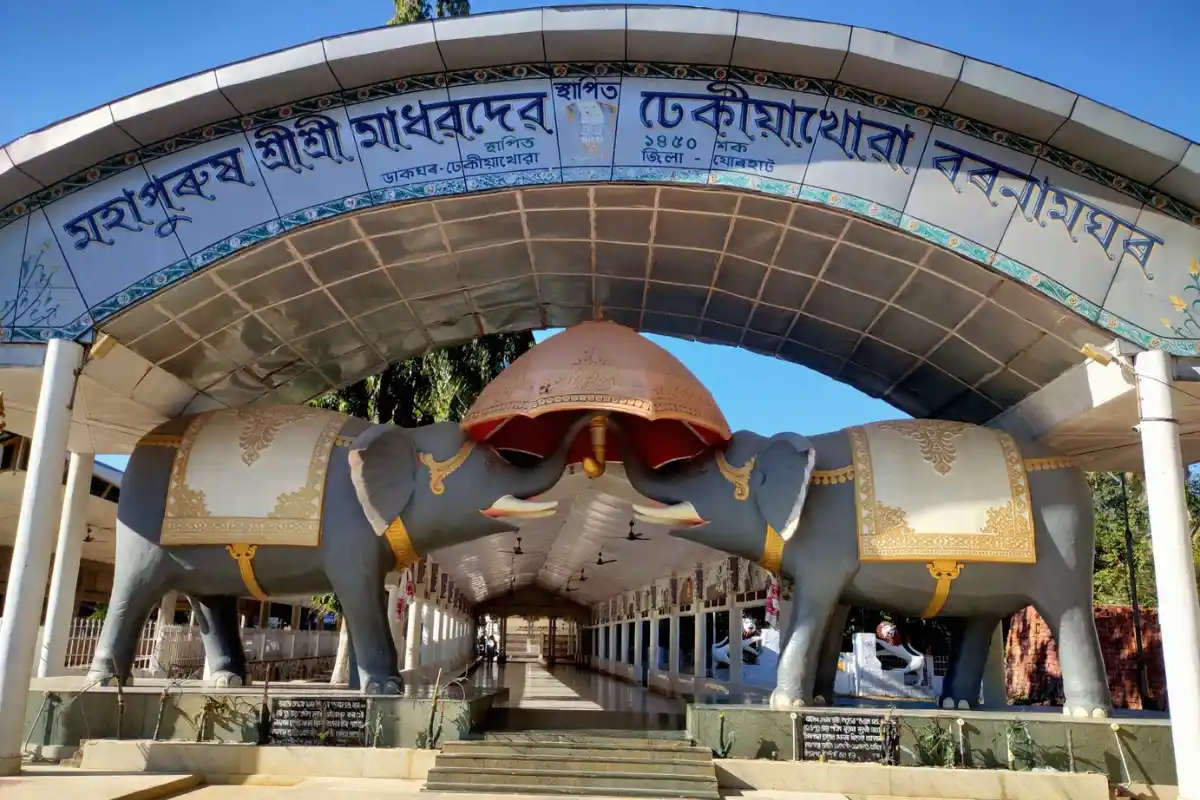


Dhekiakhowa Bornamghar stands as a sacred emblem of Assamese religion and culture. Established in 1528 by Mahapurush Madhavdeva, this revered Namghar continues to uphold his ideals, teachings, and spiritual legacy. It feels like a sanctuary of centuries-old devotion, where faith, culture, and history are closely interwoven. The resonating sound of naam (devotional songs) from this Namghar spiritually unites the Assamese community.
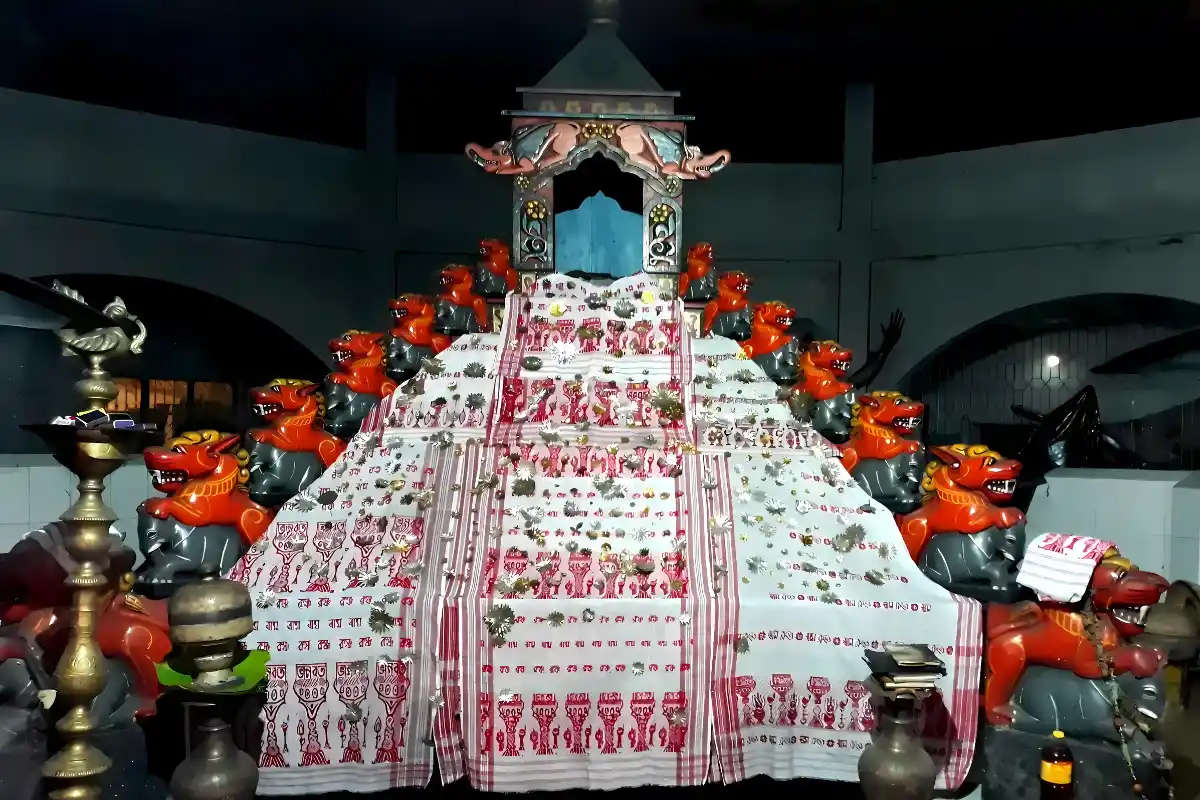
According to legend, Madhavdeva, the beloved disciple of Mahapurush Srimanta Sankardeva, once lit an earthen lamp (bonti) at this very place in Dhekiakhowa. Remarkably, this sacred lamp has been kept burning continuously for the past 494 years by devoted followers. The Dhekiakhowa Bornamghar also preserves rare elements like the dhekia phool (a wild fern flower).
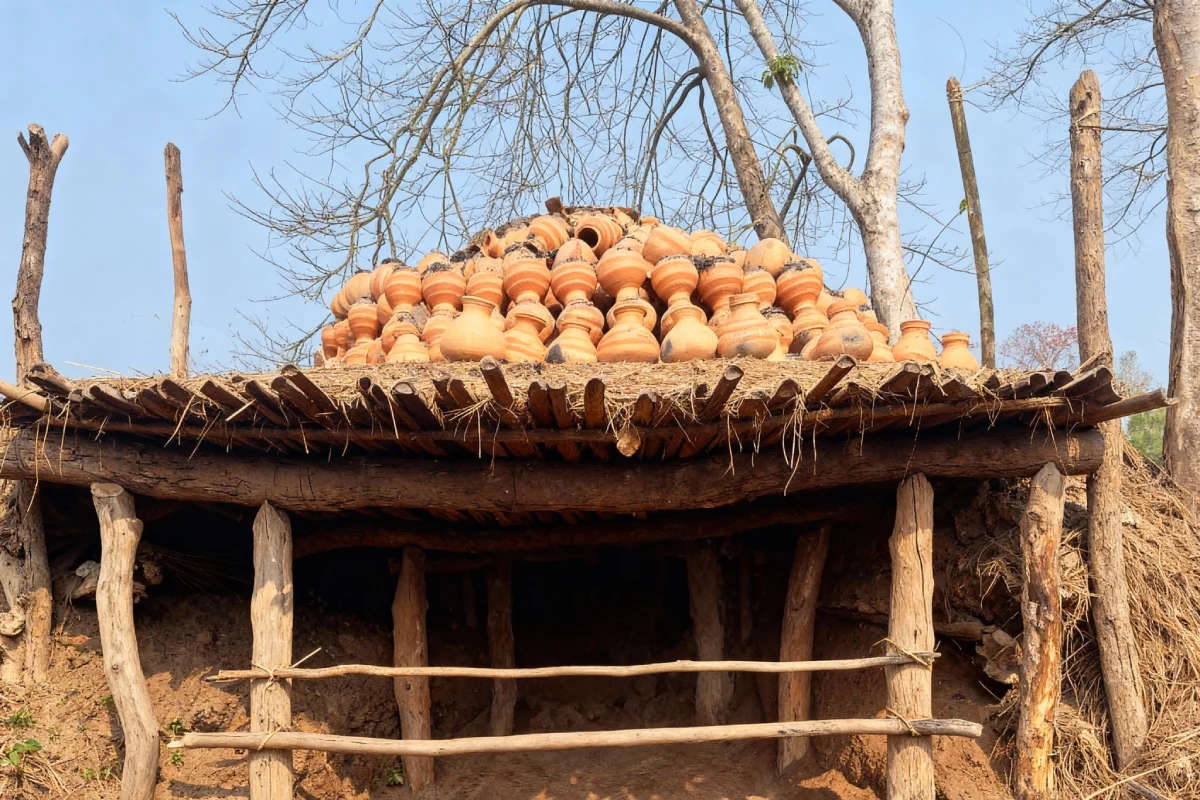
Built using traditional materials like wood, bamboo, and thatch, the structure of the Namghar reflects the simplicity and charm of Assamese architecture. Its calm and meditative ambiance echoes with the sound of devotional singing, collective prayers, and spiritual gatherings.
Throughout the year, Dhekiakhowa Bornamghar hosts various religious events that attract devotees from all across Assam. Especially during the month of Bhado, large festivals are held in honor of Srimanta Sankardeva and Madhavdeva’s anniversaries. During these occasions, the entire area surrounding the Namghar comes alive with the sounds of devotion, turning the place into a sacred center of spiritual unity.
You can experience spiritual peace in a place founded by Mahapurush Madhabdeva himself.
It hosts vibrant religious events, especially during the Bhado month.
It connects visitors to the roots of Assamese Vaishnavite culture.
The serene village setting makes it ideal for quiet reflection and prayer.

Nearest City: ()

Nearest Railway Station: Jorhat Town Railway Station(17.5 Km)

Nearest Bus Stoppage: Teok Bus Stop(3 Km)

Nearest Airport: Jorhat Airport(22 Km)
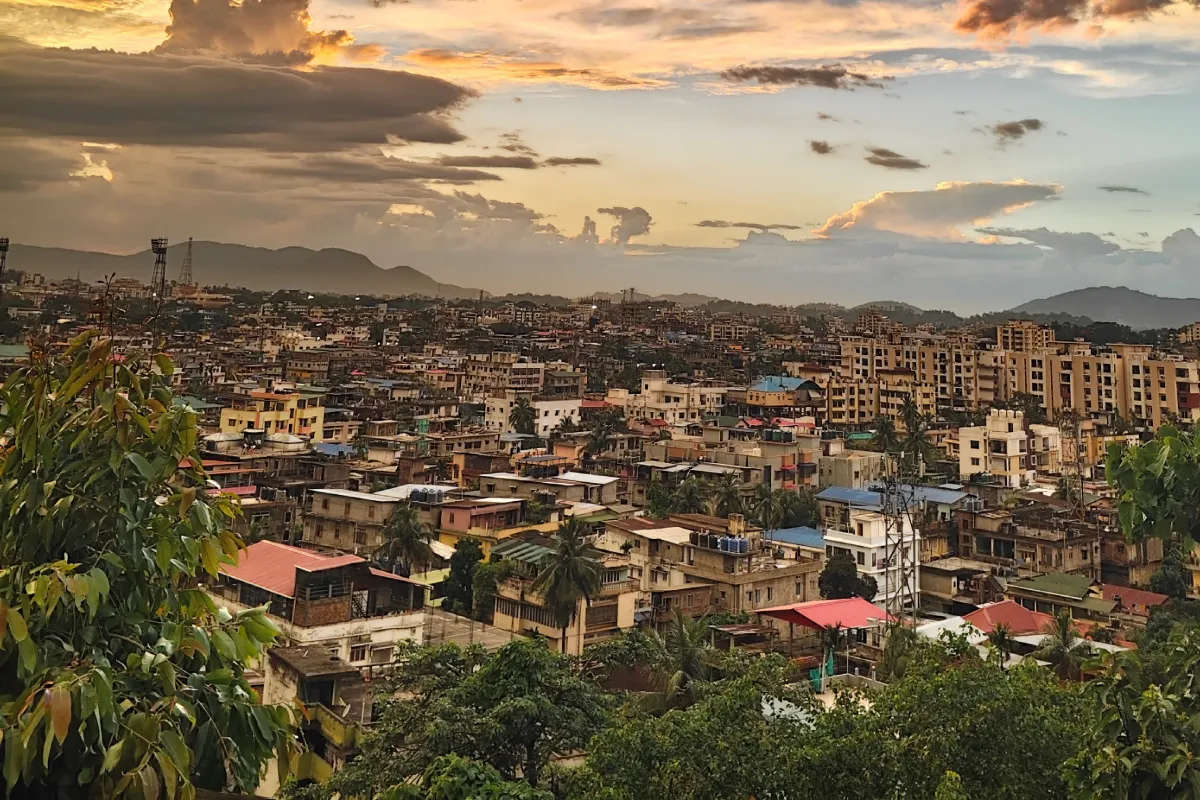
You can easily reach Dhekiakhowa Bornamghar from Jorhat town by taking a local bus, taxi, or auto-rickshaw. The place is well-connected by road, making it convenient for both locals and tourists. If you're arriving by train, the nearest railway station is Jorhat Town or Mariani Junction. From there, you can hire a cab or take public transport to the Namghar.
For air travellers, the closest airport is Jorhat Airport (Rowriah). Cabs are readily available at the airport and will take around 30–35 minutes to reach the destination. If you're coming from nearby towns, shared vehicles and private taxis frequently run along the Jorhat-Dhekiajuli route, making the journey smooth and accessible.
The best time to visit Dhekiakhowa Bornamghar is from October to March. During these cooler months, the weather stays pleasant and ideal for exploring the spiritual and cultural ambiance of the place. If you wish to witness vibrant festivities and naam-prasanga, plan your trip between August and September, when special religious events are held in remembrance of Srimanta Sankardev and Madhabdev.
Popular belief holds that during the spread of the Vaishnavite faith, certain non-Vaishnavites provoked Ahom king Suhungmung to take action against the saints. Then the king attempted to arrest Srimanta Sankardev and Madhavdev. As a result, the disciples hid Sankardev to protect him, while Madhavdev and his brother-in-law were captured. The king later gave a death sentence to the brother-in-law but released Madhavdev after the judgment.
After being freed from royal captivity, Madhavdev grew eager to reunite with his spiritual teacher, the divine personality Srimanta Sankardev. With this intense desire, he set out on foot towards Dhuwah, moving swiftly along the way. Just before nightfall, he reached the heart of present-day Dhekia Khowa village, crossing what is now known as Teok, and sought shelter at the humble home of an elderly couple.
Although the elderly pair lived in poverty, they were devout, pure-hearted, and of great spiritual integrity. It is said that, apart from a small quantity of rice kept for a guest, they had no vegetables to serve. After some discussion, they collected a few cotyledons of dhekia (Diplazium esculentum) and an elephant apple (ou tenga) from their garden and prepared a simple meal. Sensing that the hosts might not have food left for themselves, Madhavdev invited them to share his portion. Initially, they hesitated, fearing there wouldn’t be enough, but eventually joined him due to his insistence.
To their astonishment, the rice meant for one person miraculously sufficed for everyone present, revealing a glimpse of divine grace to the couple.
At the spot where the meal was cooked, Madhavdev lit a sacred lamp as a symbol of divine light. He wished for it to remain eternally burning with oil and wick. The following day, he addressed the assembled villagers, briefly explaining the spiritual significance of maintaining the lamp. Upon recognizing his divine nature, the villagers began offering their respect and devotion.
Honoring Madhavdev’s words, the elderly couple lit the sacred lamp every day throughout their lives. In doing so, they kept alive the spiritual presence and blessings of the saint. After their passing, the local community constructed a namghar (Vaishnavite prayer hall) at that site, ensuring the eternal flame was never extinguished. Over time, this place became a center for regular prayer sessions, readings from the Bhagavat, and religious discussions.
Today, Dhekiakhowa Bornamghar, sanctified by Madhavdev, reflects the spiritual legacy of Srimanta Sankardev. It serves as a sacred center for people of all backgrounds, rising above barriers of caste, creed, and religion.
Several legends are associated with the Dhekiakhowa Bornamghar. One such story recounts that its main pillars were made from sal wood. It is believed that one night, a devotee dreamt of a river, now known as Dhekiakhowa Jan, flowing in the opposite direction, carrying along a large sal tree meant for building the namghar. The next day, villagers witnessed something similar in reality, and taking it as a divine sign, they used sal wood to construct the main pillars of the namghar.
*Advertisement