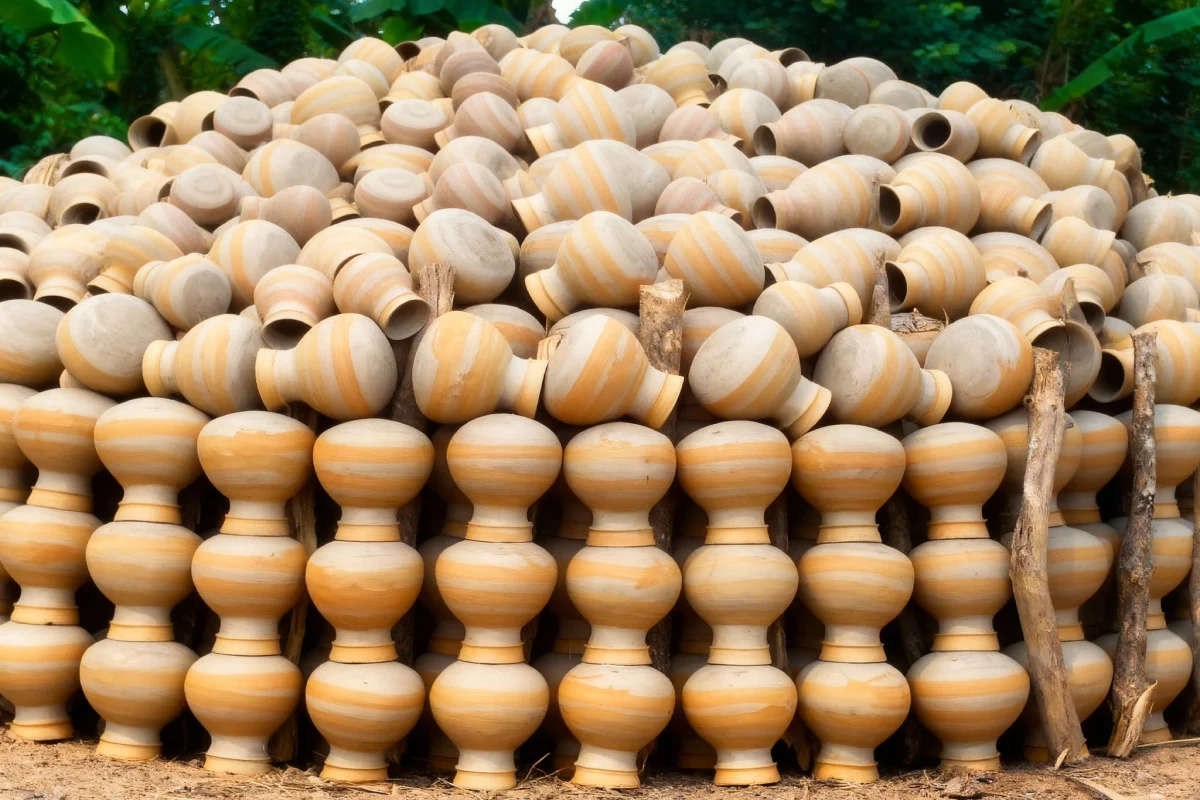
Salmora pottery village is located on the southeast bank of Majuli, approximately 25 km from Garamur, an important town on the island. Since the 16th century, Majuli potters have been the driving force behind Assam's cultural history and tradition. Salmora was a peaceful haven away from the hustle and bustle of everyday life. Covered in lush foliage, this slice of heaven thrived on agriculture, pottery, and boatbuilding.
Pottery is not just a source of income for them, but it is also an important part of their identity, firmly ingrained in their ancestors' rich cultural traditions. This soil was known as 'Kumar Mati,' and Salmora became the 'Kumar village' as a result of the clay, which led to the settlement of potters in this area.
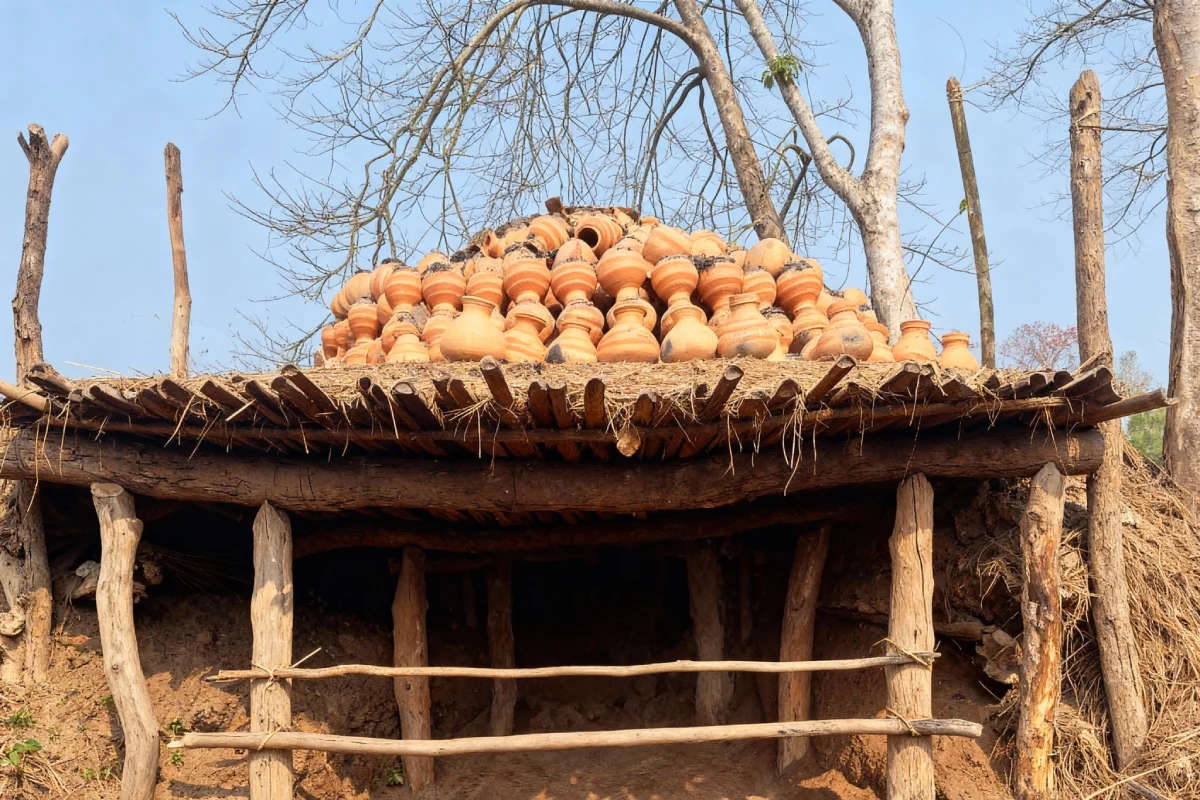
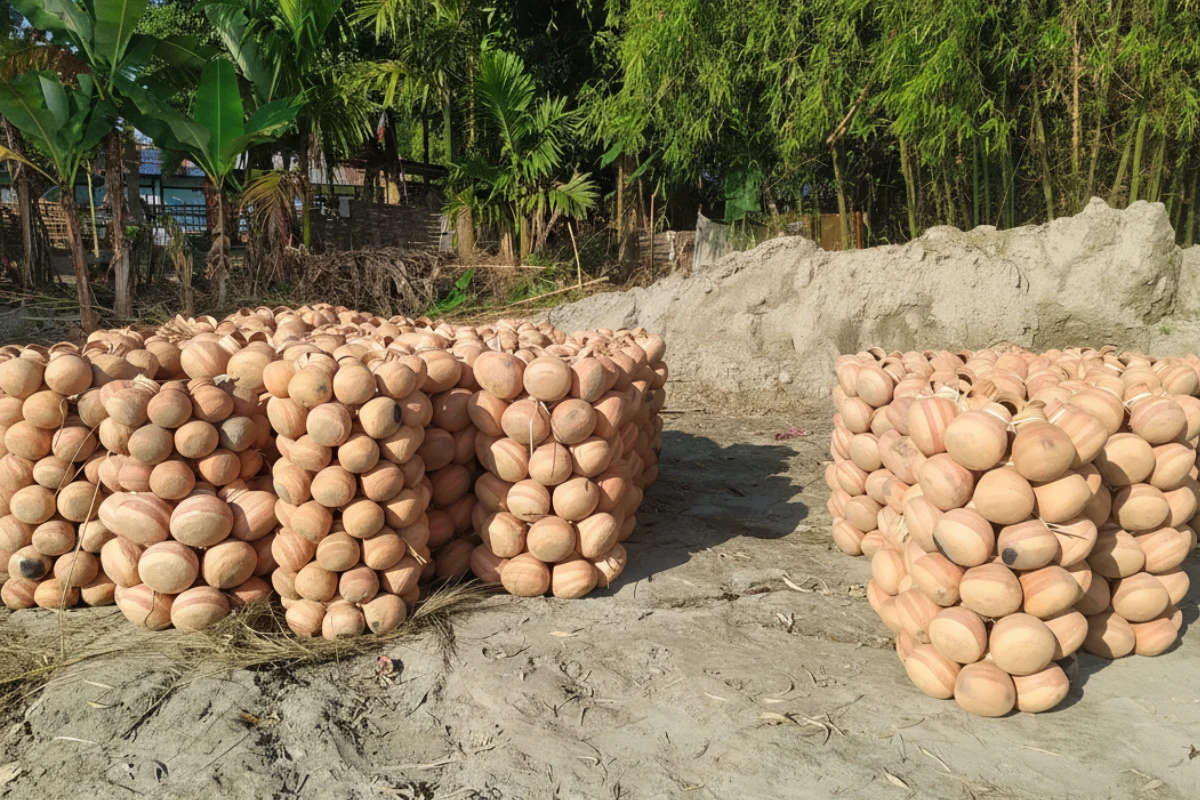
The unusual feature about Salmora pottery is that there is no potter's wheel used; instead, the ladies use a unique technique of rotating the pat with their toes while working on the pot with their hands, giving it symmetry. After achieving the desired shape, the pots are sundried and collectively baked in a driftwood-fired kiln known as 'poghali,' which can bake up to 1500 pots in a single day. In the winter, the neatly packed rows of pots arranged along Salmora's elevated chang ghors (stilt houses) make for a stunning sight. Visit Salmora to see the art of pot-making, and if you're lucky, you could even get to see the firing process.
Pottery is essential to the village's culture. Earthenware is utilized in a wide range of applications, including cooking utensils and religious objects. Interacting with the people reveals their deeply rooted cultural traditions, spiritual connection to the arts, and resilience in the face of floods and change.
While appreciating the serene beauty of Majuli Island, you may buy genuine handcrafted ceramic goods such as diyas, water pots, and ornamental pieces. Salmora is an excellent blend of craft, history, and natural beauty, with local attractions including old Vaishnavite satras, Chamaguri's mask-making hamlet, and stunning riverbanks.
Salmora is well-known for its unique pottery-making technique, which involves artisans, usually women, creating pots entirely by hand, without the aid of a wheel. You may witness the entire process, from collecting clay along the Brahmaputra River to sculpting and finishing each item using traditional methods. Some artists even let visitors try their hand at this unusual method.
Learn traditional pottery making
Explore rural lifestyle

Distance From Guwahati: 343 Km

Nearest Town / City: Garmur Town(25 Km)

Nearest Railway Station: Jorhat Town Railway Station(28 Km)

Nearest Bus Stoppage: ASTC Bus Stand, Majuli(16 Km)

Nearest Airport: Jorhat Airport (33 Km)
Once you are in Jorhat, take a taxi or auto to Nimati Ghat (around 20 km), and then board a government ferry to Majuli Island, which takes about an hour. Once you reach Kamalabari Ghat in Majuli, you can hire a local taxi, shared jeep, or rent a scooty to travel approximately 20–25 km southeast to Salmora village.
The best time to visit Salmora pottery village is from November to April, which is Assam's dry and cold season. During these months, the weather is pleasant, ferry services to Majuli Island are regular, and the country roads leading to Salmora are simpler to follow.
Take care not to disrespect village customs
If you want to learn pottery, plan a trip for few days
*Advertisement