31 Local Assamese Dishes: Your Culinary Guide for Assam
Let's dive into the flavors of Assam. Explore this guide to 31 authentic Assamese dishes shaped by local spices, traditional cooking methods, and the state's many tribes and communities. Pick your favorite one and don't forgot to try.

Updated on : August 13, 2026
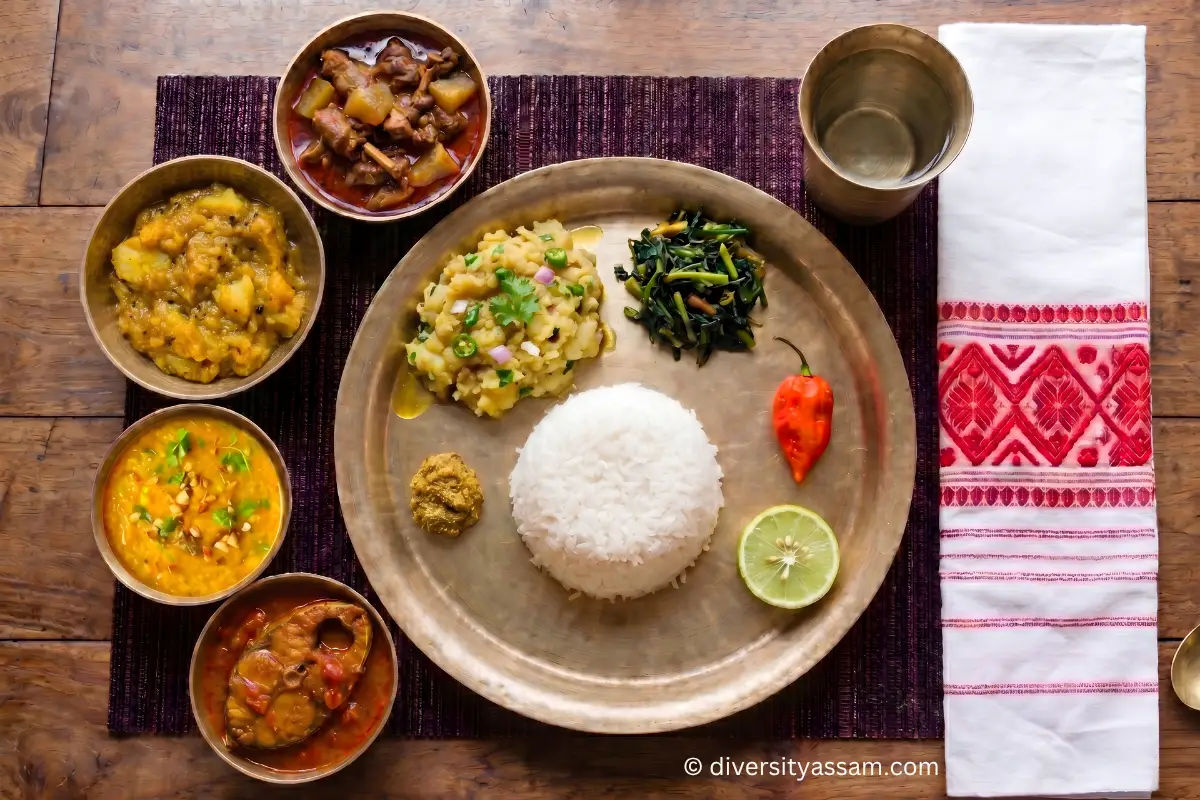
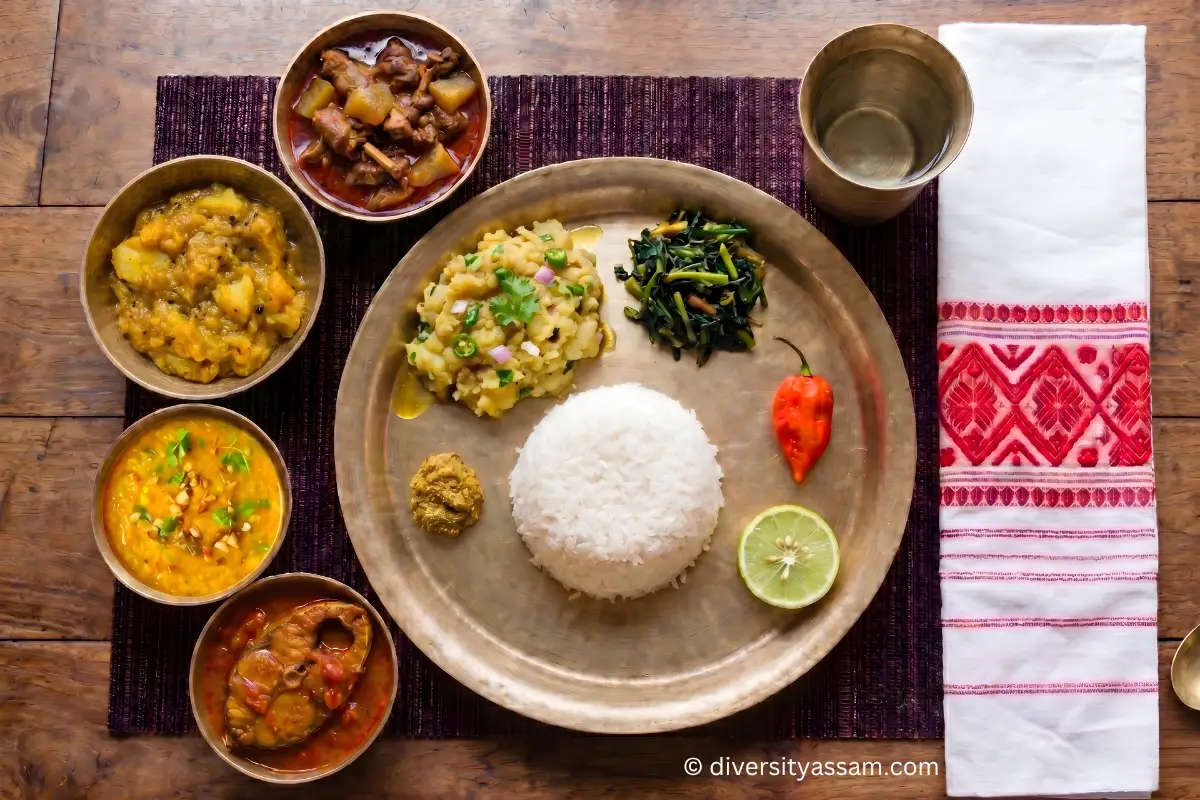
Assam, just as famous for its culture and beauty, is also home to the raw and authentic flavors of the Northeast. Be it the varieties of meat or fresh leafy vegetables, sweet delicacies, or exotic blends of native spices, the place has been well known for its unique food items and savory dishes.
Assamese dishes are a delight for every season. The strong flavors of the region bring the true delight of a meal to every platter.
People of Assam still prefer traditional food items and cooking habits, and even the crockery plays a significant role on different occasions. They firmly believe in preserving the integrity of the customs and traditions they hold dear to their hearts. Different regions of Assam offer varied indigenous flavors, and choosing the best among these Assamese dishes is quite a mouthwatering task.
Whether you're currently in Assam or planning a trip to Assam, you shouldn't miss tasting authentic Assamese dishes made with local spices and traditional cooking methods. To make your culinary experience even richer, we've handpicked 31 local Assamese dishes from across Assam's many tribes and communities. Explore these Assamese dishes, taste a few, and let them add real flavor to your culinary experience.
9 Assamese Vegetarian Dishes
Assamese vegetarian dishes show simplicity, seasonal variety, and a strong respect for natural flavors. It uses fresh local vegetables, leafy greens, lentils, and native ingredients. Spices are added sparingly, aiming to improve the dish without overwhelming it. The food is nutritious and balanced, made in traditional ways, highlighting freshness and a connection with nature.
1. Aloo Pitika (Smashed Potato)
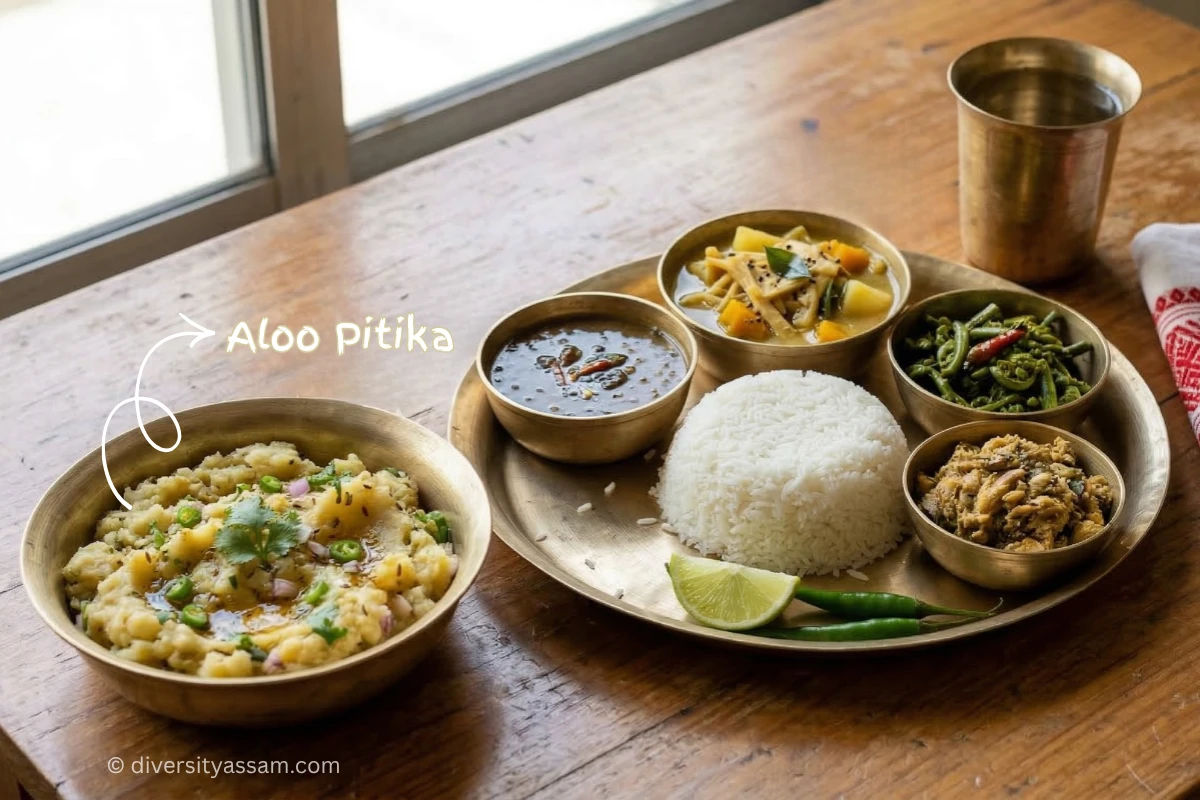
Starting with the comfort food of Assam, Aloo Pitika is famous not only in Assam but all over India. Basically, it is the classic mashed potatoes but with a punch of mustard oil. This staple dish of Assam is easy to prepare and serves as one of the common Assamese vegetarian dishes in every Assamese thali. Aloo Pitika can be easily called the most famous food of Assam. And not to forget, it’s healthy and appetizing as well.
If the cravings are too high, you can prepare this vegetarian delight even in your home kitchen. Boil some potatoes and mash them. Then add chopped onions and green chilies to it, along with some salt and mustard oil. Pickled chilies and, sometimes, king chilies are added to enhance its taste.
Be it a typical non-vegetarian thali or just plain rice and dal, Aloo Pitika blends in just perfectly with everything.
If you are looking for a nutritional breakfast or just a side dish for lunch or dinner, team up this Assamese dish with some rice or roti, and you are good to go—simple yet delicious. Aloo pitika is always served in an Assamese thali, which you can order from any local restaurant across Assam.
2. Poita Bhat (Farmented Rice)
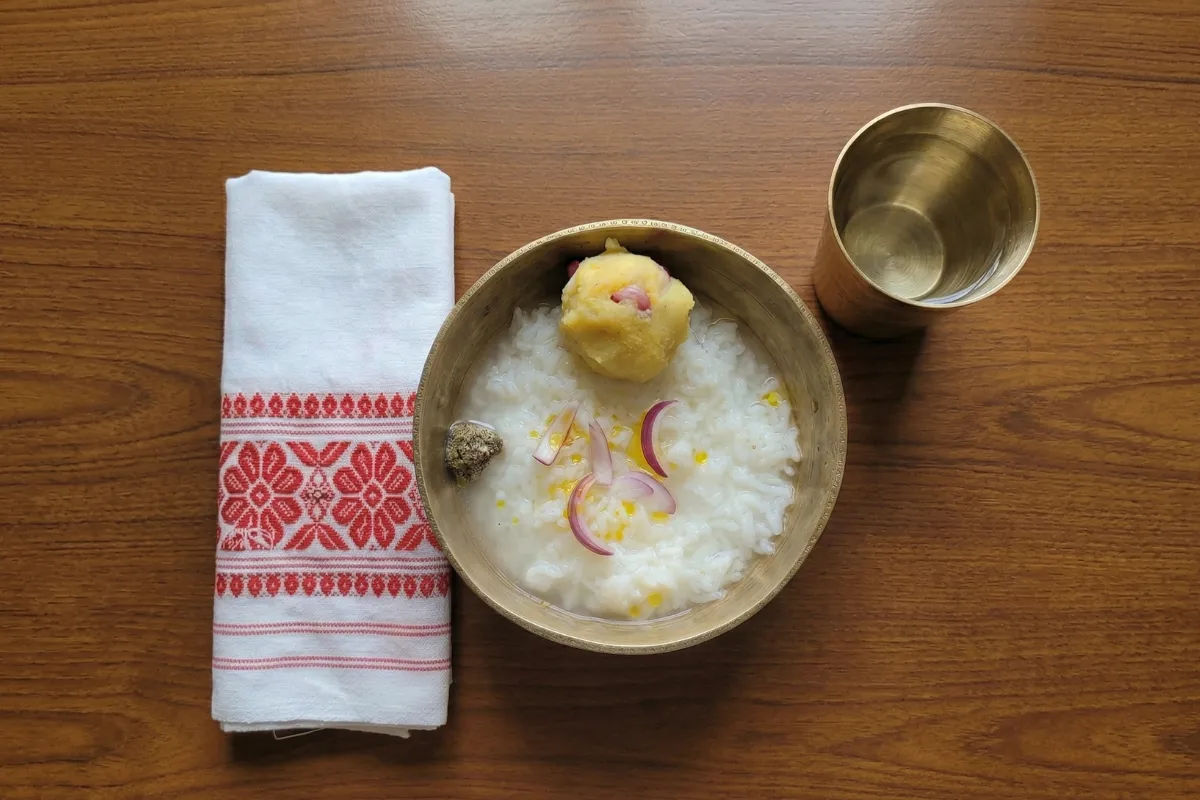
Take that extra minute of sleep and worry less about breakfast because here’s a healthy and tasty meal that will be ready within a couple of minutes. Poita Bhat is cooked rice soaked and fermented in water. Sounds different, right!
This Assamese dish is inclusive to the natives and is loved by everyone in Assam. The leftover cooked rice is used for fermenting overnight, which gives it a sour and different taste. Served with mustard oil, salt, onion, and chillies; it is a traditional take on simple rice. Our favorite Aloo Pitika (mashed potatoes) is also served along with poita bhat.
Poita Bhat is a favorite dish in summer, as the fermented water called Torani has beneficial effects. It prevents dehydration and is rich in vitamins. A nutritious diet with comforting flavors and easy to prepare with simple ingredients. There is nothing to doubt about Poita Bhat when it comes to choosing a healthy, tasty meal.
Poita Bhat rarely finds its way onto restaurant menus—it lives, instead, in the quiet mornings of Assamese homes. To truly taste it, you'd need an invitation into an Assamese household, where grandmothers and mothers make it without ever measuring anything.
3. Dhekia Xaak (Fiddlehead Fern)
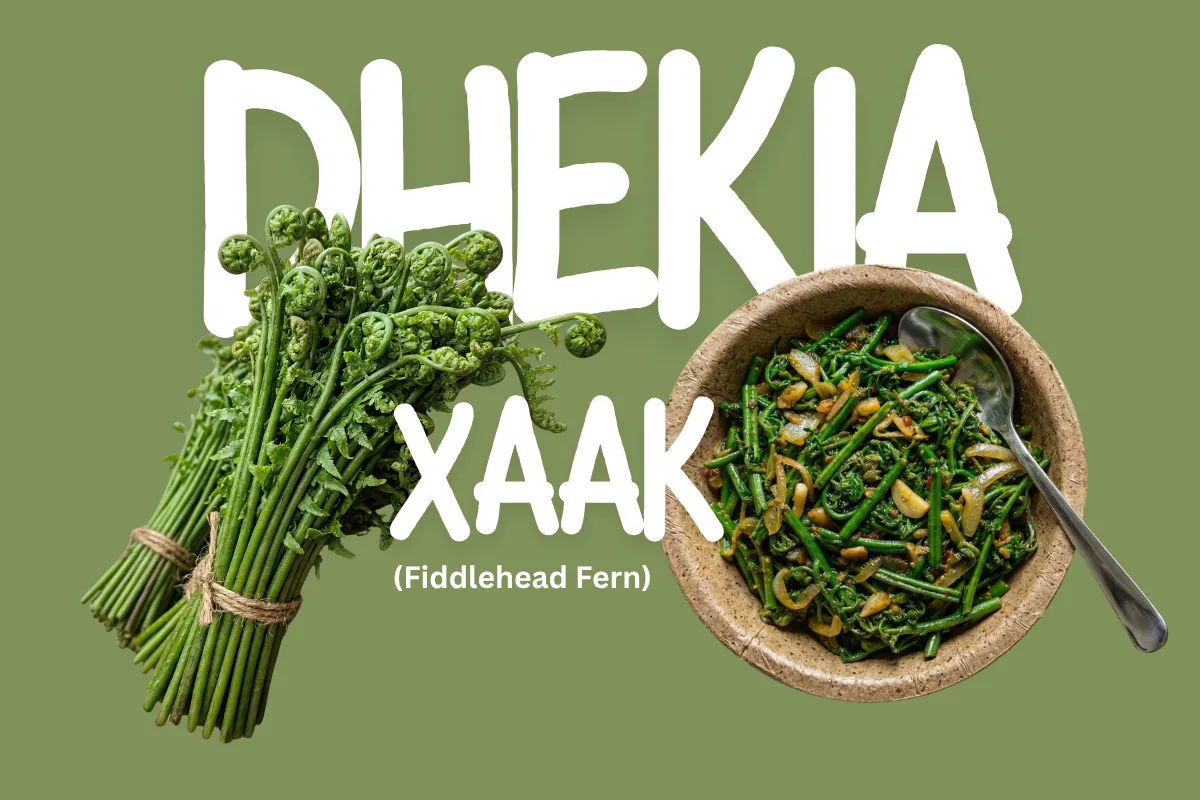
Ever wondered what we Assamese do with such a diverse variety of vegetation? Yes! We do admire nature, but we also search for any kind of edibles that enhance the flavors of our platter.
Fiddlehead fern, locally called 'Dhekia Xaak,' is a popular Assamese vegetarian dish in the authentic Assamese thali. Mostly grown in the wild, it is a spring delight. This flavored leafy vegetable, simply sautéed or fried, makes a delicious side dish. A few delicacies that are hard to resist are
Dhekia xaak bhaji (stir-fried fiddlehead ferns)
Boror tenga aru dhekia xaak (fiddleheads and lentil dumplings in sour curry)
Dhekia xaak’or logot koni (eggs fried with fiddleheads)
Dhekia xaak is an authentic Assamese vegetarian dish that represents the flavors of Assam with its delicious aroma and juicy greens.
Dhekia xaak is a spring delight, as it is consumed in the months of May to June right before the monsoon. The tender stems are easy to cook and also make a crispy side dish.
4. Ou Tenga Dali (Lentil Soup with Elephant Apple)
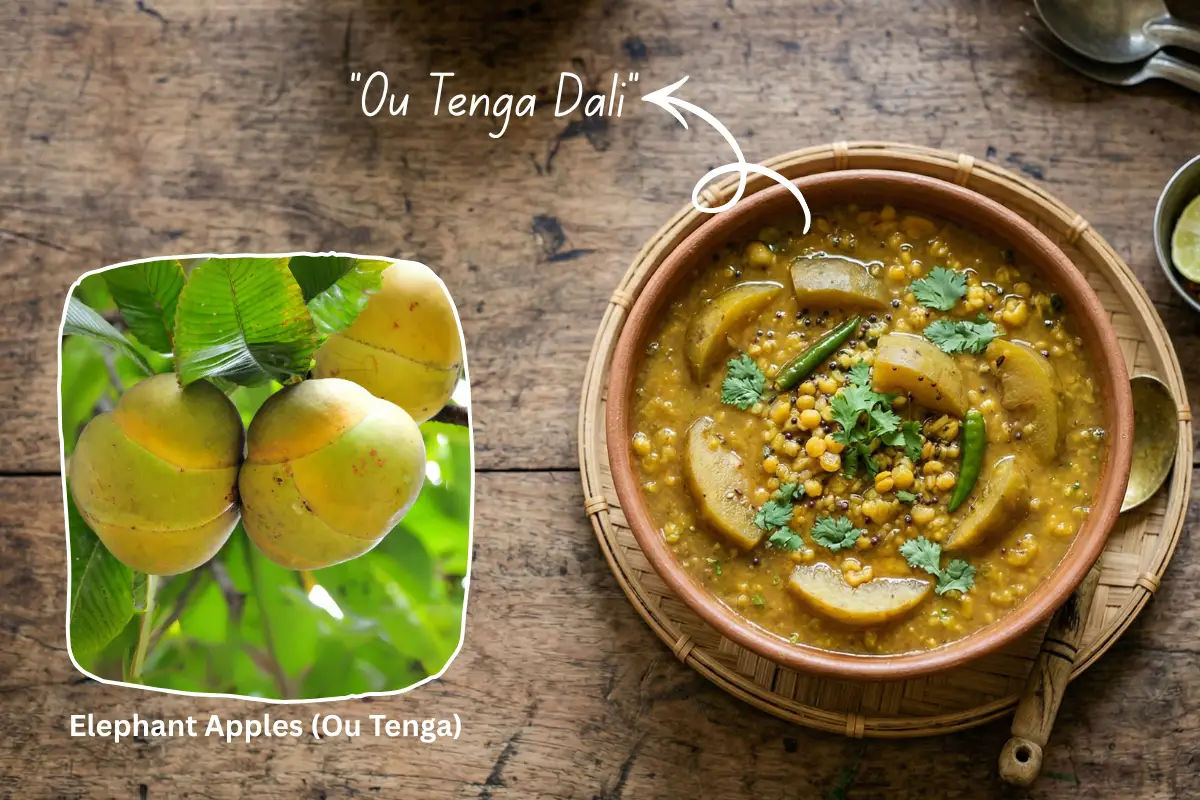
Ou Tenga, or elephant apple, is an important ingredient in Assamese vegetarian dishes and an integral part of Assam food. It has a sour taste and is mostly cooked with beans and other broth. The most famous one is Ou Tenga Dali.
It is a sour blend of boiled elephant apples in lentils and spices. Different vegetables and mustard seeds are added for flavor. The boiled Ou Tenga is sauteed till the pieces become soft, and either only the dal is added or other vegetables are added to give it a thicker texture. After the required spices are added, it is left to shimmer and thicken for a few minutes, and the delicious curry is ready to serve.
Ou tenga is not only a refreshing ingredient but is also filled with antioxidants and vitamin C. Many varieties of pickles and chutney are also prepared from Ou Tenga.
Ou tenga is an autumn delight, mainly found during the months of September to February. Ou Tenga Dali, or any other Ou Tenga dish, is normally rare in restaurants in city areas; however, roadside Dhaba or local restaurants, especially in the Upper Assam area like Kaziranga, Jorhat, and Sivsagar, serve authentic indigenous-style Ou Tenga dishes.
5. Khorisa (Bamboo Shoot)
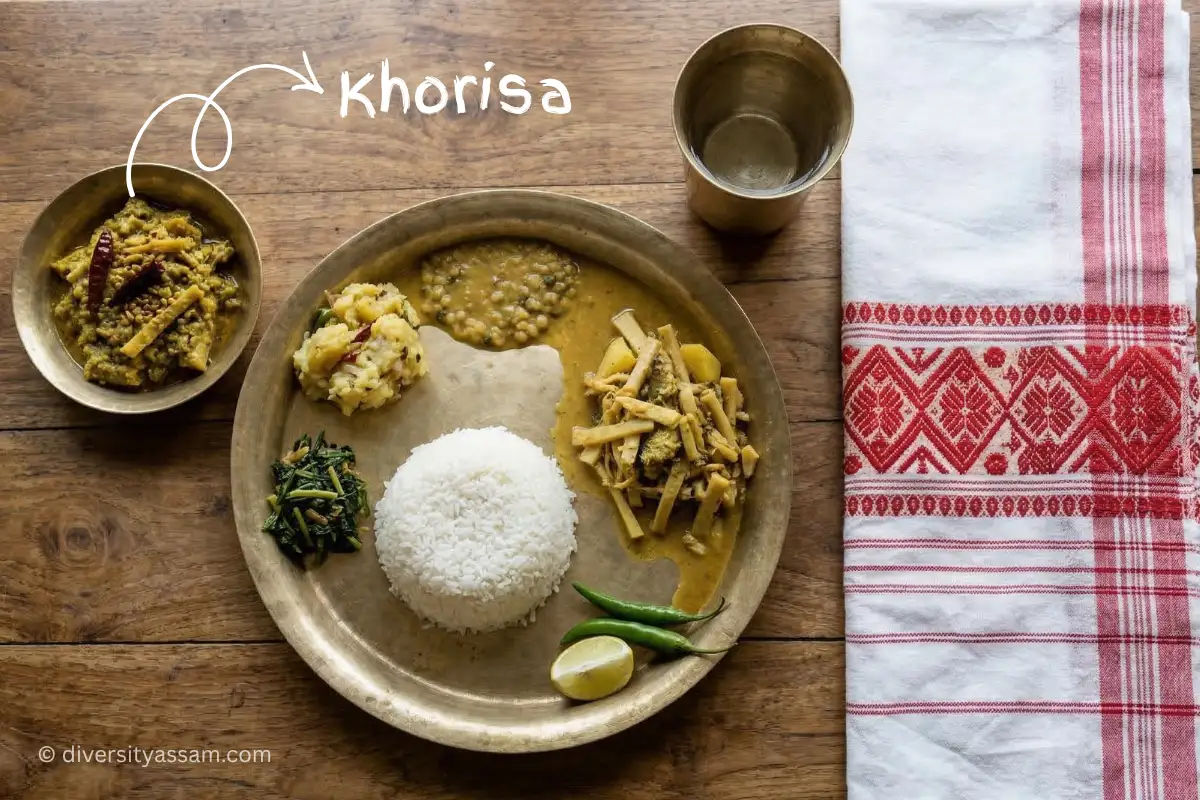
Bamboo is so integral to Assamese lifestyle and culture that we don't spare to add it to our dishes. Khorisa is nothing but fermented bamboo shoots, which are soft and sour in taste and have earthly undertones to their flavor. It is a very important ingredient in Assamese dishes, as almost half of the Assam cuisines are prepared using Khorisa.
In the past, Khorisa was also employed as a remedy for post-pox symptoms. As the market is filled with indigenously prepared khorisa bottles, I thought you should know about the process of making this cultural favorite.
Making khorisa is traditionally done by carefully slicing the shoots' outer covering. The delicate inner portion is divided into smaller pieces and then coarsely ground in iron mortars or traditional "dheki." After being ground, these bamboo shoots are moved into clay pitchers. The mouths are sealed with banana leaves after adding a small amount of water. To speed up the fermentation process, some people add a small amount of "khorisa" from an older batch. Within 4-5 days the aromatic khorisa is ready.
It can be stored up to months and enjoyed as pickles with some raw mustard oil and chilies over it or can be integrated into a wide variety of dishes. Khorisa helps in balancing the flavors and adds a distinct earthly aroma into it.
Bamboo shoots have cultural significance and are used in Assamese dishes as a representation of a connection to local traditions and preferences. Fermented bamboo shoots provide Assamese cuisine a unique flavor profile since they are a naturally occurring flavor enhancer.
6. Koldill Bhaji (Banana Flower Fry)
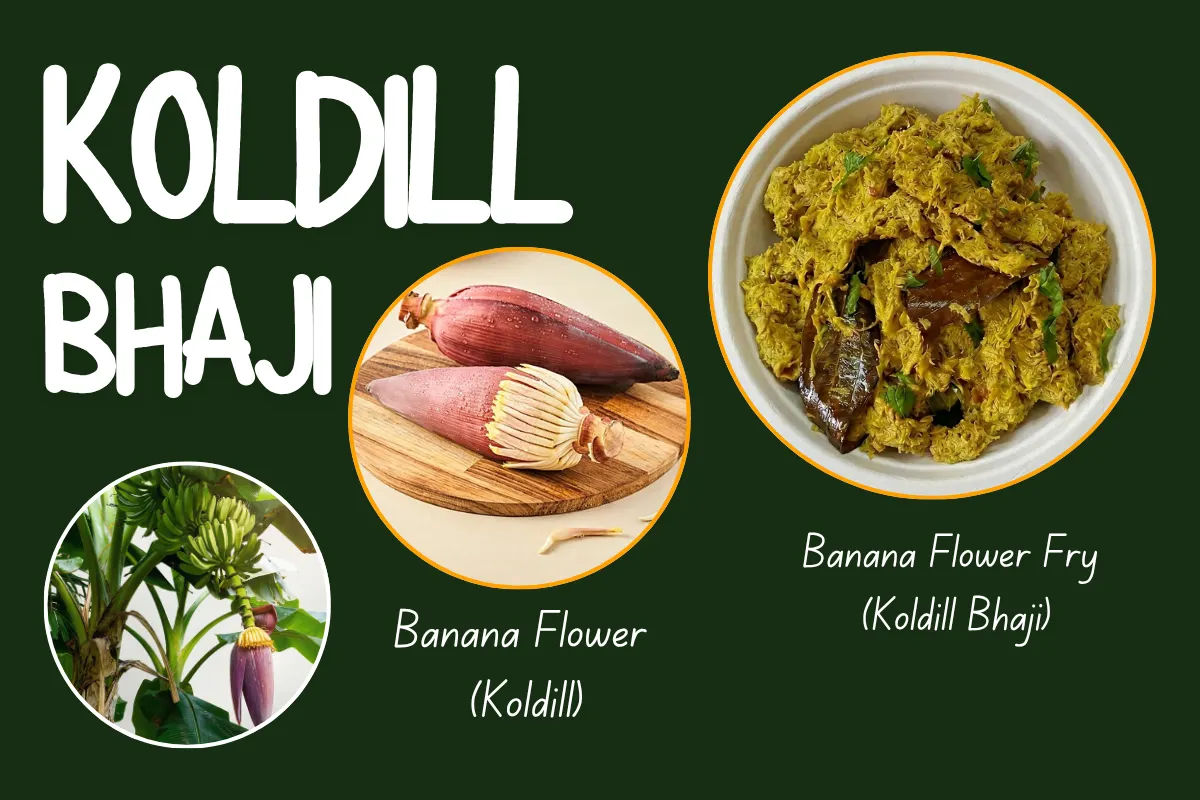
Koldil bhaji exemplifies the Assamese people's culinary inventiveness and creativity. The recipe, which includes meticulously peeling the layers of the banana flower and removing bitter stamens, is simple but demands focus and attention.
To prepare, the dark purple outer bracts are delicately removed to reveal the sensitive, creamy florets within. The stiff pistils and white-capped stigmas are discarded because they are bitter and indigestible. The cleaned florets are coarsely chopped and steeped in water with a sprinkle of salt, baking soda, and turmeric to minimize bitterness and avoid discoloration.
In a pan, mustard oil is heated and tempered with dried red chilies and panch phoron, generating a deep scent. Chopped onions and garlic are sautéed until transparent, followed by potatoes that are lightly browned to give texture. Green chilies, the prepared banana blossom, salt, turmeric, and pepper are then added, and the combination is simmered gently for 15-20 minutes, or until soft.
Finally, the heat is momentarily raised to maintain a somewhat crunchy texture before garnishing with fresh coriander leaves. This hearty Assamese vegetarian dish, served hot with dal and rice, is not only earthy and tasty but also high in fiber and iron, making it both nutritional and gratifying.
7. Posola (Banana Shoot)
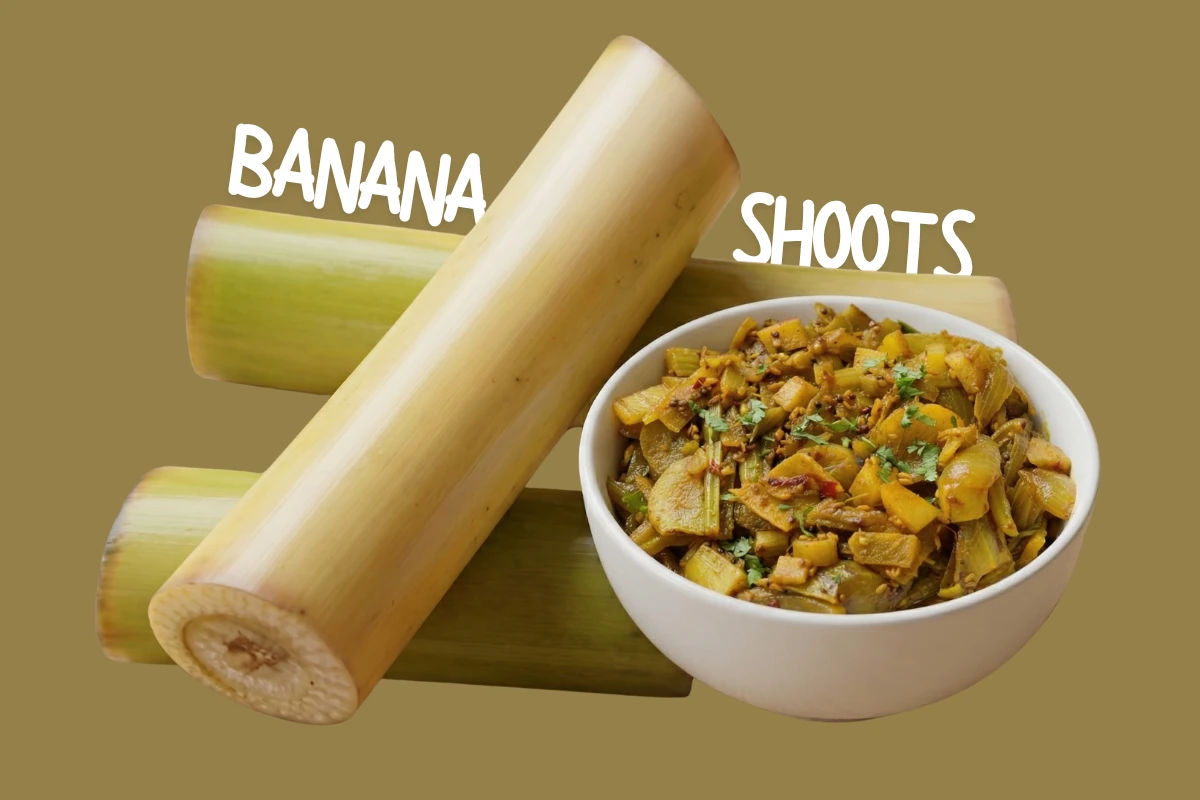
Posola in Assam is a food made with the inner part of banana shoots. The bark is peeled off and the tender inner part of the banana stem cut into small pieces. Posola is made in several ways, the most common being a simple fried dish with spices and salt. But to give it an authentic twist, we add kothal guti, which is jackfruit seeds, and prepare a delicious dish.
To make this, you'll need a bunch of simple ingredients. First, boil the jackfruit seeds so they turn soft, then stir-fry them in some mustard oil along with salt, spices, and green chilies. Once they turn golden brown, add the sliced tender banana stem pieces and cook them well. Leave it for some time and serve it hot as a side dish with any rice thali.
Kol posola is a traditional Assam vegetarian dish that is consumed by the rural people. It has been a part of Assamese delicacy for ages and correctly justifies the components of authentic Assamese cooking, which is easy, natural, and nutritious.
Talking about nutrition, you must know by now that there must be some health benefits to every exotic Assamese dish. Posola is rich in iron, vitamin B6, C, and antioxidants, which makes it the best choice for good skin, anemia, digestion, and better gut health.
Tasting Assamese banana shoots while you are in Assam can be a little challenging; regular restaurants rarely serve it. Mostly available in rural areas, and only ethnic Assamese restaurants serve it sometimes.
8. Kosu Xaak (Colocasia Leaves)
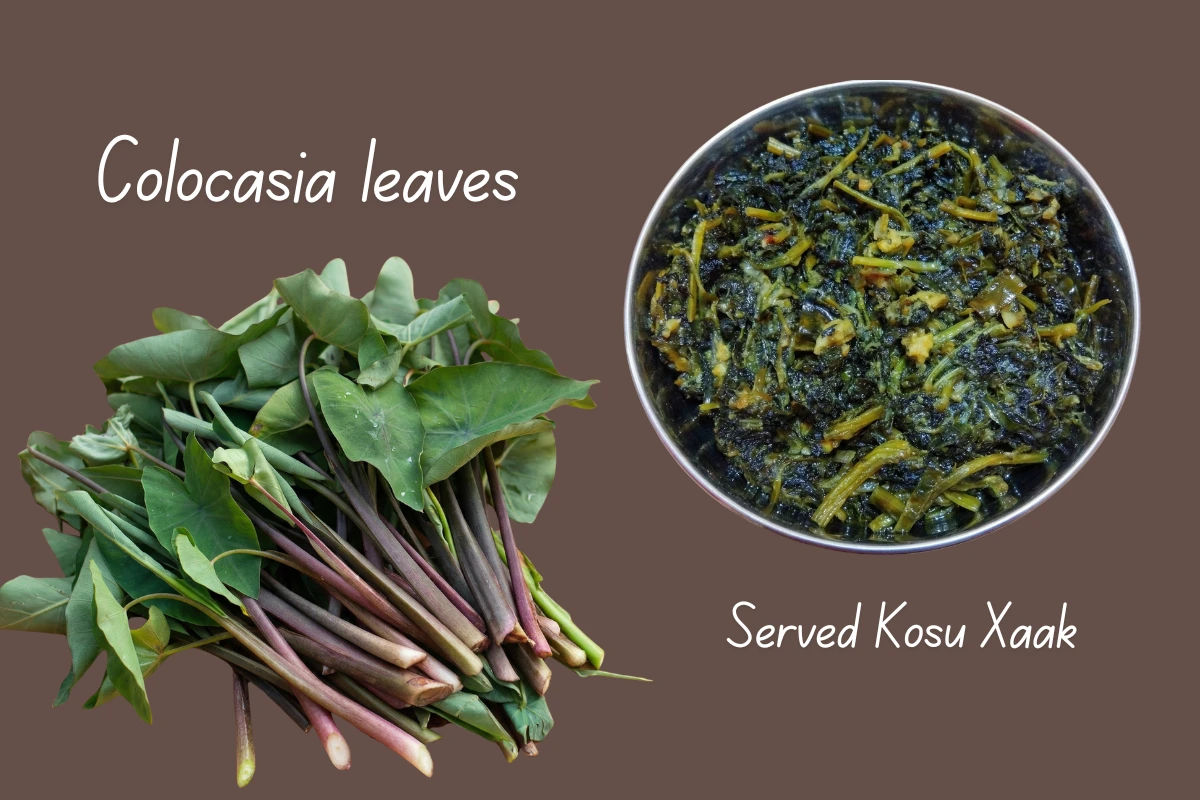
Kosu xaak, or colocasia leaves, are a staple in winters. It is served as a side dish. Freshly plucked leaves are cooked with spices and other vegetables, and a delicious broth is prepared. Mostly 'Ou Tenga' (elephant apple) and tomatoes are used to add sourness to the broth.
Kosu xaak is best prepared with any sour punch. The leafy flavors of the xaak mixed with sour cherry tomatoes, lots of green chillies, and some local spices make a uniquely delicious Assamese vegetarian dish.
Kosu Xaak is often served in an Assamese thali, which you can order from any local Assamese restaurant across Assam. So, order an Assamese thali, take some rice, vegetable fritters, and some kosu xaak jhul, and enjoy pure bliss on a platter.
9. Methi Xaak Thekera (Fenugreek Leaves)

Fenugreek leaves and the Garcinia fruit, commonly called Thekera tenga, make an exciting combination for a dish. The sour taste of 'thekera' balances the bitterness of fenugreek leaves, or methi xaak, to give a flavorful delight.
Winters in Assam are filled with an abundance of fenugreek leaves, and it’s the best time to prepare this tasty Assamese dish. Thekera is commonly used in several Assamese dishes as a souring agent. It is sun-dried and stored to be used in broths.
Fenugreek leaves are fried and sautéed in mustard oil and spices, and dried thekera slices are added to give it a sour taste. It is part of the abundance of fresh produce available during the winter months, provided the ambience and large options. While it is a popular winter green, it is also featured in the broader, traditional consumption of various local herbs and greens during the spring, particularly around the time of Rongali Bihu (April).
7 Assamese Fish Dishes
If you enjoy fish dishes, Assam will never disappoint you. Assam's love affair with fish runs as deep as its rivers—the Brahmaputra and its countless tributaries have shaped not just the land but the very soul of the state's kitchens.
Sour with tomato, wrapped in banana leaves, smoked over slow fires, or dried and stored for months, Assamese people have unique recipes for fish dishes. From tangy curries to smoky delicacies, each preparation carries its own place in an Assamese home. Now let's explore some Assamese dishes that depict how deeply Assamese people love fish and why fish is an inseparable ingredient in Assamese cuisine.
1. Bilahi Masor Tenga (Tomato-Fish Curry)
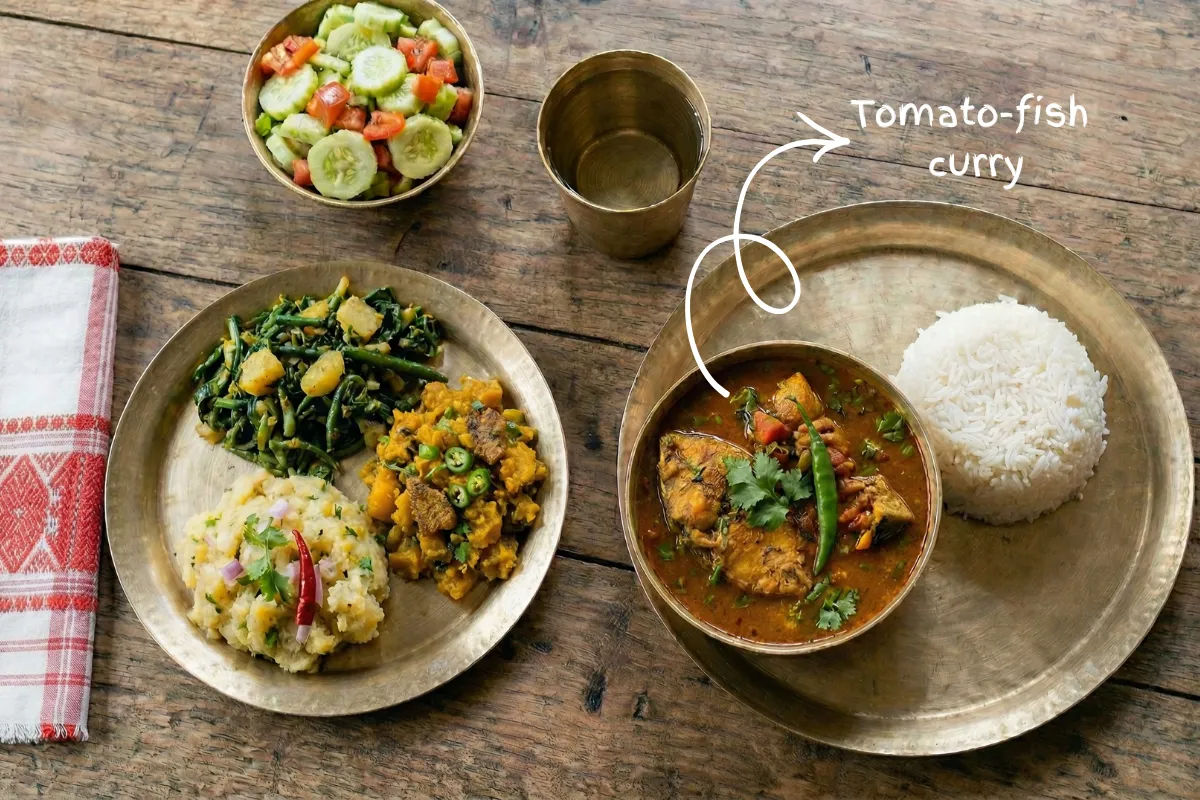
One of the most popular fish cuisines from Assam, Bilahi masor tenga (Bilahi - Tomato, Mass-Fish, Tenga—Sour in Assames) is a staple in every Assamese household, and everyone puts their special touch into it while preparing. The fish is fried and slow-cooked in a tangy broth spiked with tomatoes. Boiled potatoes and green chillis are added, and the star ingredient of this Assamese fish curry is fenugreek seed, which is added to give a lovely aroma and flavor.
Unlike Poita Bhat, Bilahi Masor Tenga needs no special invitation. Walk into any local eatery or ethnic Assamese restaurant in the state, order a fish platter, and this tangy tomato-fish curry—usually made with Rou or Catla—lands on your table as a matter of course. It's the one Assamese fish dish you're almost guaranteed to taste without any effort at all.
2. Patot Diya Maas (Steamed Fish)
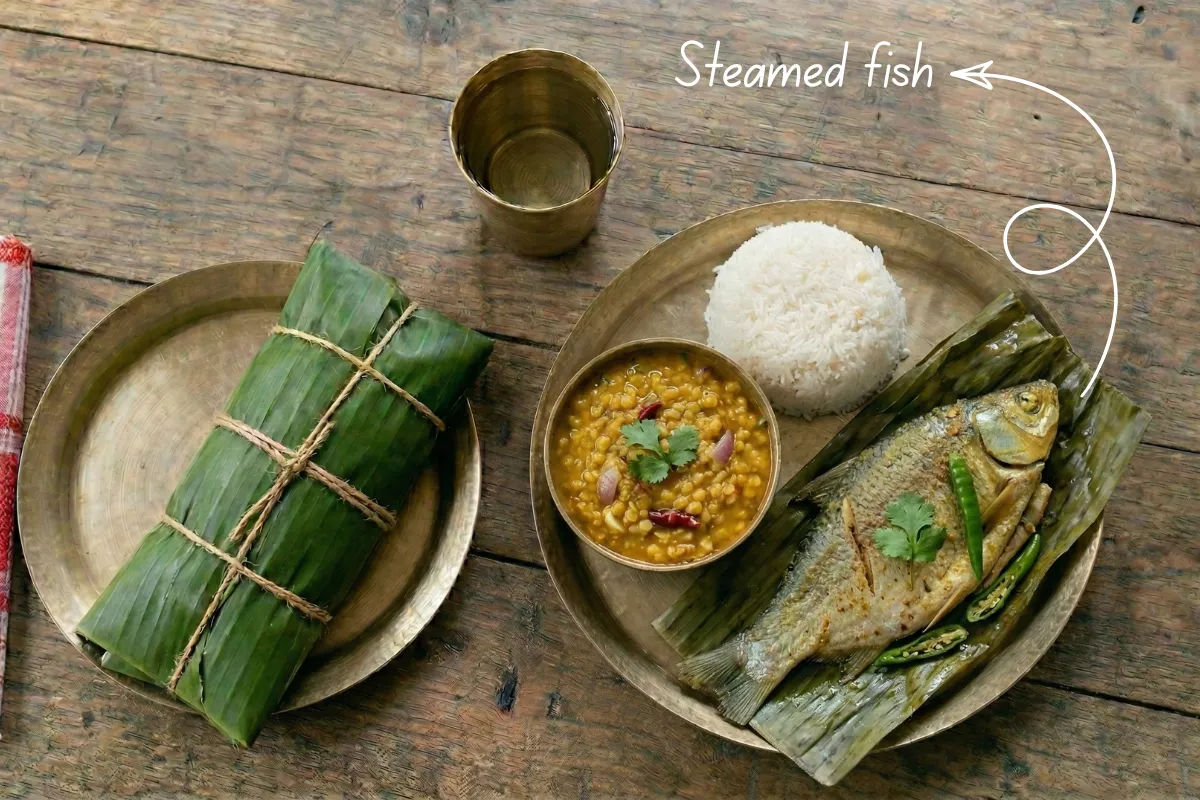
Patot Diya Maas is a traditional Assamese fish dish made with steamed fish. Along with herbs and spices, little freshwater fish are boiled on banana leaves. The main ingredients are mostly garlic, onion, coriander, and chilies. The uncooked fish is placed inside a banana leaf pocket and cooked slowly over a low heat using steam. The steam makes the fish soft and juicy, which tastes delicious with its intact flavors. It is also a healthy substitute for deep-frying oily fish recipes.
Patot Diya Maas isn't something you'll find easily on every menu—it's a dish that demands a bit of effort to find out. In Guwahati, only a handful of ethnic restaurants, namely Tholua (Uzan Bazar, Guwahati) and Khorikaa (ABC, Guwahati) and Pakghar (Panjabari, Guwahati), are remarkable ones that serve the authentic banana-leaf steamed fish.
In other parts of Assam, like in Majuli, most of the local restaurants serve steamed fish, and in Jorhat and Sivsagar, the roadside ethnic joints serve it routinely.
3. Suka Xaak Maas (Sorrel Leaves with Fish)
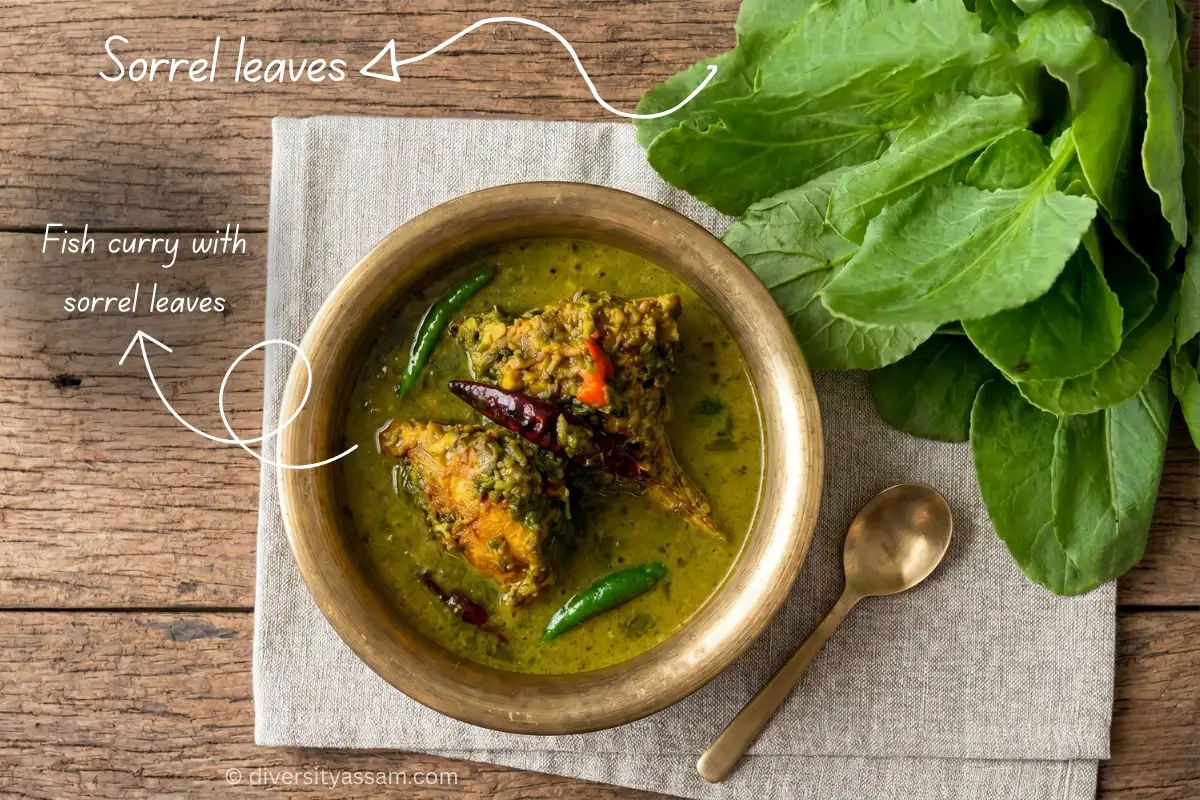
Just like kosu xaak, suka tenga is a healthy side dish prepared using indigenous leaves called sorrel, which is sour in taste. It is cooked with small fried fishes added to it and made into a broth. Suka xaak, or sorrel, is commonly found in different regions of Assam.
It is initially fried in mustard oil using the regular spices, and then deep-fried fishes are added into it, most preferably rohu or bhangan. Some coriander leaves are added, and water is added into the broth as per the choice.
It is a delicious, tangy Assamese dish to rejuvenate the taste buds with very unique lemony flavors of sorrel.
Suka Xaak Mass is rare to find on the menus of public restaurants; it is cooked by Assamese people in households only and is a special dish we enjoy in winters.
4. Ou Tenga Masor Jul (Fish Curry with Elephant Apple)
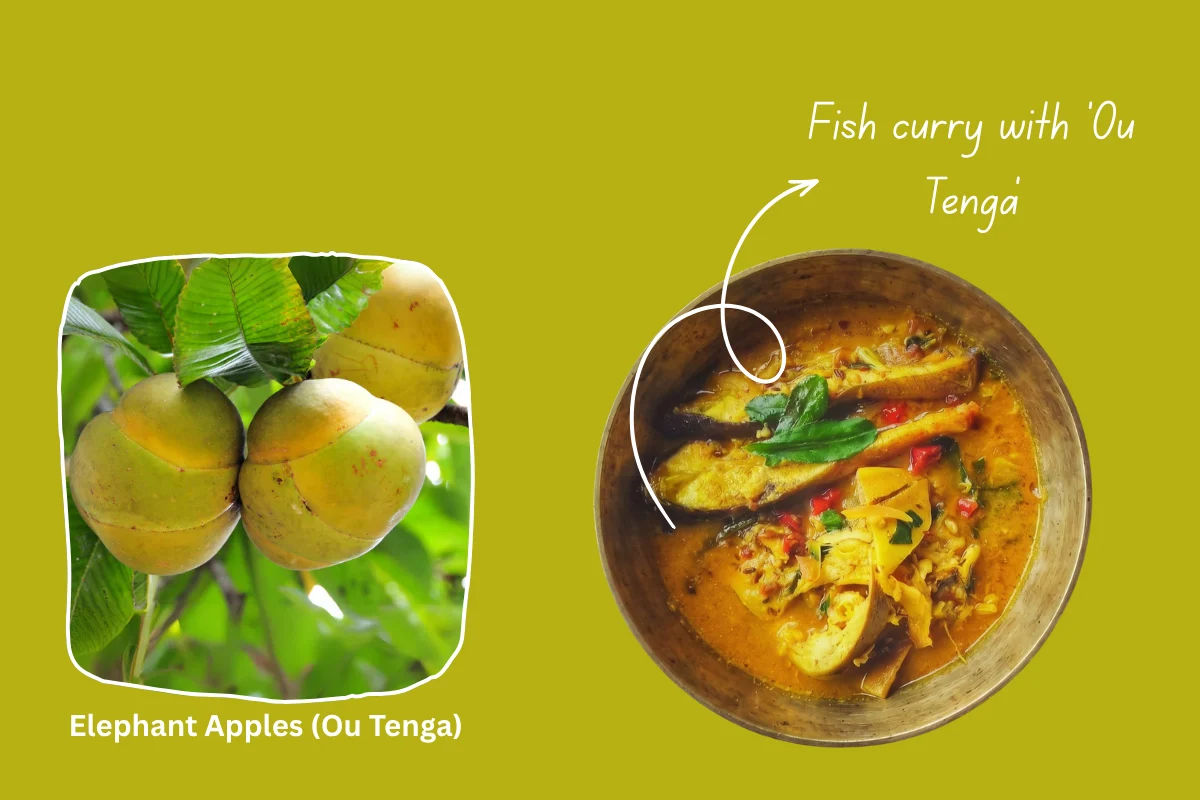
Fish cooked with big chunks of Ou Tenga (elephant apple) has to be one of the best combinations for any meal. The sweet and sour taste of Ou tenga gives the slow-cooked fish a zesty flavor, making it a wholesome meal. It is prepared similarly to Bilahi masoor tenga, a popular non-vegetarian Assamese dish easily available in local eateries in Assam
5. Xoru Maas Bhoja (Small Fried Fish)
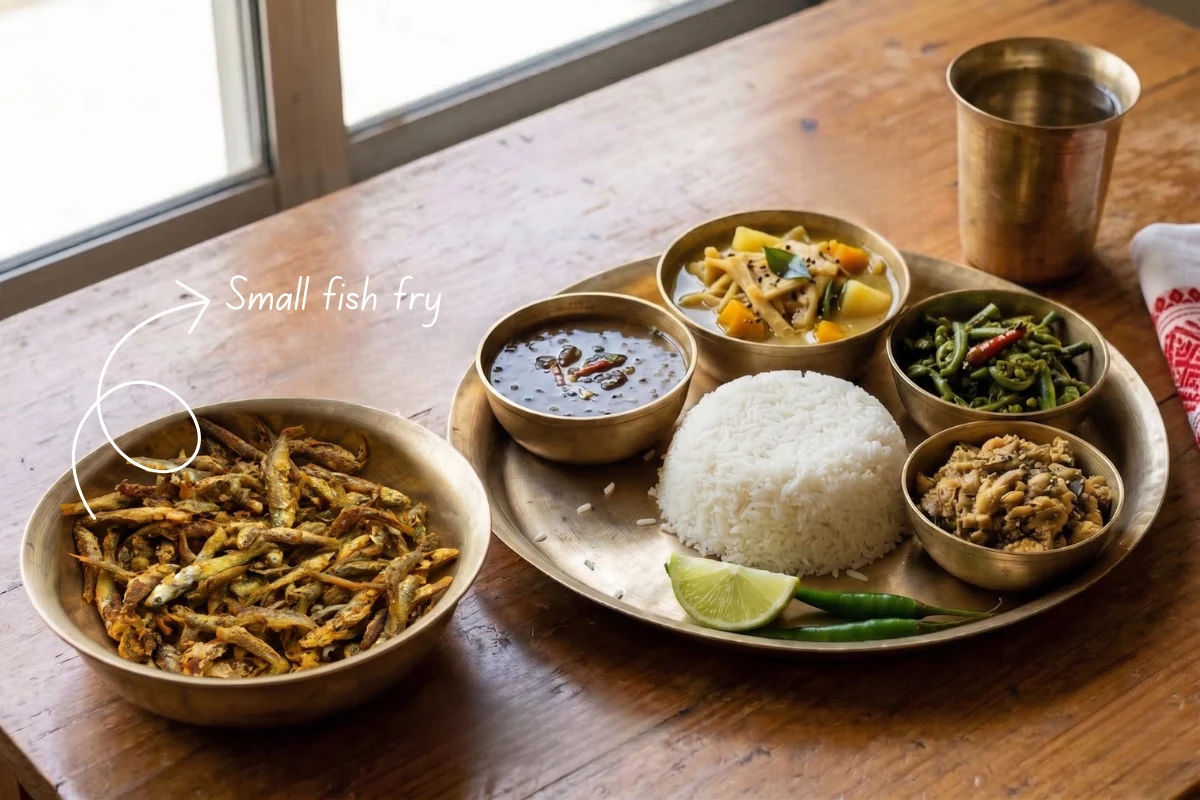
You might be thinking this list is full of Assamese fish curry and broths, but I do care about the crispy, crunchy fried fish lovers. Small fishes coated in salt, turmeric powder, and green chilies are stir-fried with chopped coriander leaves, onions, and garlic cloves. Commonly consumed small fish are Dorikona (flying barb) and Puthi (Puntius species).
This salty, crunchy Assamese dish goes really well with rice and traditional drinks. Only a few ethnic restaurants and local eateries serve small fried fish as a side dish on ordering a full platter meal.
6. Pura Maasor Pitika (Grilled-Mashed Fish)
After curry, steamed and fried, what is left is the authentic and most favorite Assamese dish, Pura Maasor pitika. Local fish freshly caught is fire-grilled and mashed with chopped onions, ginger, and chillies, along with a small amount of mustard oil. Using the freshest ingredients possible, together with a touch of premium mustard oil to bond the meal with its potent aroma, is the key to creating a pitika with a lasting aftertaste.
7. Xukuti Maas (Dry Fish)
Want to guess how much Assamese people love and consume dry fish? To answer, Jagiroad (a town 56 km from Guwahati) hosts the largest dry-fish market in Asia. We call the dry fish Xukan Maas or Xukuti Mass; Xukan means dry.
Xukuti Maas is a traditional Assamese dish cooked with sun-dried fish when fresh fish is unavailable. This sun-dried fish is naturally preserved by the drying process and has a strong, smoky aroma and a rich, earthy flavor. This recipe shows the resourcefulness of the Assamese people, who conserve river fish for use throughout the year.
While the scent of this meal may be overwhelming for those unfamiliar with it, if properly cooked, the taste becomes earthy and soothing. It is extremely popular in rural Assam and makes an excellent addition to simple steamed rice, consumed mostly in winter.
To make this Assamese dish, lightly toast the sun-dried fish in a skillet to remove the odor, then immediately wash it in warm water and chop it into little pieces. Heat some mustard oil in a pan and sauté some chopped onions until golden brown.
Fry some cubed potatoes or eggplant for a few minutes before adding the sun-dried fish. Cook with a little heated water until the veggies are softened and the flavors have blended beautifully. Carefully balance the salt and serve hot with steaming rice.
Assamese Non-Veg Dishes
Non-vegetarian Assamese dishes are not limited to fish only. Assamese non-veg dishes have their roots in riverine and rural Assamese cuisine, where freshness and less use of heavy spices are preferred. Different meats, like chicken, pork, and duck meat, are prepared in such a way that their natural taste is retained. The dishes are light, earthy, and comforting, which is a reflection of the Assamese lifestyle and culture.
1. Bahgajor Logot Kukura (Chicken Bamboo Shoot)
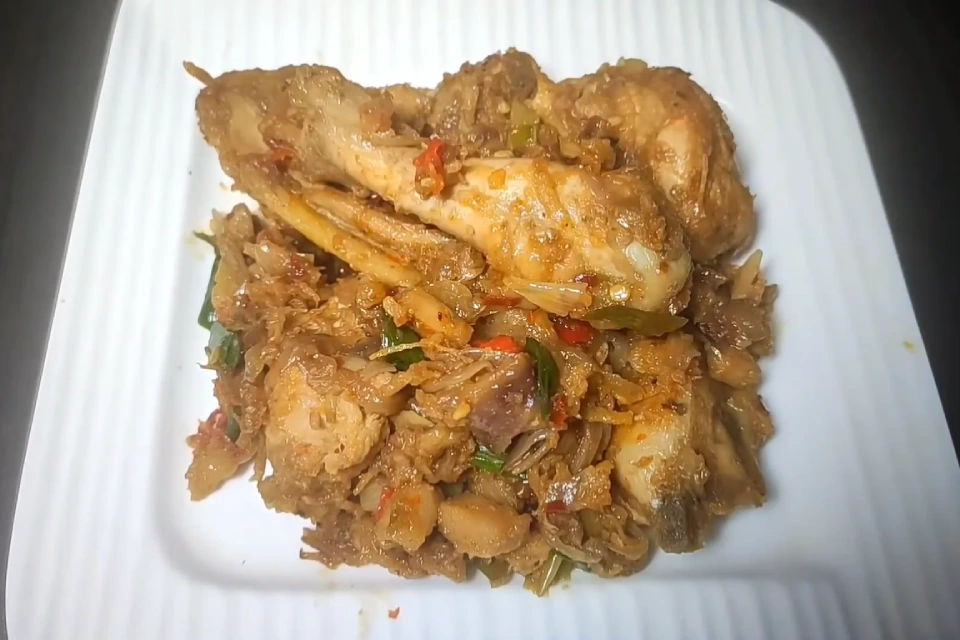
Not as complicated as its name, Bahgajor Logot Kukura is simply chicken cooked with bamboo shoots and lentils.
Assamese people share a love affair with bamboo shoots. They try to include it in different Assamese cuisine and non-veg recipes. I’d recommend the famous bamboo shoot pickle, and if you demand some chicken alongside, this dish is definitely for you.
Bahgaj, or bamboo shoot, has a sour taste and a distinct aroma. When cooked with chicken, it blends in with the flavors and gives a slight tangy punch to the taste buds. A staple in Assamese households, this dish is rich in flavors. The aroma of bamboo shoots sets it apart from the other chicken recipes. Slightly tangy and spicy, it is best served with rice.
Included in the main course, it is the most famous of all other chicken delicacies and available almost in all ethnic Assamese restaurants across Assam.
2. Laai Xaak Gahori (Pork with Mustard Greens)
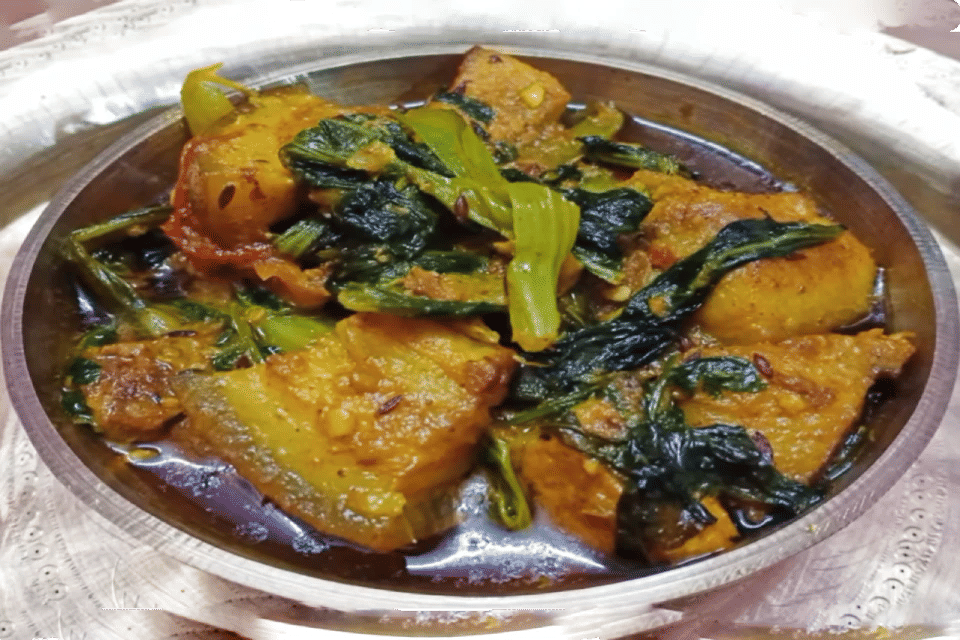
Ever thought about how some boring greens would taste when combined with your very favorite pork? Well, this Assamese cuisine serves the demand and brings all the authentic flavors to your plate.
Pork, mustard greens, and bhut jolokia (king chilli)—feels like home to every Assamese. Being a destination for pork lovers, this particular comfort dish is the most popular yet loved among the locals. Pork is loved all over the Northeast, but when it is included in Assamese cuisines, it comes in a variety of flavors, and Lai Xaak Gahori is the favorite one.
No pork in Assam should ever concern health enthusiasts. As it is cooked in mustard oil or sometimes oil-free with lots of greens, this curry is light on one’s palate as well as tummy. The greens balance the flavors and give it a rich taste. Less oily and filled with juicy flavors makes this dish a must try.
Are you convinced to try Laai Xaak Gahori? Just go to any local restaurant in Assam, ask for an Assamese pork thali, and you get Laai Xaak Gahori as the default non-veg Assamese dish.
3. Duck Meat Curry
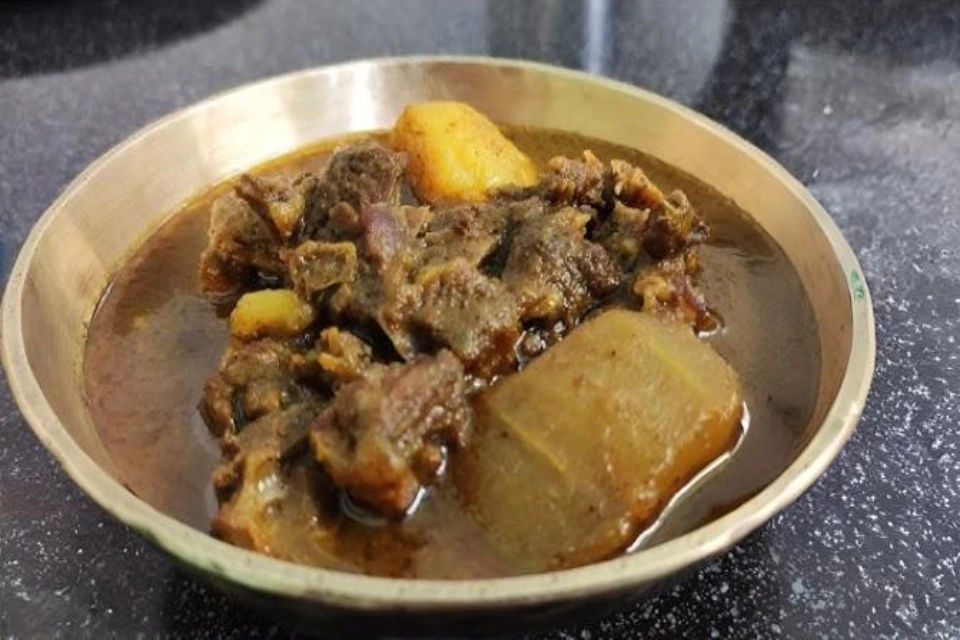
Duck meat is a main course of Assam food for special occasions and is still an integral part of any celebration or festival in Assam. Preparation of duck meat with ash gourd is mostly loved, but other styles, such as with lentils, sesame seeds, or even pumpkin, are quite popular too.
Cooking is similar to other meats, but the addition of ash gourd gives it a unique and authentic flavor. Just fry potatoes and onions in mustard oil and add ginger, garlic paste, meat, and all the salt and spices. Lower the flame and let the meat cook. Once cooked, add the ash gourd and fry for another 10-15 minutes, and finally add water as per your requirements. Duck meat has a unique smokey barbeque flavor that sets it apart from other dishes.
The best season to eat duck meat in Assam is from October to April. It is the undeclared official dish Assamese people enjoy during the Magh Bihu.
4. Til Diya Murgi Manxo (Cesame Chicken Curry)
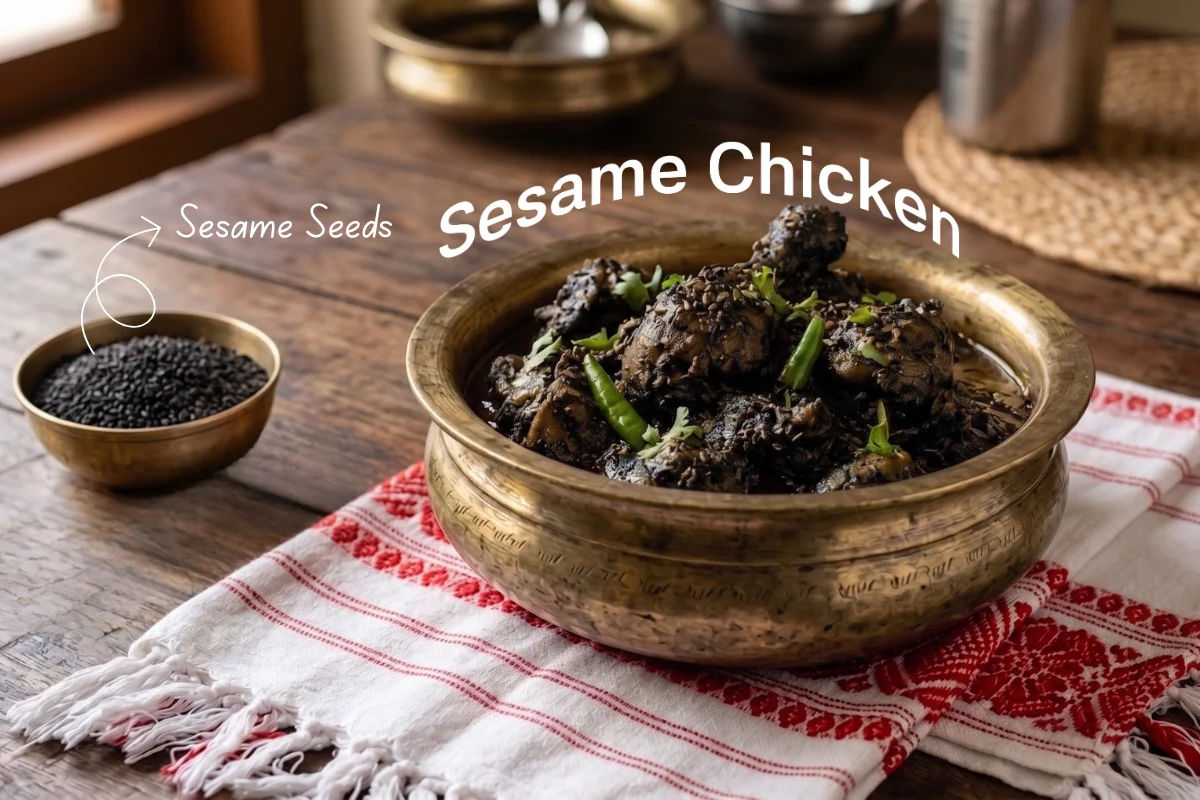
Chicken is an integral component of Assamese non-veg dishes, and that can be seen by the several variations of its recipe in traditional Assamese cooking. Til diya murgi manxo is another flavourful Assamese dish that you must try once during your Assam visit.
The first step of preparing this dish is making a paste from black sesame and black peppercorns with minimum water. Now, take a deep pan, put some oil in it, and heat it till it starts smoking. Put ginger, garlic, and onions in it and keep frying until onions turn golden brown. Then, add chicken pieces along with turmeric, cumin powder, and green chilies to the pan and sauté for 5-7 minutes over medium heat.
Put 1/2 cup of lukewarm water in it and sauté for another 10-12 minutes till the chicken is almost half-cooked. Now add the made paste of black sesame and peppercorns to it, give a thorough mix, and add a little bit of water if you want to lower the consistency of the gravy. After 5 minutes, take out the chicken when it gets soft and serve it hot along with rice.
If I have to describe Til diya murgi manxo in one line, it is like a warm hug in a winter evening. It's not easy to order in regular restaurants; only a few ethnic and tribal restaurants serve it.
5. Smoked Pork
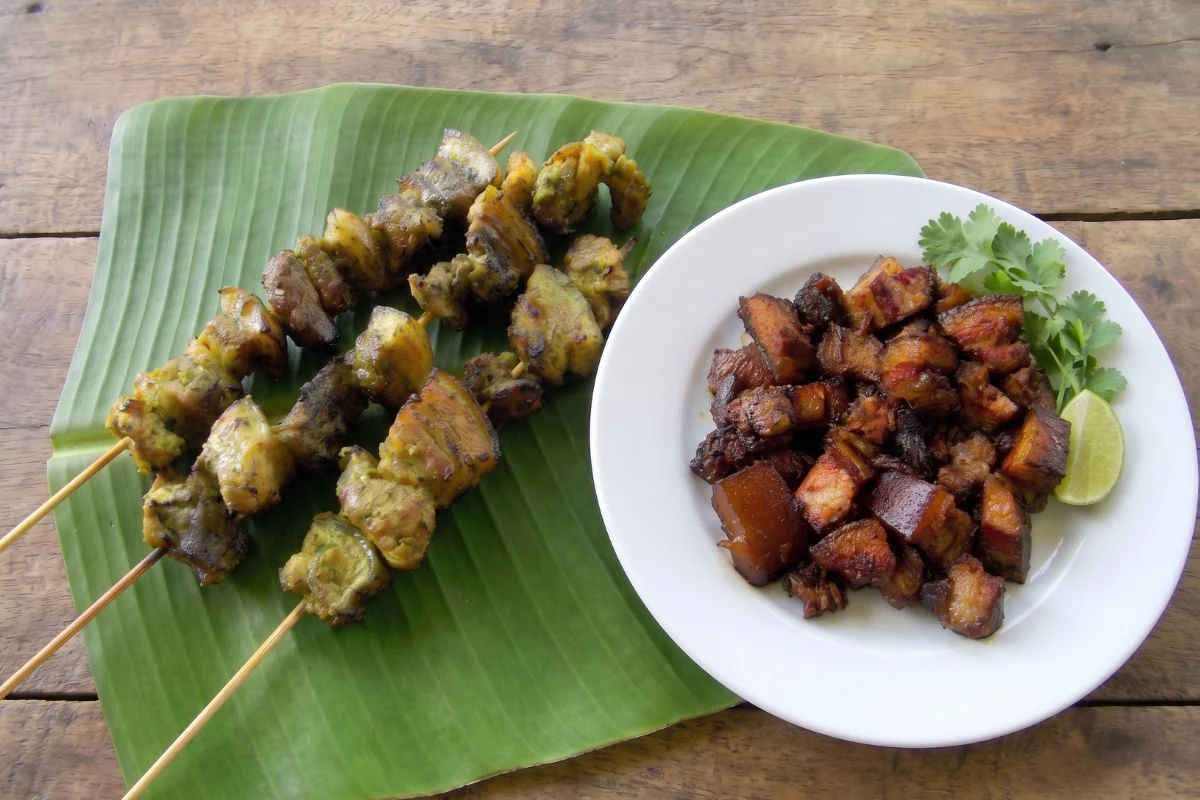
This is a classic Assamese dish for every celebration in any household, especially in villages. Smoked pork is simple yet a refreshing addition to the list of many other non-vegetarian options. The variety of tribes that thrive in Assam has their own version of this classic Assamese dish with their own unique spice mixes.
There is an intriguing story behind the invention of this meal. Pork was commonly consumed at religious festivals and other social occasions. However, there were no refrigerators to preserve leftovers back then. To prevent the meat from rotting, ancestors suspended it over the fireplace and let it smoke, dry, and ferment. This resulted in an incredible finding, allowing the meat to remain edible for 10 to 12 months. Smoked pork was thus born and became a popular Assamese dish.
Coming to the recipe of this delicious creation, it is rather minimal and easy. Take 2 tsp refined oil and sauté the smoked pork on a pan for 4-5 minutes. Once they turn golden and soft, add one roughly chopped onion, salt, turmeric, and red chili powder, and let it cook for another 5-6 minutes. Meanwhile, make a paste of ginger, garlic, and red chillies, and add it to the pan.
Cover and cook for another few minutes and then add a sliced tomato. Cover and cook till the tomato melts and then add a cup of water. Make it come to a boil and cook for another 30 minutes. Check the consistency of the gravy as per your choice and finally garnish it with cilantro.
Some Exotic Assamese Dishes for Food Explorers
Assamese dishes are sometimes an invitation to experience exotic flavors and ingredients of Assam. Have you ever wondered how food can be earthy, smoky, and refreshing at the same time? These dishes are a reflection of the tribal wisdom of Assam and its forest produce, and they offer a culinary experience that is adventurous and authentic.
Assamese dishes mentioned below are rare to find in regular restaurants; only a few ethnic restaurants serve them occasionally. So, if you want to try these exotic non-veg Assamese dishes, be a guest in a rural Assamese household.
1. Pigeon Meat Curry
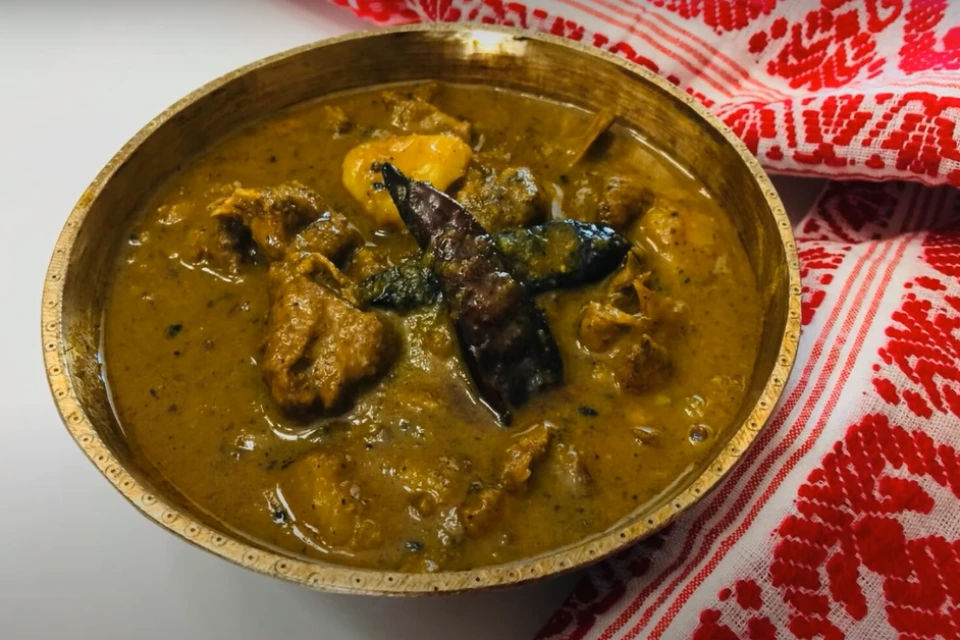
Sounds unethical, but Paro Mankho, or pigeon meat, is one of the specialties of Assam. A must-try for any outsider looking for a perfect Assamese delicacy. Although banned in other Indian states, it is loved by the locals over here.
Here’s one interesting fact too! It is mostly consumed during winters, as it’s claimed to keep the body warm and is recommended for colds and fever. So next time when the chilly wind enters through your window, you know what that tummy is craving for.
Cooked with banana flowers or simply with potato and spices, pigeon meat is usually served hot and spicy. This dish has been prepared by the Assamese for centuries, and it is still a favorite among those who value antiquity.
2. Amroli Poruar Tup
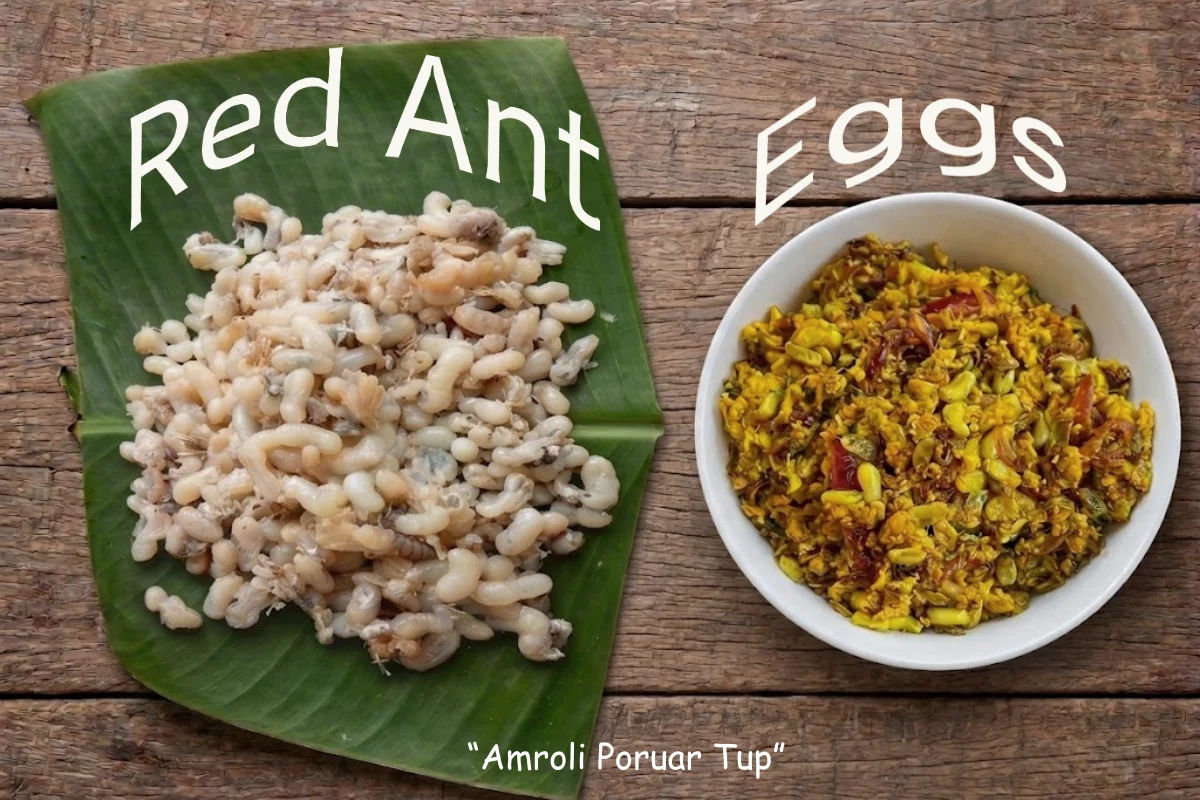
Red ant eggs, also known as Amroli Poruar Tup, are one of many unusual and little-known Assam cuisines. It has a slight acidic and lemony taste along with a crunchy texture.
A common nesting site for these ants is a mango or jackfruit tree. They inhabit tree nests that are skillfully built from leaves. In order to consume, red ant eggs are collected from trees. Because it is spring and ants lay a lot of eggs in these nests, it is eaten at Rongali Bihu/Bohag Bihu. It is typically consumed by the Assamese people with homemade wine or "xaaj."
The recipe for this Assamese dish is very simple. All you'll need to do is heat some oil in a pan and add chopped onions until golden brown. Then add the red ant eggs along with all the spices and green chilli. You can also add some garam masala for extra flavor and cook for some time. Serve it hot as a side dish with rice or as a snack with local beverages.
Red ants may protect a person from a variety of water-borne illnesses and are a good source of protein, iron, calcium, and vitamin B12. It is mainly consumed by the people of the Ahom community, but other indigenous tribes enjoy it as well.
It is one Assam dish that brings out the authentic flavors of Assam. This cuisine, which has its roots in culture and a relationship to nature, provides an opportunity to taste a distinctive flavor and heritage.
3. Eri Polu (Silkworm Pupae)
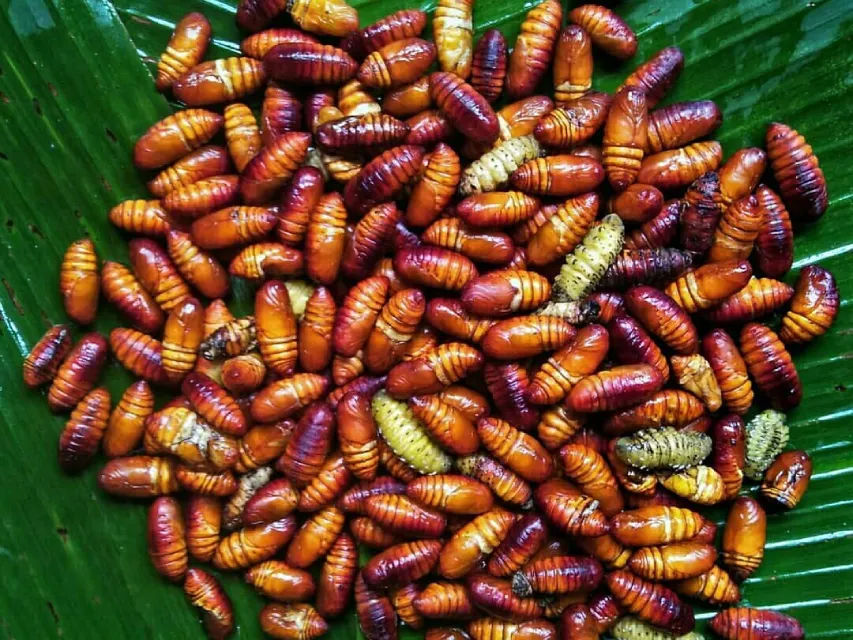
Silkworm pupae are a distinctive culinary experience because of their somewhat crunchy texture and nutty, earthy flavor character. They are extracted from Eri polu, or Eri silkworm (Samia ricinii), which is a common sight in Assam.
The remaining pupa is already softer since the cocoon is boiled in boiling water to remove the silk. This tender pupa is occasionally smoked on bamboo shoots and flavored with herbs and spices, or fermented bamboo shoots are used to give a tangy punch to this Assam cuisine.
After the silk is removed from the cocoon, the dish can be made up of the remaining silkworm. Assam dishes are creative in utilizing what is easily available, as seen by the inclusion of silkworm pupae in the local cuisine.
Talking about the nutritious value, pupae of silkworms are a rich source of protein, fat, and minerals.
4. Masor Petu (fish intestine)
Assamese dishes are incomplete without fish, from masor tenga to pura mass, and this is something that every Assamese household prefers in their non-vegetarian list. An exotic Assam cuisine for all fish lovers.
The freshly cleaned fish intestine, or masor petu, is cooked with fried rice, mostly the leftover rice, and added spices to give it a unique taste. Fish intestine is rich, intense, and often described as strong and aromatic. It can absorb flavors from the food around it, improving the overall flavor of the dish.
To make this delicious meal, heat up some mustard oil in a pan and add chopped onions and turmeric until golden brown, add the fish intestine, and cook for a couple of minutes. Then add 2-3 cups of rice, sliced green chilis, and other spices with salt and cook till oil separates. Serve it with your favorite dal rice and enjoy.
Depending on how it is prepared, fish intestines can add a fascinating contrast to a dish by having a slightly crunchy or soft feel.
5. Pani Xamux
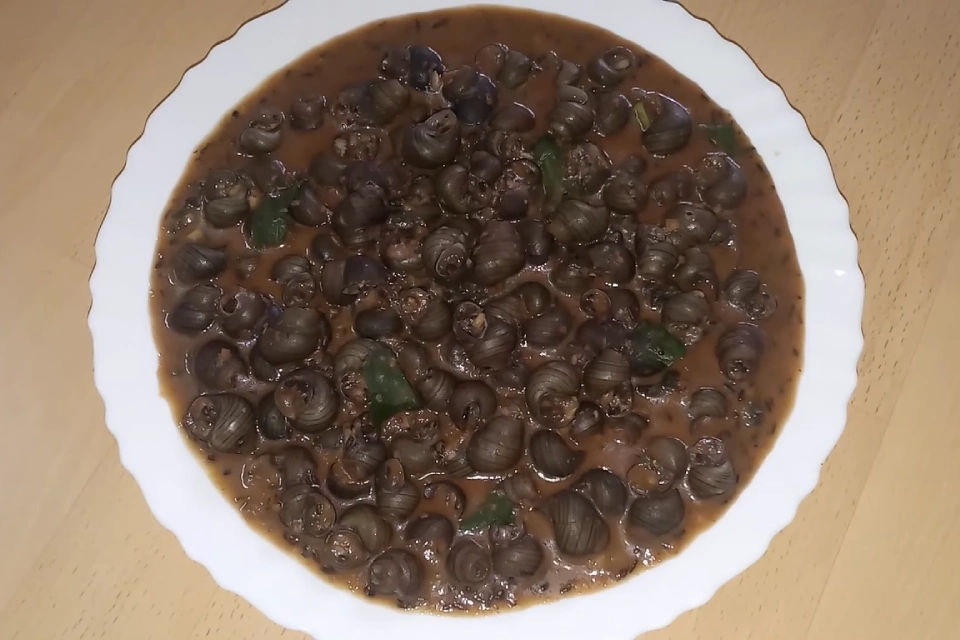
The exotic adventure doesn’t end here; I’ve one more ingredient to introduce to the list, and it's not something you’d usually find in other regions. These are not your regular snails; these are clean, soft, and delicious river snails cooked using old indigenous and traditional recipes.
Pani Xamuk, or water snail, is a popular exotic Assamese dish. Fresh, clean rivers are the source for collecting these snails.
It is primarily cooked by the Bodo tribes of Assam with their mouthwatering recipes. One of the most loved among them is Pani Xamuk cooked with Mati Dali, or black gram.
The snails are first boiled along with their shells and then cooked with dal or broth. The very popular Khar (alkaline) is also added to the broth to enhance the flavor. Spices are added, and voila! The soft, delicious snails are ready to be sucked from the shells and consumed in delight.
Assamese Sweet Dishes
Sweet Assamese dishes have a strong connection with tradition and festivals. They are mostly prepared using rice, jaggery, sesame, coconut, and milk, which are abundant in Assam. The sweetness is comforting and mild, and these dishes are a reflection of the Assamese culture and lifestyle.
1. Payokh
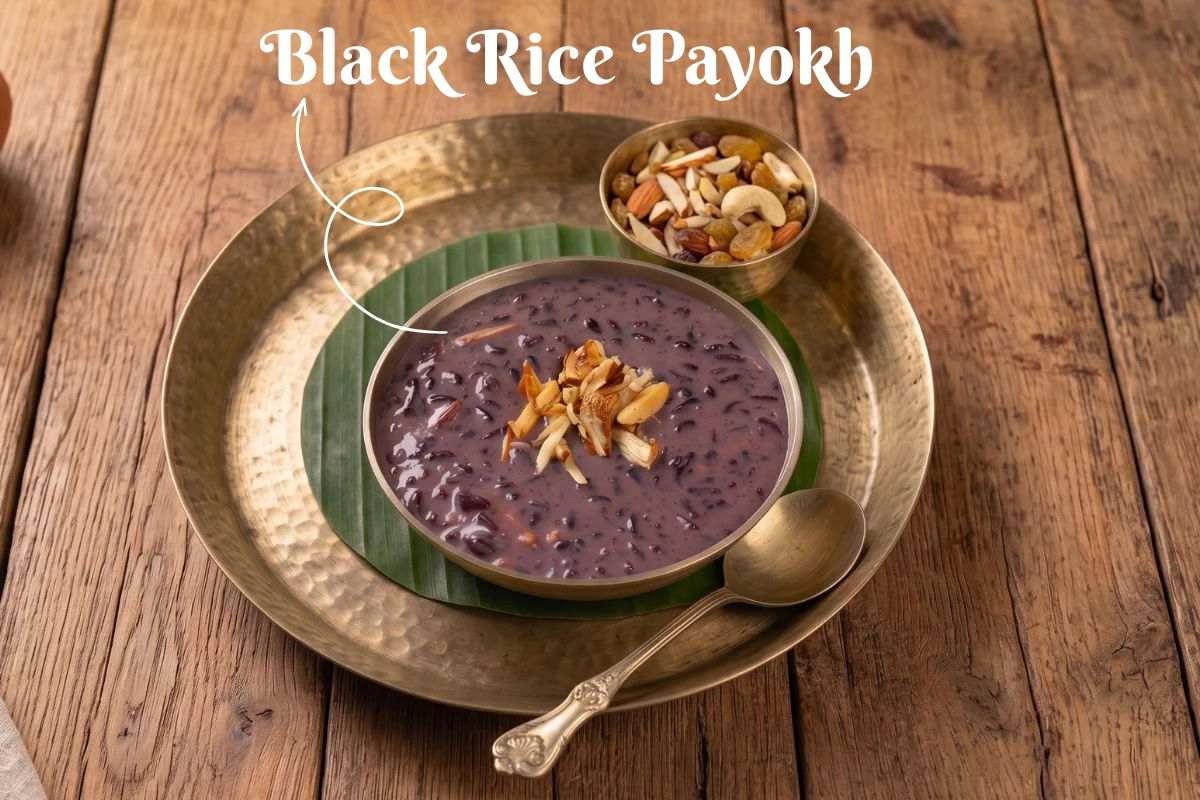
Payokh is the Assamese version of the popular dish payesh or kheer. It is a rice pudding made with milk. It is one of the most favorite desserts prepared in almost every state of India. But do you know what makes the Assamese recipe of Payokh so special? It is the use of Joha saul—an aromatic indigenous variety of rice from Assam.
Fresh cow milk is used to prepare this tasty dessert, and the rice is cooked in it. Along with it, chopped almonds, cashew nuts, and raisins are added for the crunch, and cardamom seeds are added to balance the flavor. Sugar is often substituted with jaggery just like many Assamese dishes, and to add a perfect blend of aroma to the Joha rice, some bay leaves are a necessity.
Payokh in Assam is prepared on many auspicious occasions and even presented as a bhog, or offering. It is a simple and delicious pudding that is served hot and slurry. In many regions it is prepared in quite a similar way, just with some variations, but the Assamese recipe is a simple, delicious, and aromatic delight.
There is a similar variety of payokh, which is loved by many, and it’s called komolar kheeer, or orange pudding. Prepared similarly with rice and milk, just the addition of cooled orange pulp before serving the dessert is what makes it special.
2. Narikolor Laro
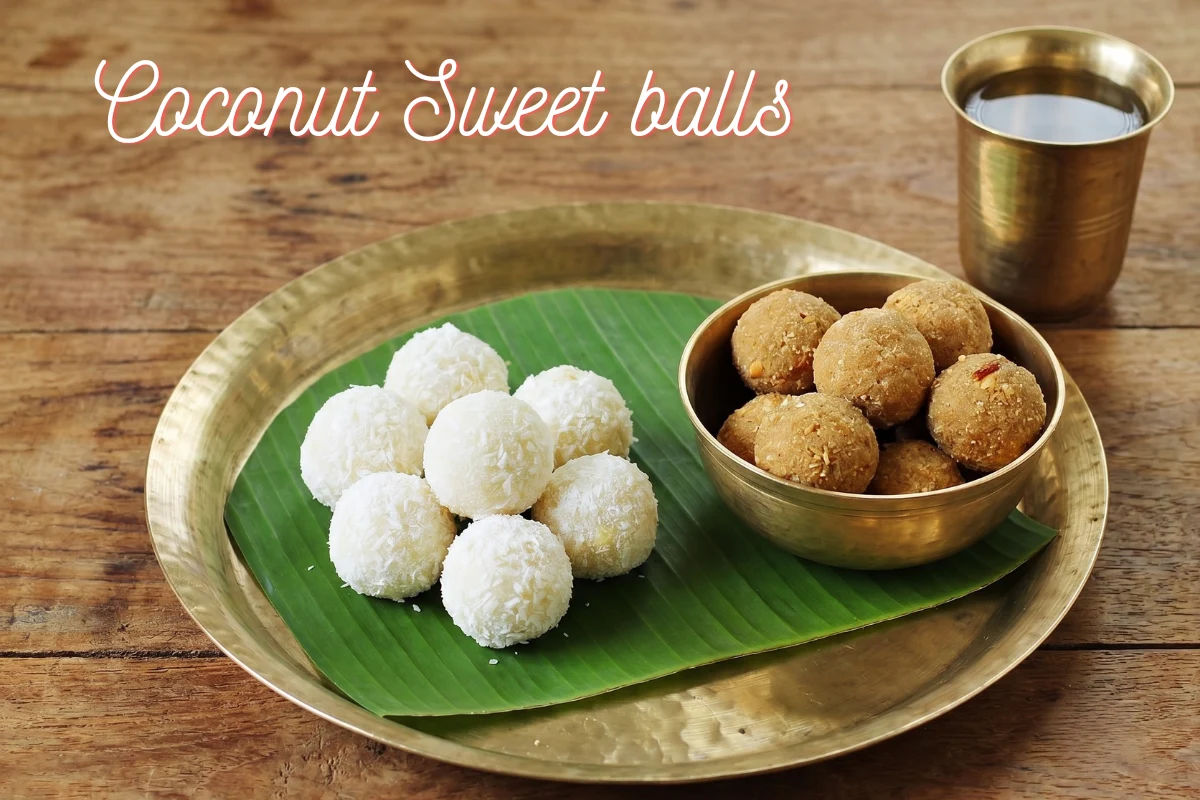
A traditional Assamese sweet made with grated coconut and either sugar or jaggery is called narikol laru, or coconut balls. This is a delicious dessert that is frequently made on Bihu. Narikolor laru, along with other pithas, are cooked mostly during Bhogali bihu and are an essential part of Bihu celebrations.
To make gur diya narikolor laru, freshly shredded coconut is combined with a jaggery syrup. After cooking, the mixture is formed into balls.
3. Til Pitha
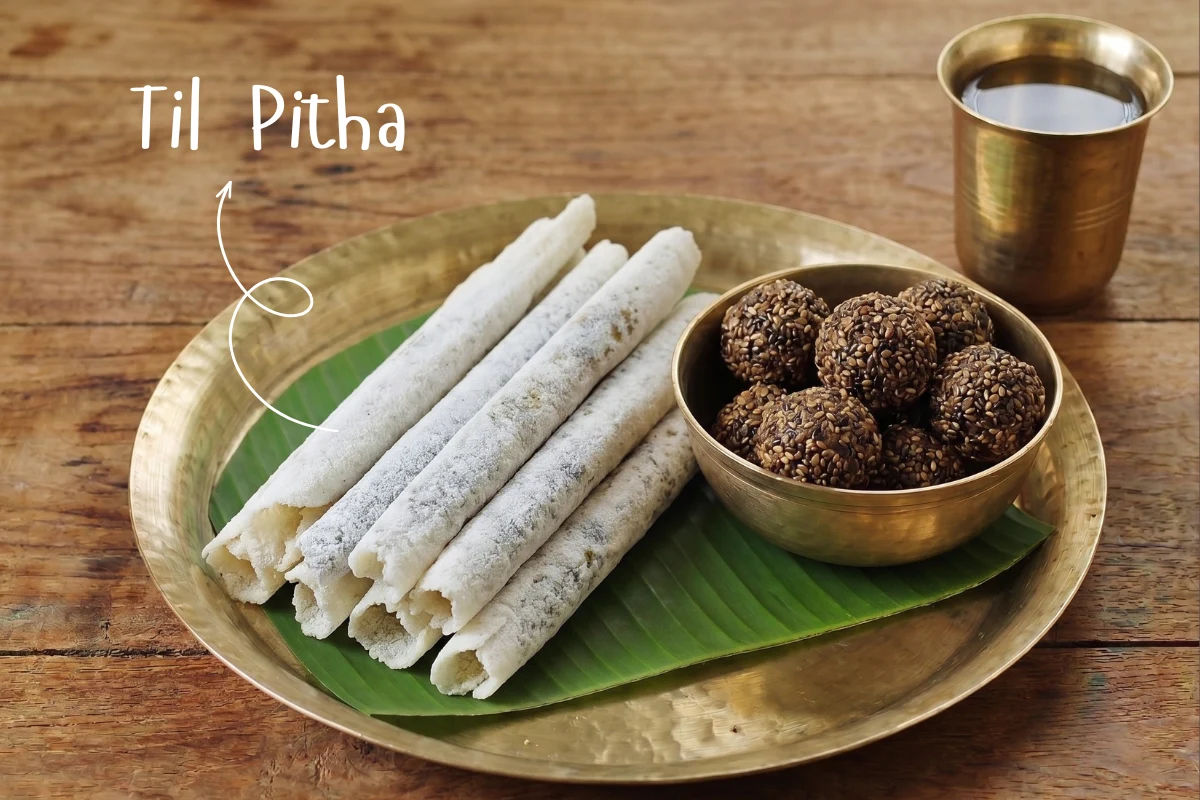
Til pitha is a particular type of sweet rice-based pancake made in Assam from a special species of glutinous rice known as bora saul. The glutinous grain is used for its binding quality. Sesame seeds (Til) or occasionally a coconut filling that has been sweetened and flavored with jaggery are wrapped around the ground rice. They have a crunchy texture thanks to gentle toasting, and they resemble spring rolls.
Til pitha is made with finely powdered rice that has been soaked overnight or for around 5 hours. The rice is ground into a thin powder traditionally under a dheki in many Assamese households, but a grinder can also be used. The fist full of fine powder is then spread over a hot pan, and a mixture of sesame and jaggery is added as filling on the heating pitha. Once turned into a crisp sheet, it is rolled using delicate fingers and done. Just some practice over the pan, and you are good to go.
These pithas are a staple of Assamese bihu platters, which are presented with other sweets and pithas for feasting. They are extremely well-known in Assam and are available year-round. It can be enjoyed for breakfast or as a snack.
In Assamese homes, til pitha is served as a welcome snack to guests as well as consumed by all family members. Pitha is offered during wedding rituals when the wedded daughter visits her parents. Although til pithas are typically prepared for consumption at home, they are occasionally offered for sale at fairs, festivals, and cultural displays.
4. Tekeli Pitha
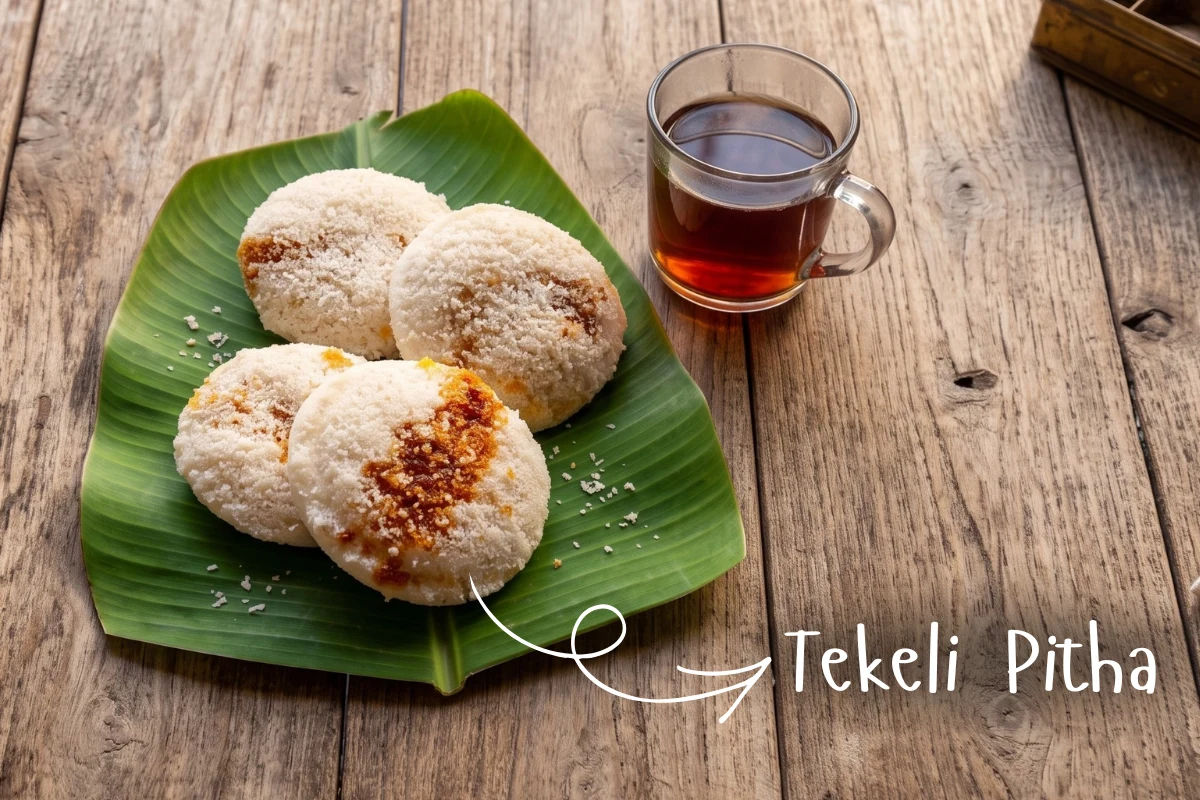
Tekeli pitha, or Ketli pitha of Assam, is a unique pitha that is super easy to cook and requires minimum ingredients and labor. These are steamed rice cakes with a flavourful punch of coconut and sweetness of sugar or jaggery. A tekeli is a small earthen pot used to cook any broth. These cakes are steamed either on the mouth of these pots or the kettle lid. That's why the name is Tekeli Pitha.
They are also known as ketli pitha in modern times, and tekeli is replaced by ketli or simply a kettle. Tekeli pitha is a breakfast delicacy of Assam. Often found as a popular street food in local stalls. Tekeli pitha are round, soft and delicious cakes that you must try once in a lifetime.
Tekeli pitha is more than simply a meal; it's a representation of abundance, an ode to the prosperity of the crop, and a tasty representation of ethnic diversity. This culinary wonder, created amid the bustling streets, captures the spirit of tradition, community, and the pure delight of sharing delicious customs during this auspicious occasion.
During Magh Bihu, Tekeli Pitha has a unique place. Usually, especially in rural regions, it is created in homes or on the streets. Invoking prosperity and good fortune for the following year, the dish represents the abundance of the harvest. It is a treasured component of this joyous occasion because of its distinct flavor and the cultural importance it has in Assam and Assamese dishes.
5. Tilor Laru
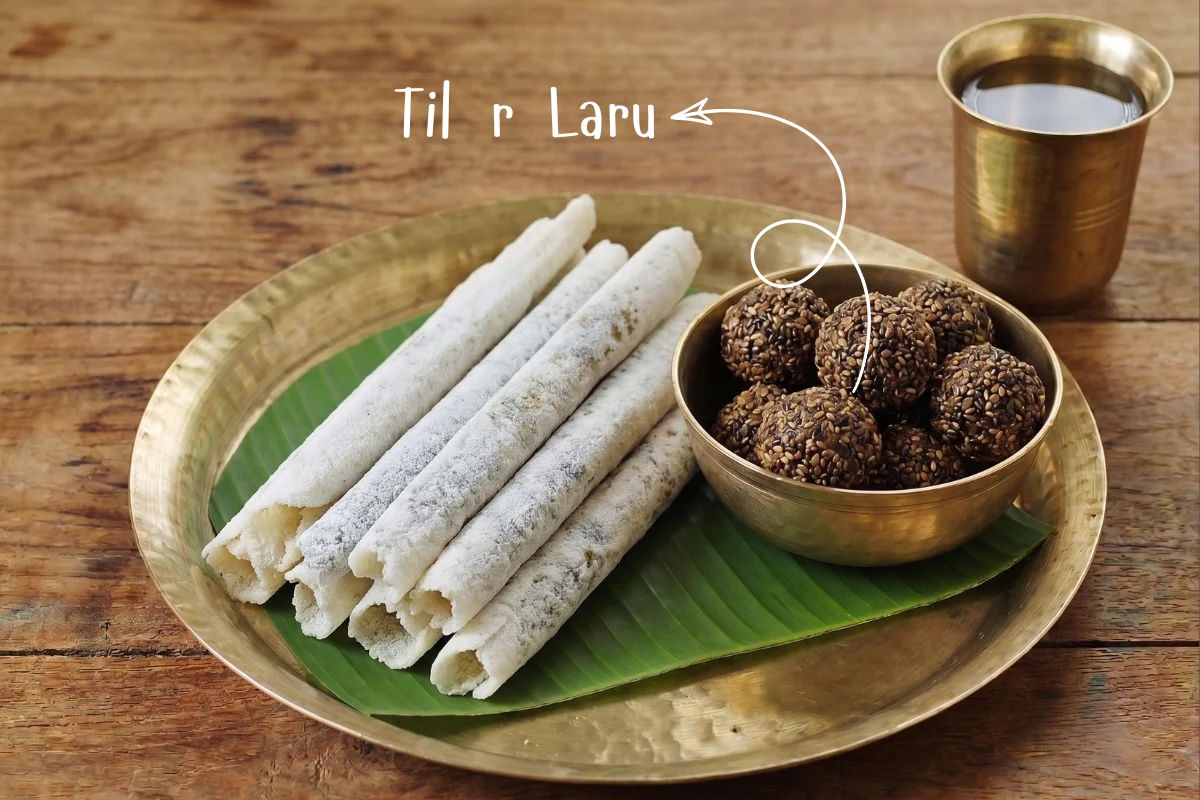
Last but not least, we've tillor laru on the list. This Assamese sweet fills every household with its delicious and tempting aroma. The preparation is quite simple, but what makes it special is the cultural significance associated with it. Tilor laru are small sweet balls mainly prepared during festivals and ceremonies.
To create these delicious laddoos, melt the jaggery with a little water in a pot over low heat, stirring occasionally. Meanwhile, lightly toast the sesame seeds until they begin to sputter and emit an aroma. Cool for a few minutes before grinding into a coarse powder in the grinder. On a plate, combine the melted jaggery and crushed seeds and form small, tightly packed balls. To assist in making the balls, dip your fingers in some water. You can eat these sweet treats right now or let them solidify for a few minutes, and you can store these sweet treats for a month.
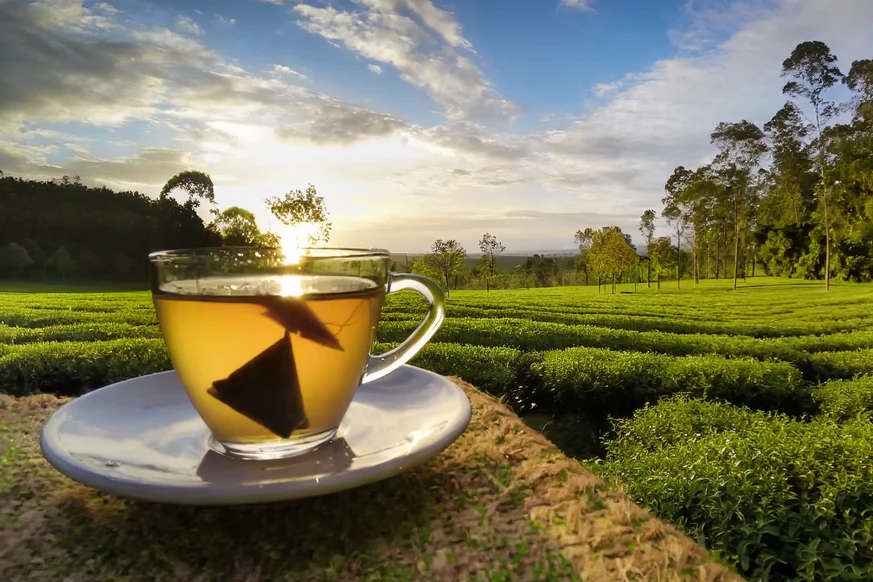
Assamese Bihu festivals are the prime occasions to enjoy these treats, and they are best served with aromatic Assam tea.
Endnotes
If you are looking for authentic and delicious Assamese dishes along with nutritional value and a good appetite, plan your trip to Assam. Just visit any local Assamese restaurant and order an Assamese thali with any of the variety of delicious Assamese dishes mentioned here, enjoy the meal, feel the delicacy, and thank us later.