Authentic Assamese Thali: A Satisfying Full Meal With Health Benefits
Let's explore the main dishes in an Assamese thali, vegetarian and non-vegetarian dishes, and what makes the dishes in an Assamese thali a healthy, satisfying meal.

Updated on : August 13, 2026
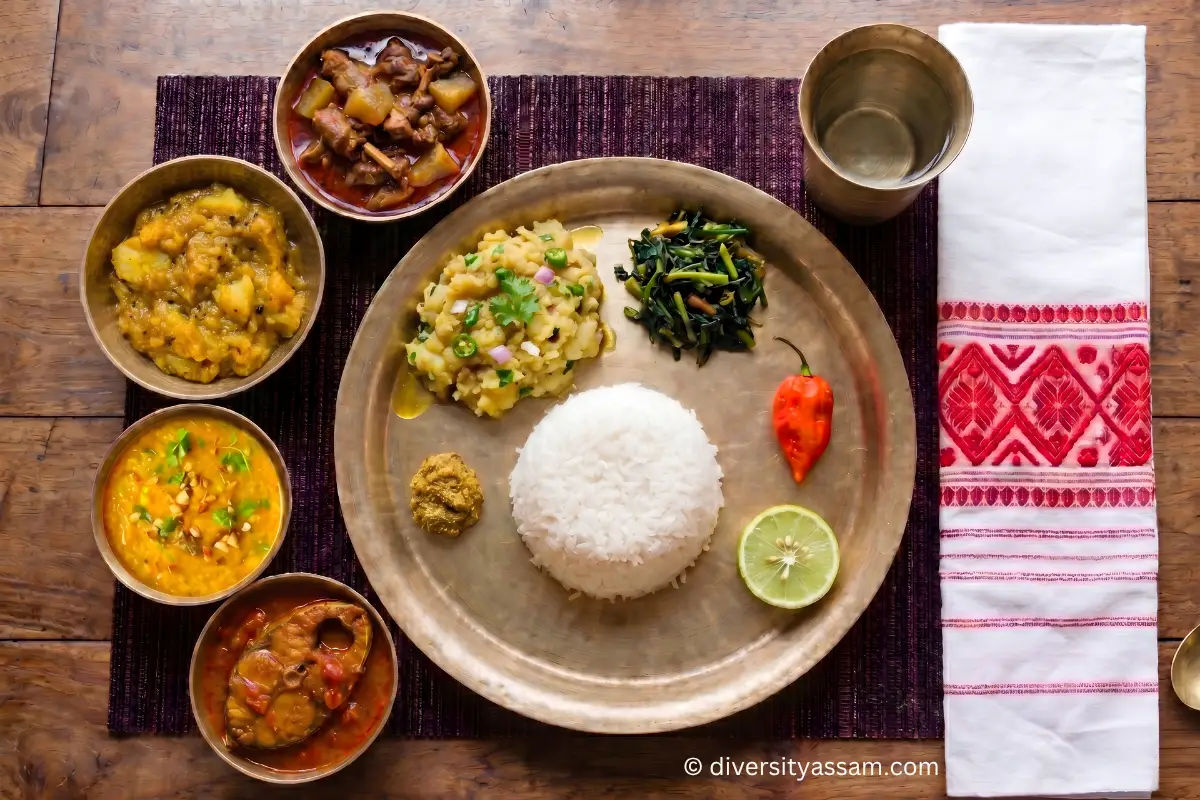
Traditional Assamese food is a blend of the region's distinct flavors, and what better way to enjoy it all together than by enjoying a traditional Assamese thali.
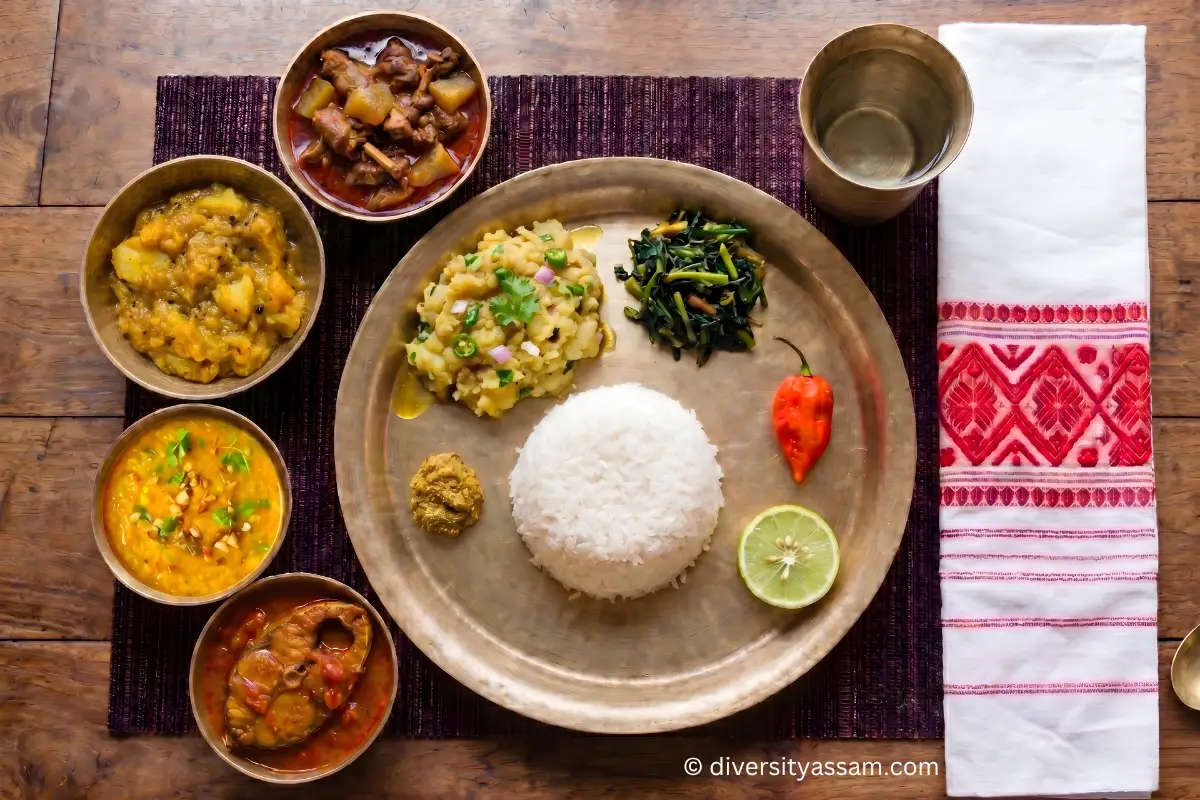
An Assamese thali is a flavorful platter filled with traditional Assamese foods such as rice, dal, aloo pitika, pickles, sour broth, alkaline side dishes, locally available leafy greens, and various sorts of meat and fish if you're not vegetarian.
Each dish from an Assamese thali is meticulously crafted to strike a balance between taste and nutrition. It demonstrates the Assamese culture's simplicity and richness. Fresh, seasonal ingredients and few spices allow the natural tastes to shine through. This makes each meal healthful, cozy, and wonderfully satisfying.
Assamese food is famous for its truly authentic flavors and variety of ingredients. But that doesn't compromise the healthy aspects of a diet. It is, in fact, rich in healthy sources that are beneficial in many ways. Freshly grown vegetables from the fields of Assam provide a rich source of vitamins and minerals. Even the non-vegetarian dishes are cooked in a healthy way with many greens and less oil to keep the flavors and nutrition intact.
Let's explore what's in a traditional Assamese thali along with its health benefits.
What Does an Assamese Thali Offer?
Bhaat (Steamed Rice)
The primary ingredient in Assamese thali is rice. It is the foundation of almost every meal and a staple of the Assamese people's daily diet. Steamed rice is the perfect ingredient to pair with other meals on the thali because it balances the flavors of broths and vegetables without overpowering their own.
Bhaat basically binds every flavor in the thali together. Rice has always been the staple meal in Assam due to its tolerance to the climate and soil types. Rice types such as Bora and Joha served as staple foods, becoming the foundation of regular meals. These rice types are appreciated not just for their flavor and texture, but also for their capacity to adapt to the local climate and soil conditions, allowing them to thrive in the region for millennia. Bhaat in traditional Assamese thalis is primarily of the Aijong and Hali kinds and served with a variety of side dishes.
Steamed rice is easy on the stomach, and it contains a lot of carbohydrates, which gives you energy fast. It is low in fat, is gluten-free, has no cholesterol, and the best thing is that it has a lot of water in it. It helps you stay hydrated. Pairing it up with dal or vegetables makes it a very healthy meal.
Dali (Lentil Soup)
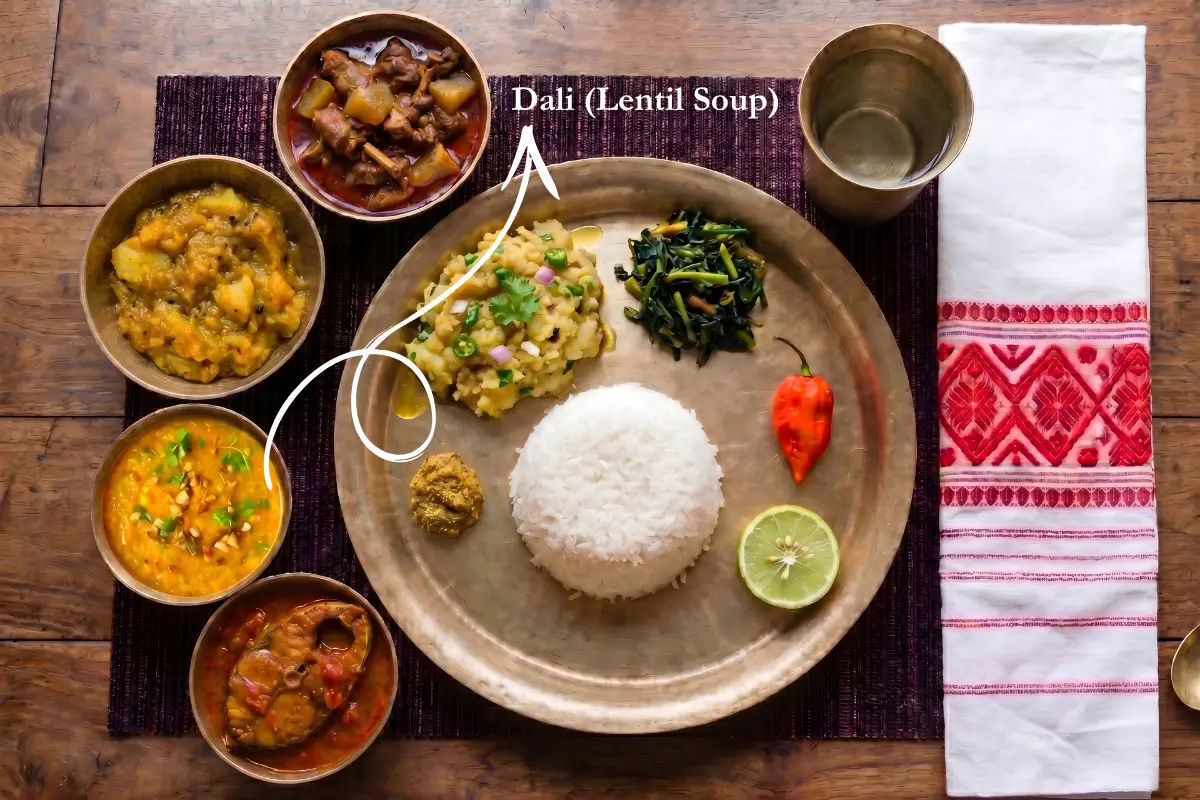
Dali is not a rare dish in an Assamese thali; in fact, it is the most simple and common one. The recipe for authentic Assamese dali is also really simple, which makes it a comfort side dish for many. It is boiled and cooked with basic spices, often served as a side dish to complement rice.
Sometimes tomato is also added to add a tangy punch to the dal. Lentils like moong and masoor are quite common, but a second bowl of dali is also served in an Assamese thali, which is black gram or called "mati dali" in Assamese.
Dali is a wonderful source of plant-based protein, which is necessary for muscle growth, tissue repair, and general bodily functions. Dal is the main source of protein in areas where meat consumption is restricted, which helps to maintain the thali's nutritional balance. Vital nutrients like vitamins, minerals, and dietary fiber are abundant in lentils. They offer sufficient amounts of potassium, iron, folate, and other micronutrients, all of which support general health and well-being.
Khar (Alkaline)
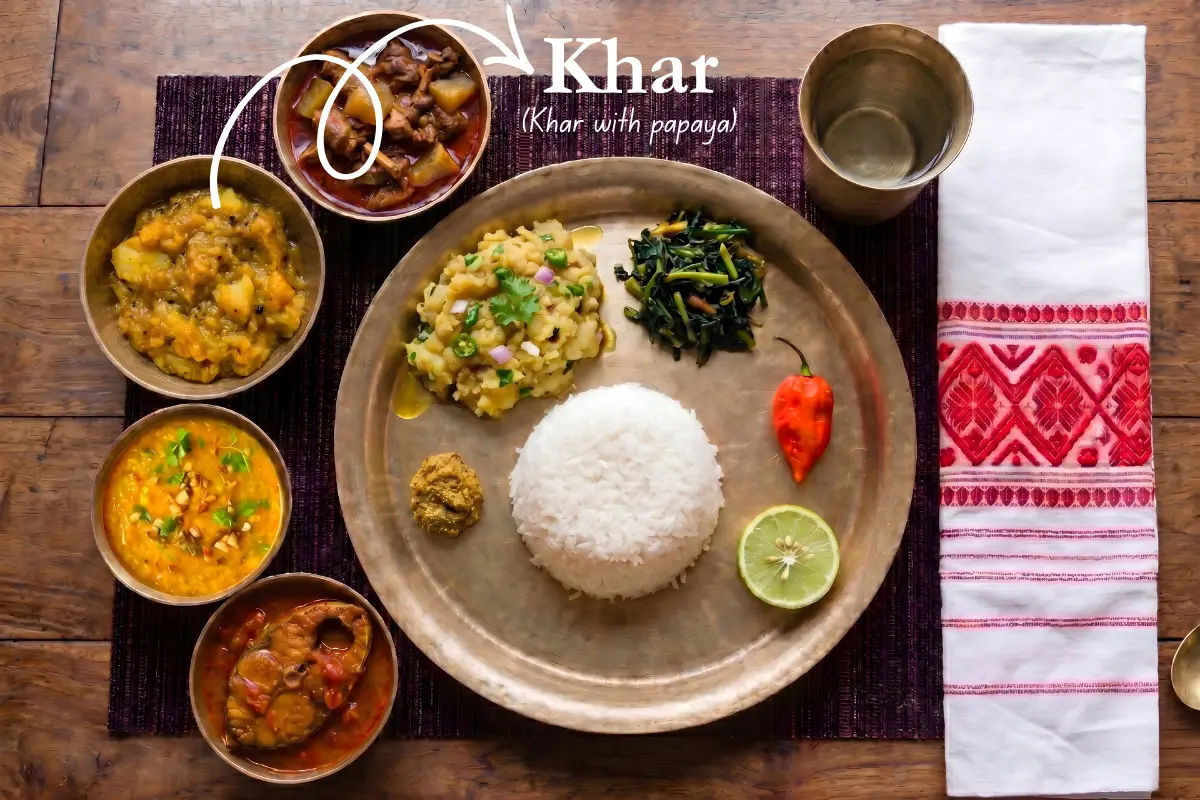
A traditional Assamese thali is incomplete without khar. Khar is not just another dish, but it's a cultural identity of Assamese people from ancient times.
Khar works as the appetizer. It is a unique Assamese dish prepared by filtering water through the ashes of the pseudostem, corm, and fruit skin of a banana named Bhimkol in Assamese (a seeded banana variety).
The parts of the banana plant are dried under the sun. Fully dried plant parts are burnt, and the ashes are collected and filtered with water. The residue collected is KHAR. Khar can also be prepared from the ashes of the stem of the black gram plant, the stem of the mustard plant, and the ashes of the firewood of the banyan tree.
The preparation of Khar involves cooking the main ingredient (vegetable or meat) with Khar (alkaline water) and other spices until the flavors meld together. The result is a dish that is light yet flavorful, with a slightly bitter and alkaline taste. The most commonly served khar in an Assamese thali is with papaya and black gram.
Khar has a unique place in Assamese culture and is frequently served as the first dish in a typical Assamese meal, followed by subsequent meals. The tribes of Assam, particularly the Tiwa tribe, believe that God was so pleased with their devotion that he gifted them the knowledge of making Khar.
In addition to providing khar its distinct flavor, its alkaline properties may provide health benefits. Khar is typically drunk before the start of a meal to promote digestion. The alkaline characteristics help to neutralize stomach acids and promote a healthy digestive tract.
It is believed to have detoxifying properties and anti-inflammatory properties and to be nutrient-rich, like high in sodium, iron, and potassium. High potassium and low sodium as compared to baking soda can make natural khar to be used as a substitute for baking soda.
Aloo Pitika (Mashed Potatoes)
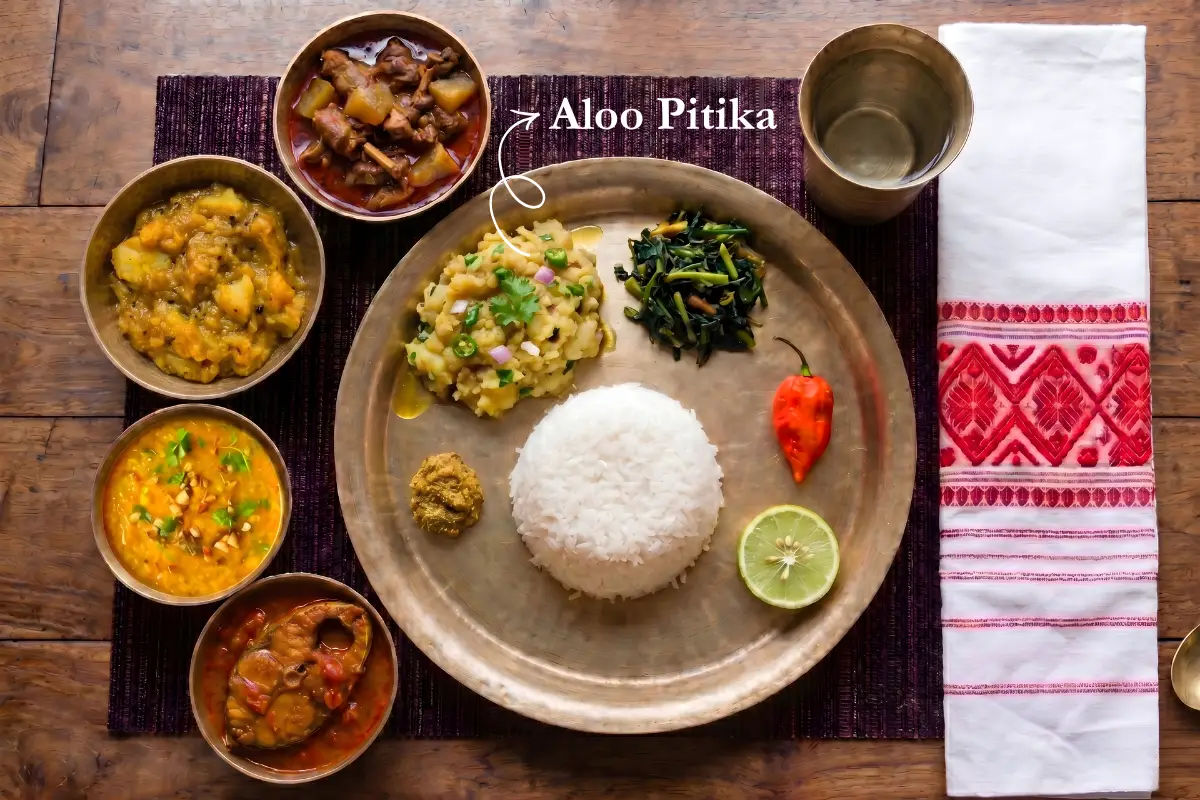
Aloo pitika is the most popular side dish of Assam and also the heart of an Assamese thali. It's the comfort meal for people all over Assam and the only dish that is so simple yet has a special place in everyone's heart as well as on their taste buds.
Aloo pitika is the Assamese version of mashed potatoes with a flavorful addition of mustard oil. When the sour and spicy flavors of other dishes start overpowering, aloo pitika keeps it balanced with its mushy, simple taste. In addition to mustard oil, some onion, coriander, and chilies are added for the crunch.
Aloo pitika serves as a side dish in an Assamese thali, which is consumed by taking a small portion and mixing it with a bite-sized amount of rice. We Assamese people love to have it for breakfast, lunch, and dinner as well.
Full of carbohydrates, it acts as an energy booster, while mustard oil and onion act as a source of antioxidants and good fats. Coriander is rich in vitamins. Aloo pitika is easily digestible and less processed.
Masor Tenga (Sour Fish Curry)
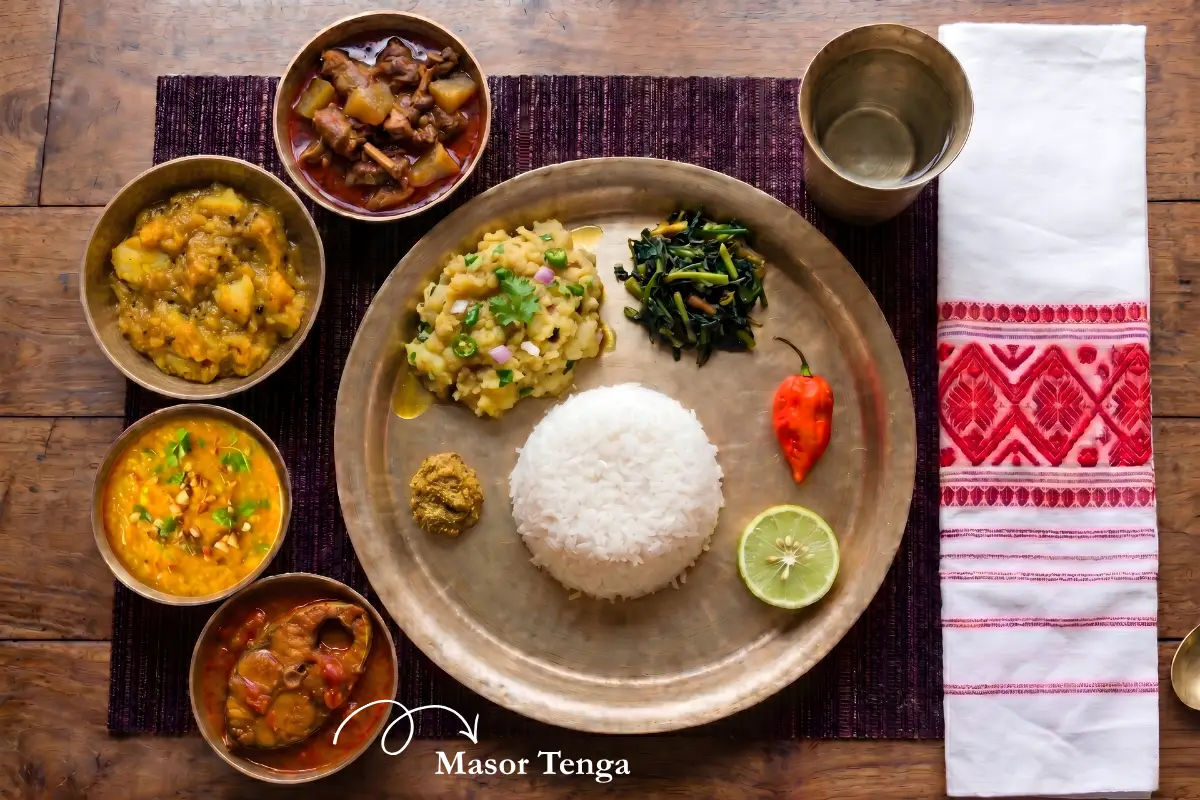
In Assamese cuisine, sour fish curry is defined as "Masor Tenga" and is a staple of the region's identity. The use of freshwater fish native to Assam, including Rohu and Catla, along with traditional herbs and spices, contributes to the unique flavor profile of this dish.
Masor tenga has a tangy taste obtained from using lemon, wood apple, and tomatoes. Fish are slow-cooked in a light and sour broth that is enhanced by adding fenugreek seed to the preparation. No authentic Assamese thali is complete without masor tenga, and fish will always be an integral part of non-vegetarian meals in Assam.
Masor tenga also has tremendous nutritional value. It is a high-protein and omega-3 fatty acid source and, as such, is able to help improve heart and brain health. The tanginess of the lemon, wood apple, and tomato used in masor tenga helps promote digestive health and stimulate appetite.
Since there is little or no oil or spices used in the preparation of this dish, it is light in nature and soothing and can also be consumed during recovery diets.
Duck Meat Curry with Ash Guard
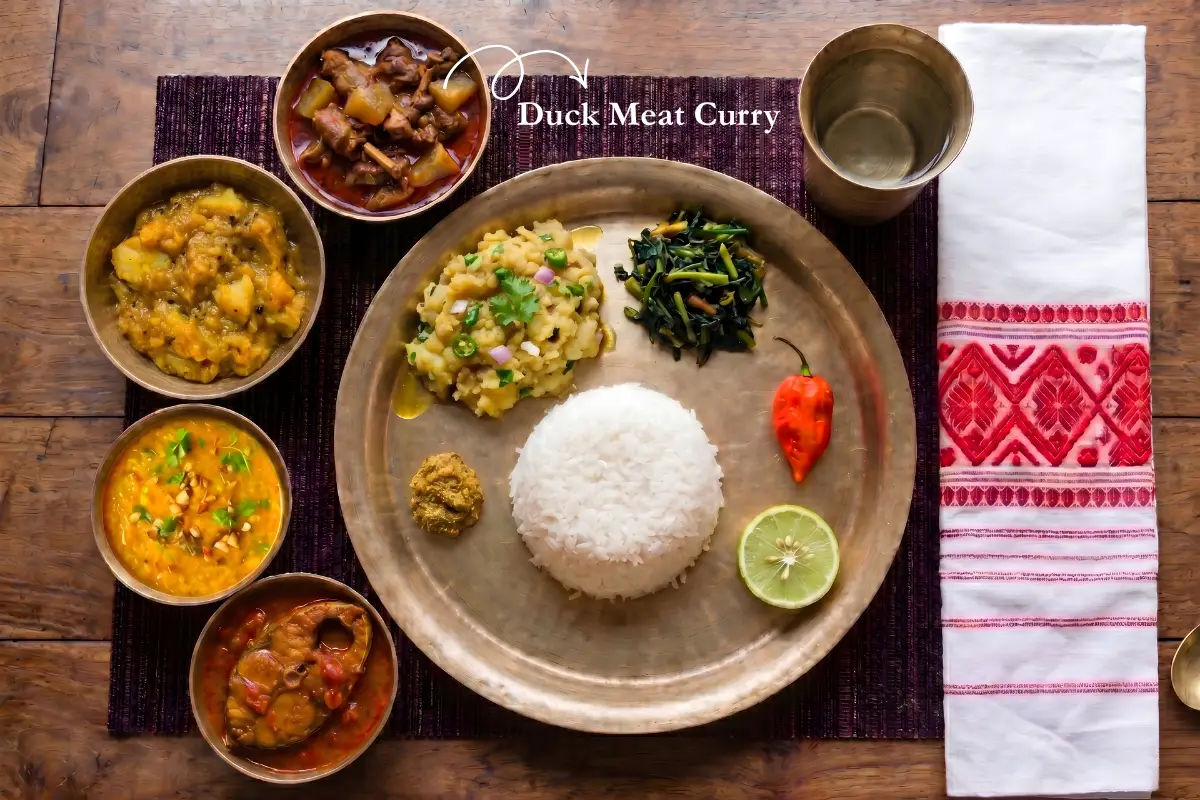
This is the most delicious item of a non-vegetarian Assamese thali and a very unique dish to try while you're in Assam. Duck meat is considered very special in Assam, as it is cooked mostly during festivals and ceremonies. However, you don't have to wait for any of it and can easily taste it by ordering a non-vegetarian Assamese thali.
Hanhor Mangxo has an earthy and rich flavor. The slow cooking of the duck gives a savory taste to the food, and it is spiced mildly with ingredients like ginger, garlic, and black pepper. Ash gourd and sesame seeds give the dish a hint of sweetness and nutty flavor while the curry remains light, aromatic, and less oily than typical Indian meat curry.
Duck meat is a nutrient-dense protein that provides numerous health benefits, including high levels of iron, selenium, and B vitamins. It serves as a healthier, leaner substitute for red meat, with skinless duck breast containing less fat and fewer calories than chicken. Meanwhile, ash gourd aids digestion and helps in reducing inflammation.
Dhekia Bhaji (Fiddlehead Ferns)
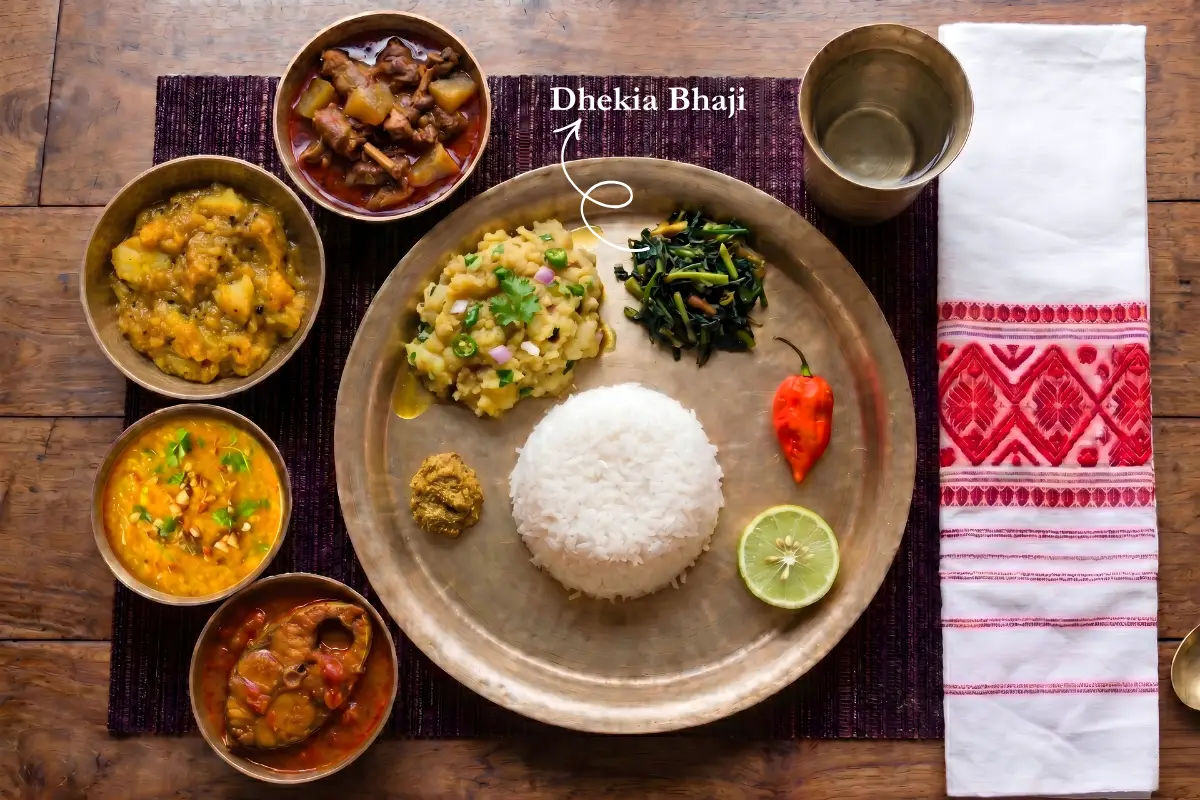
Local greens give the Assamese thali its unique identity, and fiddlehead ferns are an integral part of it. Locally called "Dhekia xaak," fiddlehead ferns are naturally so flavorful one doesn't need a lot of spices to cook them. It is prepared by gently cleaning them and plucking them into small pieces. Then in low oil, it is sautéed along with potatoes, salt, and turmeric.
Although dhekia bhaji is not very heavy on the stomach and is something that fills you up very well, it also connects the people of Assam to nature, their local greens, and balanced eating. The dish is typically eaten on an Assamese thali as an accompaniment but is also able to provide both sustenance and authenticity to the meal.
Kahudi (Fermented Mustard Paste)
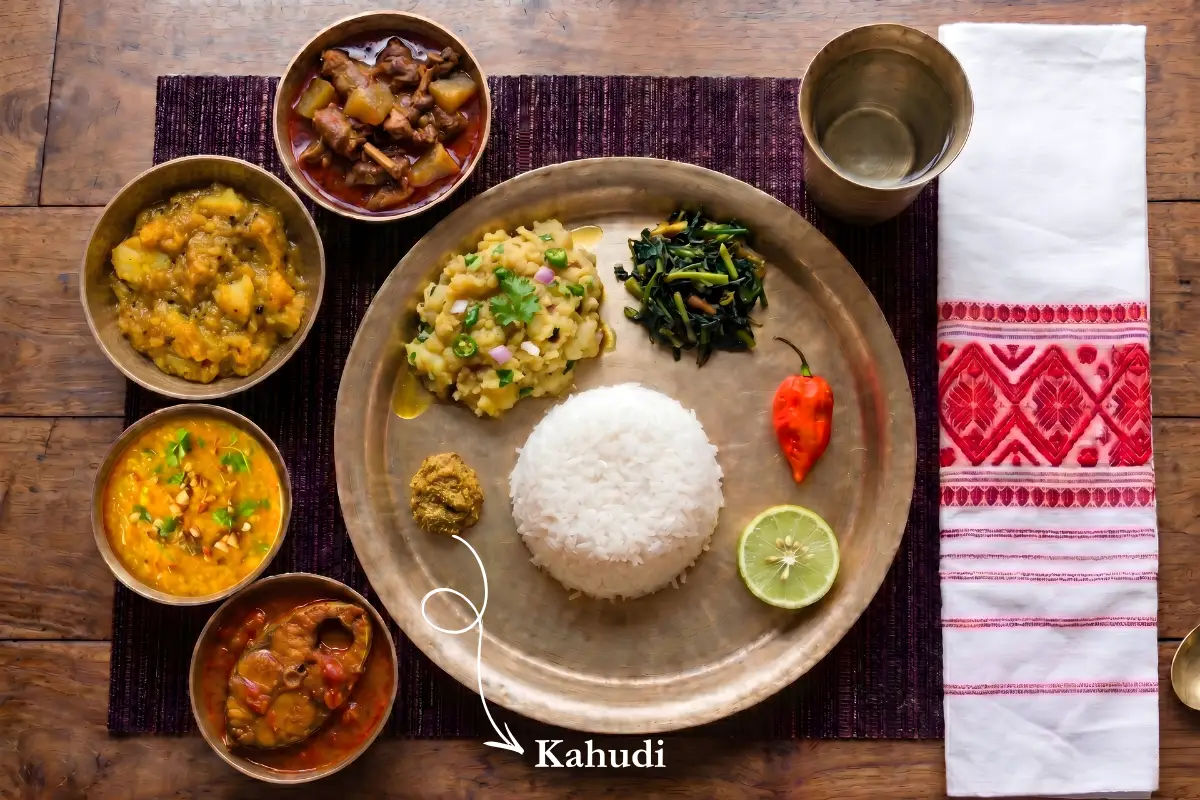
Kahudi or Pani tenga is a very unique fermented mustard paste of the Assamese thali that is prepared by mixing coarsely ground mustard with extracts of acidic Garcinia pedunculata (Thekera) or tamarind. The seeds of black or white mustard are cleaned, washed, and allowed to dry, followed by light roasting in a pan.
The dried mustard seeds are ground, and a bit of khar, along with salt, is added along with a souring agent. It is then shaped into balls, wrapped in banana leaves, and packed away in a dry and dark place, mostly an earthen pot, for about a week. Once fermented, you get an amazingly tasting fermented mustard paste. It is the Assamese-style chutney with healthy ingredients.
Mustard is known for its anti-inflammatory properties, helps in blood circulation, improves your metabolism, and is also antiseptic. Besides, fermentation breaks down the carbohydrates into lactic acid, which improves the nutritional value and helps in digestion.
Bor Bhoja (Cutlets)
These crispy fritters are a special addition to an Assamese thali that gives the required crunch with a healthy twist. Bor is a deep-fried cutlet made of different ingredients like raw banana (kaskol), banana flower (koldil), curry leaves (noroxingho paat), and even lentils (dal).
These are the Assamese version of pakoras. The desired ingredient is dipped in a rice flour slurry, which is mixed with salt and basic spices, and then it is deep-fried in oil till crispy. Rice flour is a healthy substitute for cornstarch or gram flour, and curry leaves aid digestion, improve hair health, and help control blood sugar.
Banana flower is rich in fiber, supports gut health, and may help manage diabetes and weight.
Traditional Accompaniments
A flavorful meal requires some sides to keep it interesting, and what better way to pair it than with our native ingredients? An Assamese thali is incomplete without bhoot jolokia (ghost pepper) and a slice of kaji nemu (Assam lemon), which is essential to Assamese cuisine and is well-known for its highly fragrant quality.
Bhoot jolokia adds not only heat but also a distinct earthy flavor to the bites, while lemon assists digestion. It completes the meal.
Vegetarian and Non-Vegetarian Assamese Thali
Assamese food comes in a variety of options, and each component has its distinct flavor profile. While the vegetarian Assamese thali focuses more on plant-based dishes, the non-vegetarian Assamese thali is a mixture of all the vegetarian options along with a meat and fish dish.
You can try a variety of meats like 'Til diya murgi manxo' (chicken with sesame seeds), 'Lai Xaak Gahori' (pork with leafy greens), and 'paro manxo' (pigeon meat), but a traditional Assamese thali mostly includes duck meat curry. Whereas the primary fish dish of a non-vegetarian Assamese thali is Masor Tenga.
Vegetarian cooking styles are light boiling, steaming, and mashing with the use of minimal oil and spices. There's more emphasis on natural taste, whereas non-vegetarian cooking styles are slow cooking, shallow frying meats, using fat from meat to enhance the flavor, and using slightly more spices but still mild compared to other Indian cuisines.
Where to Order an Assamese Thali?
Anywhere in Assam, you can order an Assamese thali from a nearby local restaurant. Plethora of Assamese Thali combos are easily available and affordable in all of Assam.
The basic thalis can be found in abundance in small roadside joints, local hotels, and even in marketplaces in towns and villages. In cities, there are plenty of cloud kitchens that offer Assamese thali combos on Zomato or Swiggy.
A vegetarian Assamese thali consisting of rice, dal, pickle, and vegetables can cost anywhere from 39 rupees to 249 rupees per plate, making it very affordable in terms of money. However, the non-vegetarian thalis, which contain meat and fish, may cost up to 699 rupees at premium hotels and restaurants.
Assamese thalis in rural Assam are more economical and simple, whereas in metros like Guwahati, Jorhat & Dibrugarh, well-maintained ethnic restaurants can cost 299 rupees to 699 rupees per plate per person for a full, satisfying meal.
How is an Assamese thali served?
Assam also has its own unique serving materials, which are found nowhere else. An Assamese thali that consists of all serveware like plates, bowls, glasses, etc. is made of bell metal. The bell metal products are regarded as an important household asset in every Assamese family. It occupies a special position in Assamese society too.
In Assamese society, it is believed that the habit of taking food in the bell-metal utensils helps to maintain sound health. Therefore, most probably, during the Ahom reign in Assam, the kings and other higher officials used to take food in Maihang Kaahi and Baati, a unique dinner set made of bell metal.
These utensils are highly prized for their durability, antibacterial properties, and ability to keep food warm, making them perfect for serving staples.
After-Meal Palate Cleanser
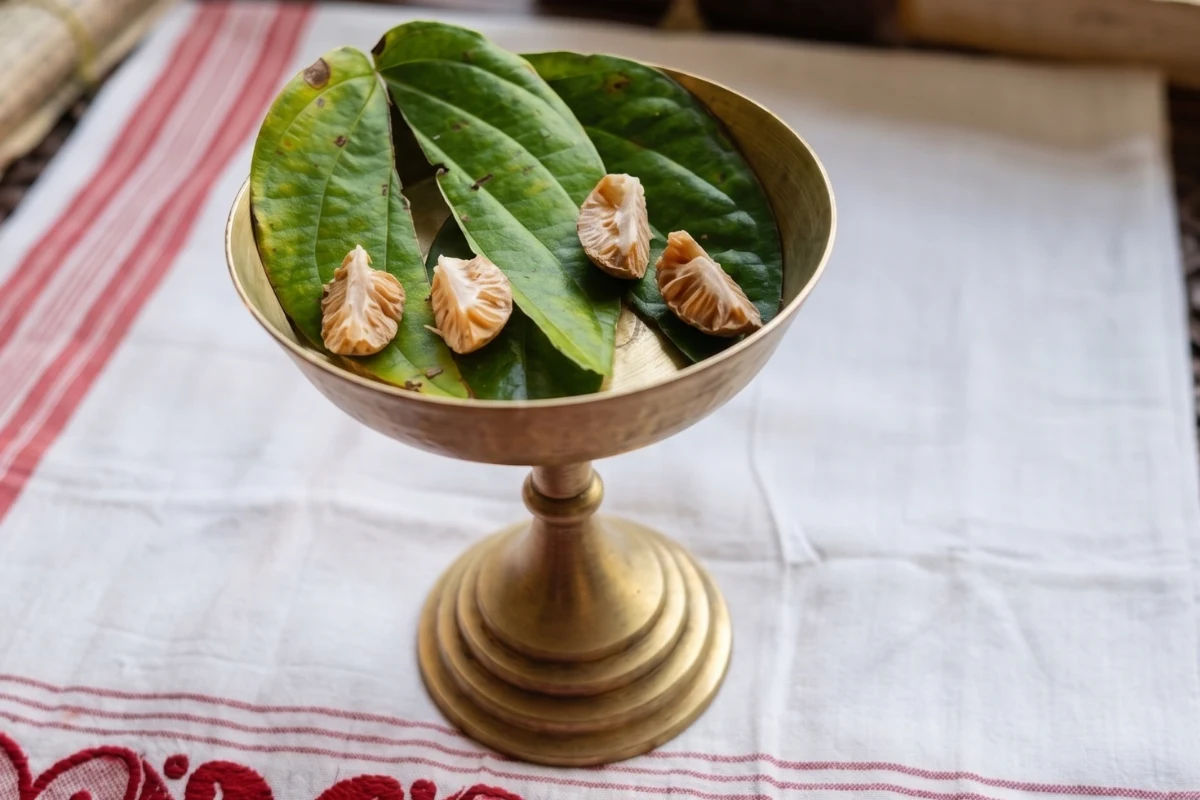
Assam has its own combination of palate cleansers, which are also cultural symbols. Pan Tamul (raw areca nut with betel leaf) is a deeply ingrained cultural tradition in Assam that symbolizes hospitality, respect, and social bonds.
This combination works as a traditional post-meal digestive and mouth freshener. It is also provided to guests and utilized in religious rites.
Assamese Thali During Festivals
An Assamese thali at a festival is a bright and cultural representation of tradition, seasonality, and community pride. The Assamese thali becomes grander at festivities such as Bohag Bihu and Magh Bihu, with a variety of dishes cooked using fresh, local ingredients.
A traditional festive thali starts with steamed rice, then two types of dal, and a variety of vegetable preparations, including dhekia bhaji, labra bhaji (mixed seasonal vegetables), and a crispy dry-fry vegetable dish. Unique Assamese ingredients such as khar (an alkaline dish) and tenga (a souring agent similar to what is used in masor tenga) are necessary for flavor balance.
Non-vegetarian dishes frequently take center stage, such as fish curries, duck meat, or chicken cooked with traditional spices like bamboo shoot and sesame. During festivals, premium river fish make their way into Assamese cuisine. During Magh Bihu, special roasted and smoked meats are available. Pigeon meat becomes a popular winter dish among many people.
No festive Assamese thali is complete without traditional sweets and snacks like pitha and laru, which are typically made with rice, sesame, and jaggery. Til pitha, ghila pitha, narikolor laru, and tilor laru are handcrafted specialties that bring warmth and nostalgia to the feast. Payokh, a delicious rice pudding from Assam, is also a staple of festival thalis.
If you visit the rural areas of Assam during festivals, you'd be offered a refreshing glass of local rice beer along with the Assamese thali. Different tribes have their own method of brewing it, but the outcome is an equally delicious and nowhere-else-to-be-found drink.
Assamese Thali by Tribals
The tribes of Assam have their own unique traditional dishes that might seem exotic to some but hold ancestral roots and deep respect for nature. Tribes of Assam believe in healthy food and slow cooking with very little to no oil. They use minimal spices, among which raw turmeric and mustard are prominent.
Fermented food is another integral component of their thalis. Some of the dishes of a traditional Assamese thali by tribals include rice, boiled dal, smoked meat (pork, chicken), fermented chutney (mustard, dry fish), bamboo shoot-infused broths, and exotic dishes like red ant eggs, water snails, and silkworms.
Assamese Thali Vs. Bengali Thali
Belonging to the eastern part of India, both Bengali and Assamese thalis revolve around rice and quite similar ingredients, but the preparation and flavor profiles are very distinct.
An Assamese thali provides a more balanced option with predominantly earthy, mild, and spicy flavors, whereas a Bengali thali is richer, sweeter, and includes more spices. The Assamese thali doesn't really have a dessert section, nor does it have any sweet or dairy dishes, whereas the Bengali thali includes curd, sweets, and ghee.
The main ingredients of an Assamese thali are rice, sour fish curry, local greens, fermented paste, alkaline khar, black gram, pitika, duck, and banana cutlets, whereas a traditional Bengali thali comprises rice, dal, fried starters, mustard-based fish curries, spiced vegetable dishes, sweet and sour chutney, and dessert (like mishti-doi).
Assamese thali is a mild amalgamation of simple ingredients with less oil that often highlights the agrarian and rural lifestyle of Assamese people, while Bengali thali provides a richer, bolder taste of flavors reflecting their rich culinary expertise.
If you're looking for a comfort meal, Assamese thali is a go-to, and if you're into more intense flavors and a sweet ending, you can have a Bengali thali.
What Makes Dishes in an Assamese Thali a Wholesome Meal?
Assamese food is all about rice, vegetables, and its native herbs and spices. Cooking practices like steaming, boiling, and sauté are preferred over deep frying, which keeps the nutrition solid.
Unlike other Indian non-vegetarian dishes, Assamese people cook meat dishes with low oil and very few spices, which makes them easy to digest as well as cook. Many pork and chicken dishes are cooked with lentils, bamboo shoots, and spinach to balance the flavors, which are also light on the stomach.
The use of citrus ingredients like elephant apple, starfruit, thekera tenga (gamboge), gooseberries, and native tangy leaves like manimuni (pennywort) provides a rich source of vitamin C and antioxidants.
"Variety is the spice of life." Assam is surrounded by a large number of indigenous plants and vegetation, and a lot of them have tremendous health benefits. Assamese food is filled with these nutritious sources.
End Notes
Assamese food offers a healthy way to eat delicious meals without worrying about fats and cholesterol thanks to its less-fatty, vitamin-rich diet. Additionally, the ability of several components to break down food helps to avoid unpleasant stomach problems following a large meal. Superfoods and medicinal plants can also be prepared in a tasty fashion to strengthen immunity against a range of illnesse